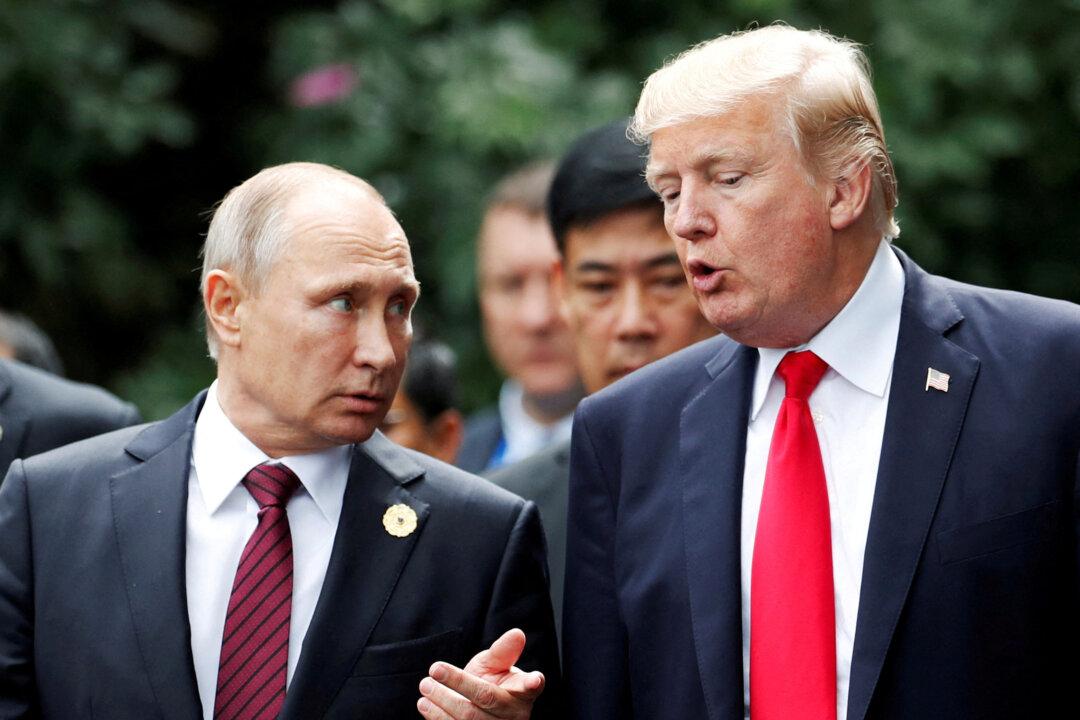
Donald Trump returned to office in 2025 with a familiar message: no new wars. So far, that promise has held. But U.S. policy in the Middle East has rarely looked more unpredictable. Within months, the Trump administration has swung between positions that appear contradictory, even to close allies.
Trump reopened back-channel talks with Iran—then threatened its regime with collapse. He bypassed Israel during a regional tour, criticized its leadership, then quietly reengaged. He lifted sanctions on Syria’s new Islamist transitional government, led by a figure previously linked to extremist factions. And he welcomed Pakistan’s army chief to the White House—a diplomatic move that visibly irritated India.
Launched at the 2023 G20 summit in India, IMEC was proposed as a joint initiative among the United States, India, several Gulf states, and the European Union. Its objective was simple in concept, but sweeping in impact: to connect India to Europe via a secure trade corridor that would run through the Arabian Peninsula and Israel. IMEC was designed to carry goods, energy, and data—across railways, pipelines, ports, and undersea cables. But just as important, it was designed to do so without passing through Chinese-controlled routes or relying on Chinese financing.
It was widely viewed at the time as a response to China’s Belt and Road Initiative (BRI)—a global infrastructure and lending project that has, over the past decade, expanded Beijing’s influence across Asia, Africa, and parts of Europe. But while BRI moved quickly, IMEC stalled almost immediately.
The reason? War.
In October 2023, the Hamas attacks on Israel and the ensuing military campaign in Gaza brought regional diplomacy to a halt. The normalization talks between Saudi Arabia and Israel collapsed. Shipping in the Red Sea came under threat. Investment discussions between the U.S. and Gulf sovereign wealth funds froze. In effect, IMEC—a corridor that depended on regional cooperation and long-term stability—was shelved before construction began.
Fast forward to 2025, and Trump’s seemingly erratic diplomacy begins to look different. Not coordinated in the traditional sense, but converging around a shared strategic challenge: how to clear the obstacles that once blocked the corridor.
Take Iran. While the administration reopened quiet talks, it also took a hard line in public—threatening the regime with collapse after strikes on Israel. This approach mirrors a familiar Trump pattern: Dial up pressure while leaving the door open for negotiation. The strategic result is a recalibrated deterrent. Iran is both isolated and engaged—a state that, if contained, would dramatically improve the viability of Gulf-led trade routes.
None of this suggests that Trump has a master plan for the region. There is no grand strategy document from the National Security Council explaining how IMEC is being revived, nor is there a confirmed interagency operation coordinating each of these steps. But the pattern of outcomes—stabilization of transit zones, renewed Gulf investment, softening of regional rivalries—points toward a potential revival of IMEC, even if by accident more than design.
This form of statecraft is increasingly common in the 21st century: not ideology, but infrastructure; not declarations of alliance, but alignment through access. The idea is simple: When commerce and energy flow, instability recedes. And when a corridor becomes viable, the actors who enable it gain leverage—without deploying troops, signing treaties, or broadcasting intentions.
Unlike BRI, which has often left recipient countries in debt, IMEC is pitched as a mutually beneficial structure. Whether that vision holds up remains to be seen. But what’s notable is that the groundwork for such a system is being laid not through speeches or aid packages, but through a shifting of diplomatic posture and regional risk reduction.
China has not been mentioned in any of Trump’s public statements about the region. But the structure that’s emerging reflects the same logic that led to BRI: Whoever builds the corridor builds the future. It’s not about confrontation. It’s about architecture. And right now, the United States and its partners may be quietly reclaiming ground that had been ceded to authoritarian development models.
This approach isn’t guaranteed to succeed. Gaza remains volatile. Iran’s leadership is unpredictable. The Gulf states themselves are not a monolith—Qatar, the United Arab Emirates, and Saudi Arabia often pursue competing agendas. And India, while a willing partner, remains wary of regional entanglements.
But something has changed.
Trump’s moves, while often improvised and controversial, are increasingly converging around a model that prioritizes pathways over politics. Ports over promises. Pipelines over posturing.
And in that model, IMEC is not just a project. It’s a test case—of whether the United States can still shape global systems not by force, but by facilitating movement.
In the end, it may not matter whether Trump is consciously pursuing a corridor doctrine. What matters is that his actions are beginning to clear the ground for one.