The second meeting of the Advisory Committee on Immunization Practices (ACIP) was a wild and woolly wonder to behold. Scientists took on industry. Industry fought back. Agencies spoke out. Sometimes the accused fell silent. They dug into data. They made claims and counterclaims. Sometimes the scientists fought with each other in real time, for all the world to see.
Media reports described the scene as chaos without precedent. Maybe so. They were in shock that such a thing was unfolding in real time, livestreamed and accessible from every device.
We are blessed to see it. Why? Because this is how science actually works. It requires debate, open-sourced data, and discussion of studies with strengths and weaknesses by people who have mastery of the subject matter. As it turns out, the experts do not agree.
For years now, public life has been about asserting that science is one thing. Very often, we have heard about the “scientific consensus” or the “settled science.” Exactly who defined that? Usually, the consensus was defined by industry. It could be the climate change industry, the pharmaceutical industry, the financial industry, and so on.
The many people who resisted the COVID-19 response were called anti-science. It took Anthony Fauci to explain precisely what that meant. It meant disagreeing with him.
The biggest players have defined what constitutes science. Debate, if occurring at all, has always been outside the public purview. The rest of us have been condemned to only accept the results of the experts. Dissenting voices have been silenced, excluded from publishing in journals, kicked out of professions, and mocked and ridiculed for not holding the right views.
For five years, this has gone on in the world of immunology, with vaccines in particular. The science has been reduced to slogans. “Safe and effective” has been the preferred incantation. Anyone who questioned either word or even added a caveat was treading on thin ice. Outright dissent was punished.
In other words, science had come to mean the opposite of what René Descartes said it was.
He wrote: “The first [rule] was never to accept anything as true unless I recognized it to be evidently such: that is, carefully to avoid precipitation and prejudgment, and to include nothing in my conclusions unless it presented itself so clearly and distinctly to my mind that I had no occasion to doubt it.”
The second ACIP meeting modeled what real science looks like.
The industry that made the COVID-19 shots was there to defend itself. Dr. Robert Malone, at some point, became fed up with constant claims that the shots provide “protection” without identifying any corollary endpoints.
Finally, he challenged them directly: “What are the corrective protections for the shots?”
Malone waited. There was no answer.
So he said it: “There is no established correlative protection for COVID. Period. Full stop. And stop saying otherwise.”
Whoa!
At another point, he said the industry had edited both data and images that they submitted to the Food and Drug Administration. This pertains to where the potion goes in the body. We heard over and over that the shot stays in the arm, but that has been proven over and over again to be wrong. It goes everywhere, crossing even the blood-brain barrier and pervading all internal organs.
The industry refused to respond to the accusation.
On another occasion, ACIP Chairman Martin Kulldorff congratulated Pfizer for running a randomized controlled trial for expecting mothers, even if it was a limited trial. But he noted that the documentation revealed a fourfold increase in birth defects following injection with the product. The industry spokesperson at first deflected and then ultimately fell silent when confronted with evidence from Pfizer’s own trial data.
This type of thing went on all day. This wasn’t bias at work. These were facts.
I listened all day and felt a general sense of awe at the vocabulary, mastery, and courage shown by ACIP committee members. I was grateful to not be in the mix because, although I know my stuff in this area, I’m far from being an expert. These people on this new committee have a very impressive grasp of their subject matter, one that rivals the industry itself.
Remember that these meetings did not always go this way. In the past, the pharmaceutical industry would work directly with the Centers for Disease Control and Prevention and present their recommendations. They had always been routinely and unanimously approved.
Then Robert F. Kennedy Jr. came along. He fired everyone with a conflict of interest. That was the entire committee. He then hired new members without conflicts but with expertise. These were the people who had been silenced for five of the most grim years of pharma dominance on record.
The new team got to work immediately. Its first meeting in June was more tame. Even then, committee member Retsef Levi of MIT spoke out immediately about a problem in the data for a monoclonal antibody for respiratory syncytial virus. He accused the manufacturer of burying deaths in footnotes. His accusation was fleshed out in more detail over the coming weeks. At this point, other committee members announced a reversal of their votes.
Do you see what’s happening here? The orthodoxy is falling apart. The “settled science” is confronting the actual scientific process; genuine experts are asking profound questions of the people who have ascended to the heights based on echoing an established line.
There are three buckets of permission addressed by ACIP: yes, no, and shared decision-making between the doctor and the patient. There seems to be a growing sense for all shots that they deserve not blanket approvals or disapprovals but rather informed consent. Patients need to be warned about the downside. Same with pharmaceutical advertising. It must reflect the known information that we have.
Please appreciate this moment. Maintaining integrity in our times is extremely difficult. The industry owns the universities, the journals, the media, and the agencies. Even then, some people would not put up with it. They have fought mightily, without money, access, and power and at great personal and professional expense.
Now this heroic group has been given the chance to present alternative findings—not being told what to say, but just the opposite. They have been freed to speak their minds and been given a platform from which to do it. The result is a mighty crumbling of an edifice that was so previously secured that the “settled science” was mandated.
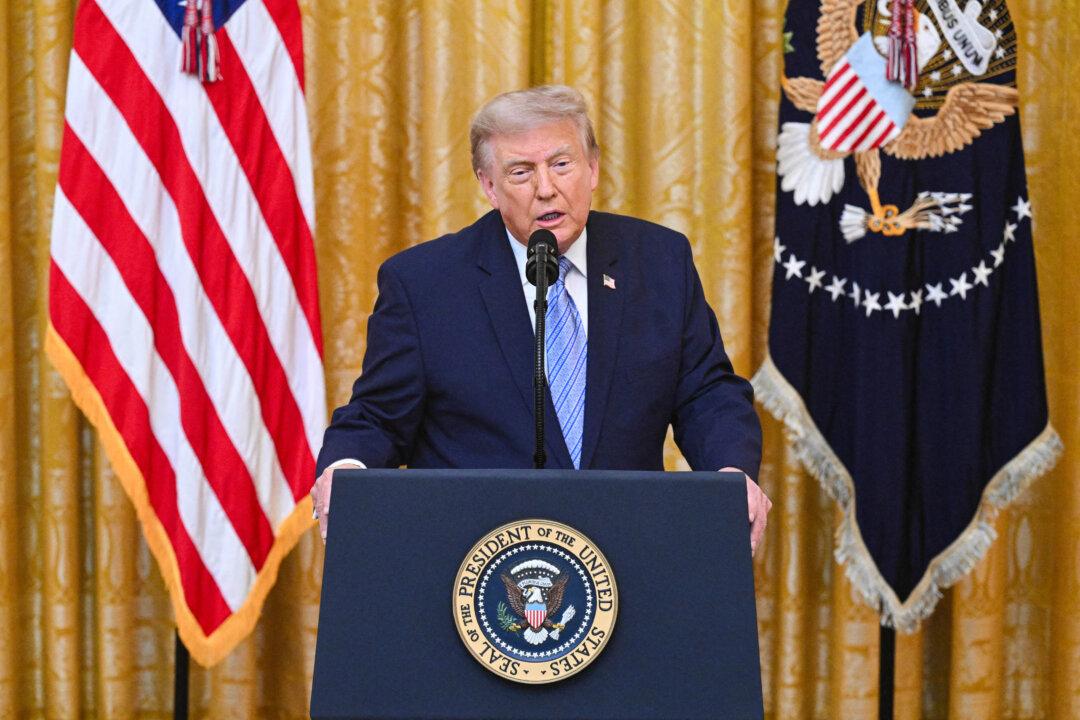
In truth, we are unused to seeing how real science works. President Donald Trump had issued an executive order designed to deploy gold-standard science in his administration. That is exactly what he has done. With Jay Bhattacharya running the National Institutes of Health, Marty Makary heading the Food and Drug Administration, and Kennedy overseeing the whole at the Health and Human Services Department, we are finding our way back.
It is often said that we live in the age of science. But what does that mean? It cannot mean rule by experts selected by government and industry. It has to mean debate, evidence, and doubt pending proof. It is a process, not a conclusion. We are now seeing that unfold in real time. This is not chaos. It is a blessed relief.
So much needs to be fixed about the system as it stands. The process has just begun. We can expect much in the way of protests, screams, and objections. And that is just fine. We are going to win this with the evidence, not with doctrine. That’s exactly what this new committee is showing us. If it is shocking, this is only because it has been so long since we have been exposed to the scientific process.