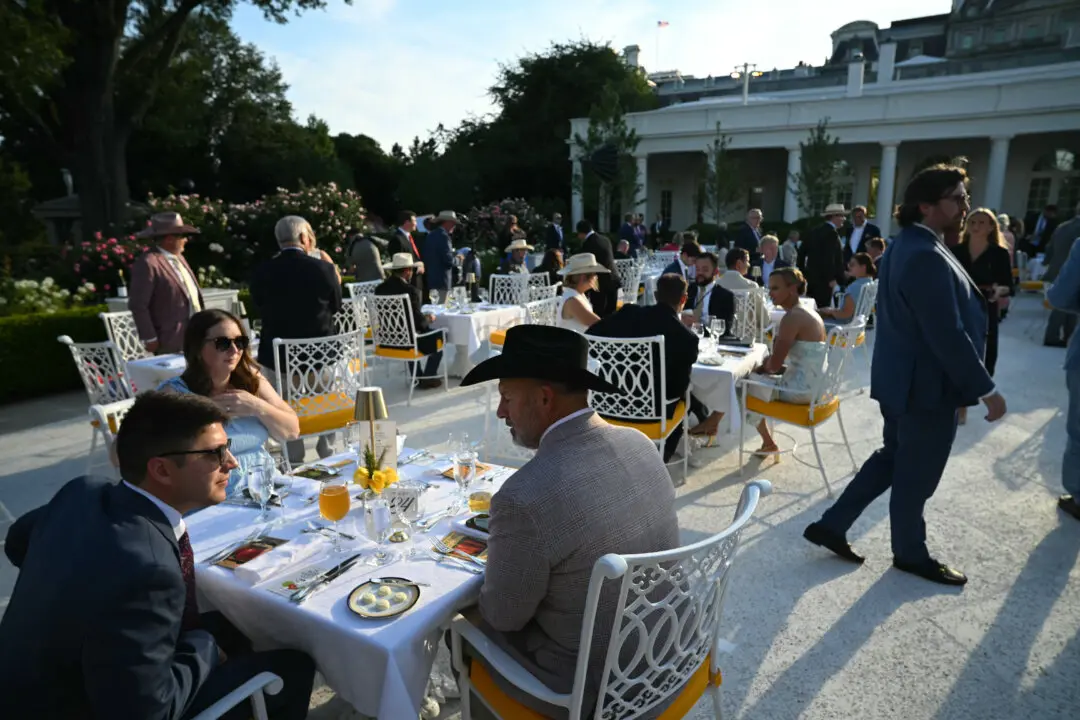
Every year, we host a gathering on our ranch called Confluence. It started long before Texas, back when we were still in California. In those days, it was called Sowing Sovereignty. It was born in a moment of resistance, during lockdowns and mandates, when people were looking for a place to gather, to think freely, and to remember what it meant to be human together.
Before anything else, I feel deep gratitude for my partners in this event. We have walked through multiple years together, with highs and lows, moments of clarity and moments of doubt. Alec Zeck of The Way Forward podcast, along with Mike and Lindsey Holshue of the event company Assemble, have continued to show up and build alongside me. All of us have wavered at times, but our willingness to keep building together has always carried us forward.
What began as a one-day event on a small farm has grown into something much bigger. This year, we are preparing to welcome 1,100 people onto our land, a number that still stretches my understanding of what is possible. It challenges me to rethink how many people we can feed, how many we can serve, and how much can be built in a matter of days when a community comes together with intention.
Hosting this event is one of the greatest joys of my life. Families gather, children run freely across the land, and conversations unfold across a wide range of topics. We hear from speakers like Catherine Austin Fitts, Charles Eisenstein, Dr. Eileen McKusick, and Zeck, exploring everything from law to health to agriculture to the unseen forces that shape our world. Children practice blindfolded vision and learn where their food comes from, while adults engage in meaningful conversations about systems, responsibility, and the future we are trying to build.
It is a living expression of what many people say they want.
But each year, I become more aware of something that is harder to see from the outside. Very few people truly understand what it takes to build something like this in the physical world.
Two weeks before the event, the requests continue to come in: Can you provide a community kitchen? Can there be AV at the community tent? Can we add another stage, expand the offerings, improve the experience, or shorten the coffee lines?
In the digital world, these requests feel simple. Features can be added quickly, businesses can be launched from a laptop, and entire systems can be built without ever touching the product being sold. The modern economy allows people to create value without engaging with the physical reality of production.
But on a ranch, every addition carries weight.
A new stage requires materials, labor, planning, and time. Coffee requires sourcing, preparation, equipment, and people to serve it. Every popsicle that will be sold during the weekend has already passed through our hands, made in batches over weeks, stored, organized, and prepared for that moment of exchange. The same is true for the bread, the medicinals, the hygiene products in our store, and the meals we will serve.
None of it appears instantly. It is the result of long days, often stretching to 12 hours or more, repeated over and over in the lead-up to the event. It depends on people who show up consistently, refine their work, and carry responsibility across time. This kind of effort cannot be automated or outsourced. It requires presence, coordination, and endurance.
Even within a community that values freedom and self-sufficiency, I see a growing disconnect between the ideas we hold and the work required to bring them into reality.
This disconnect is not limited to this community or this event. It reflects a broader pattern unfolding across the world. We are living in a time of abundant ideas and diminishing capacity to execute them. The idea is the spark, but a spark without kindling, without wood, and without someone tending it never becomes a fire. If we want our ideas to take hold, to burn brightly, and to reshape the future, we need more people willing to do the work that sustains them.
We are not lacking in vision. People talk constantly about building a better world, living on land, growing food, raising families differently, and creating stronger, more connected communities. But when you look more closely, far fewer people are actually engaged in the daily work required to make those ideas real.
There are those who generate ideas, and there are those who build. Some people can do both, but increasingly we are living in a culture that rewards vision while overlooking execution. The result is a widening gap between what we imagine and what we are capable of sustaining.
Concepts like decentralization and sovereignty are often discussed as ideals, but they rest on very real foundations. They require land, systems, skills, resources, and people who are willing to commit to the process over time. A functioning farm, a resilient community, or a local food system does not appear overnight. It is built through effort, repetition, and responsibility.
At Confluence, I see both the desire and the opportunity. People arrive and recognize something they have been missing. They say this is the life they want, the kind of community they have been imagining.
My response is always the same: Stop dreaming and start doing.
The future so many of us talk about will not come from ideas alone. It will come from people who are willing to take responsibility for building, to learn the necessary skills, and to remain committed even when the work is demanding or repetitive. Real change happens through steady effort, through physical action, and through a willingness to engage with the world as it is while shaping what it can become.
If we truly want a different future, we have to be willing to build it.