The United States is in a global fight against Islamic extremism, illegal drugs, and their deadly nexus.
Al-Qaeda and the Islamic State of Iraq and Syria (ISIS) are reemerging in Africa after losing many of their safe havens in Syria and Iraq. Their growth is fueled by narcotics trafficking, including cocaine through Venezuela and by Russian-backed Libyans. Hezbollah, supported by Iran, also has links to South American drug cartels.
Today, almost 80 percent of the Islamic State’s narcotics and terror operations take place in Africa. They are joined by numerous al-Qaeda militants. Al-Qaeda controls territory across the African Sahel, from the West African coast to the Red Sea. This is the semi-arid part of Africa that divides the Saharan deserts of the north from the savannah of central Africa. From the Sahel, the jihadists seek to establish a caliphate that would eventually impose Islamic law globally. It’s a pipe dream of the worst kind, and one that has been deadly to democracy and human rights for half a century.
From Venezuela, at least one drug flight a week travels to West Africa, enabled by corrupt air traffic controllers. Last year, for example, two private jets took off from Venezuela and landed in Guinea-Bissau in West Africa. One of the jets was seized by authorities there. It had 2.6 tons of cocaine onboard. The flight was headed for Mali, where its onward sale to Europe funds al-Qaeda. The other jet landed in Burkina Faso. Both Guinea-Bissau and Burkina Faso are plagued by narco-terrorists.
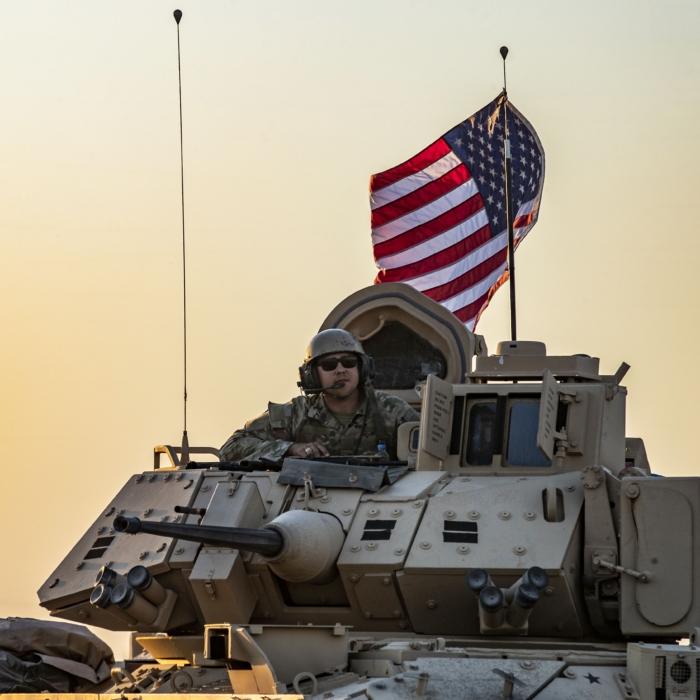
Between Oct. 1 and Nov. 6, U.S. Central Command (CENTCOM) conducted more than 22 operations against ISIS in Syria. There are 8,400 Islamic State militants in prisons across that country. The prisoners hail from 70 countries. Another approximately 30,000 Islamic State supporters, wives, and children are imprisoned along with their militant husbands and fathers. ISIS is trying to infiltrate these prisons and break its militants out, which significantly adds to the global threat. Adm. Brad Cooper, who leads CENTCOM, calls the Syrian detainee camps “incubators for radicalization.”
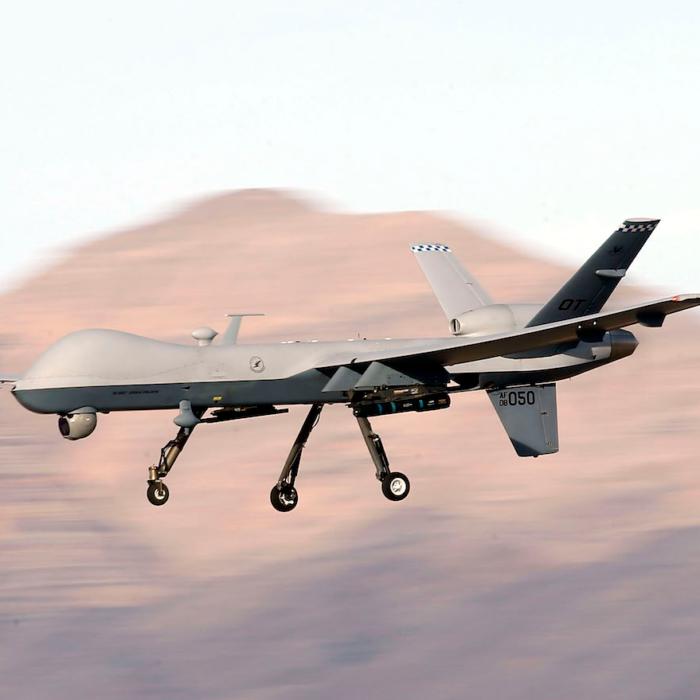
This year, the U.S. military has conducted more than 100 airstrikes in Somalia against ISIS and al-Qaeda (including its affiliate al-Shabab). That’s a tenfold increase over last year. In the latest U.S. strike on Nov. 25, U.S. Africa Command hit ISIS in Somalia. The strike was coordinated with the local government. MQ-9 Reaper drones hit first, with a follow-up involving 10 helicopters. Nevertheless, the United States is not keeping up because of political fragmentation in the country.

In Mali, an al-Qaeda affiliate called JNIM has surrounded the capital city, has blockaded fuel imports, and is close to toppling the government. Two more African countries, Niger and Burkina Faso, are also under threat of being overthrown by JNIM. The Islamic State-West Africa Province group is also active in the region. If Mali falls to the narco-terrorists, countries across the Sahel could follow.
In Mozambique, the local ISIS affiliate focuses its attacks on the northern region of Cabo Delgado, which is rich in liquified natural gas (LNG). Western energy companies, such as the United States’ ExxonMobil and France’s TotalEnergies, seek to develop LNG fields there. In March, the United States loaned $4.7 billion to develop an LNG plant, which seems impossible given the violence. They are stymied by the political instability, including attacks on their facilities.
If ISIS can gain control of LNG exports from this area, even through extortion for a percentage of the profits, it could use the proceeds to launch an attack on the capital city and fund foreign jihadists. Already in 2025, ISIS conducted 234 attacks, killing more than 374 people in the Cabo Delgado region. Dozens of Christian men have been beheaded, and almost 100,000 residents have fled in response.
An ISIS branch in Afghanistan called ISIS-Khorasan (ISIS-K) is also highly active. Illustrating the geopolitical complexity of the new war on terror, ISIS-K hit targets in Iran and Russia recently and is being hunted by the Taliban, who are arguably themselves terrorists despite their control of Kabul, Afghanistan’s capital city.
Also illustrating the shifting nature of contemporary terrorism, Syria’s leader, Ahmed al-Sharaa—who was formerly associated with al-Qaeda and attempted to unite the group with ISIS—met with President Donald Trump last month. A year ago, al-Sharaa’s terrorist group toppled the Syrian dictator, who was allied with Russia and Iran. Now, he appears to be a partner of Saudi Arabia and Qatar. He is the first Syrian president ever to visit the White House and join the anti-ISIS coalition.
Some terrorists, like the Taliban, have fallen in with China and Russia, while others, like al-Sharaa, appear to have turned against their old terrorist associations. What happens behind the scenes, for example, through U.S. intelligence agencies, cannot be known. But, as with dictators, it is hard to hold the moral high ground when negotiating with terrorists. The proof is in the pudding. This nexus of terrorism and deadly drug trafficking must be stopped.