Most of us these days have rarely been on a farm. That’s odd. Agronomy was a foundational practice at America’s founding. It shaped the values of independence, frugality, respect for nature, hands-on work, family, and community that made this country great. Those spirits of the American character lasted from the colonial period through the end of the 19th century, when heavy industry took over and agriculture receded.
Even so, the small farm as the basis of America’s food supply and also the character of the nation lasted all the way to near the end of the 20th century. At some point, especially after the early 1970s, large cartels of producers stepped in. Chemical fertilizers and large-scale industrial methods took over in part because of government regulations and subsidies. Today, the small farm is in major danger of extinction.
As much as possible, the farm rejects industrial feed products, chemical pesticides and fertilizers, and shots of all kinds. The animals feed from grass and enjoy lives of respect and dignity for what they are. You won’t see the industrial-prison-style conditions that are common now in factory-food institutions, the ones that offend our sensibilities and have given rise to veganism born of moral revulsion.
Visiting this farm is a once-in-a-lifetime experience. On a tour, we stopped to see the pigs. These were pigs such as I had never seen before. The prior week, I had seen pigs at a county fair. They seemed barely alive, utterly immobile, fattened up beyond belief. Joel’s pigs were long, strong, and full of energy, alert and aware, quick and even joyful. I fed them acorns that had fallen from trees and they had hilarious engagements with each other, muscling one another out of the way to get the acorns. It was a tremendous delight.

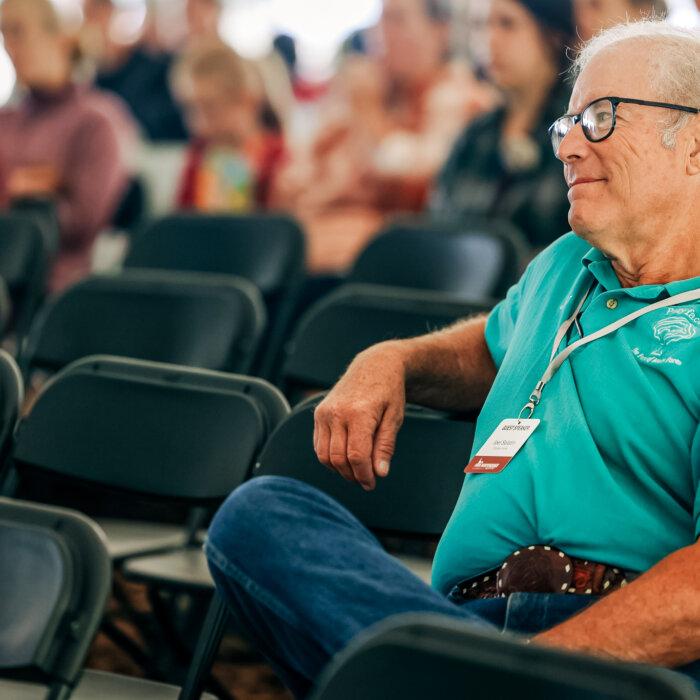
Joel’s methods of farming trace back to a century ago—his bookshelf is full of old books on agricultural practices—long before everything changed. That’s why the meat from this farm is in such high demand, particularly from those who are health conscious and sick of factory methods and chemically poisoned animals. You can taste the huge difference. The chicken and sausage we ate for breakfast and lunch were simply spectacular.
Joel is a huge innovator and an idealist. He has inspired many to follow in his path. However, in his talk he frankly addressed the major legal barriers in place that have made life very hard for farmers who want to survive. The farmer now earns only 8 percent of the retail dollars of the food budget, down from more than half a century ago. The other 92 percent goes to processors, transport, middlemen, additives, and distant retailers.
The farmer is simply not allowed to own the structure of production from farm to table. It is not allowed by federal law. These restrictions have proven devastating.
Please take note of Salatin’s rendering of this history. It immediately struck me as correct, and the version surprised me because I’ve been reading this history for decades. His spin is different from anything I had ever heard before. It makes sense of all the facts I know and puts the entire change in federal law in a different light.
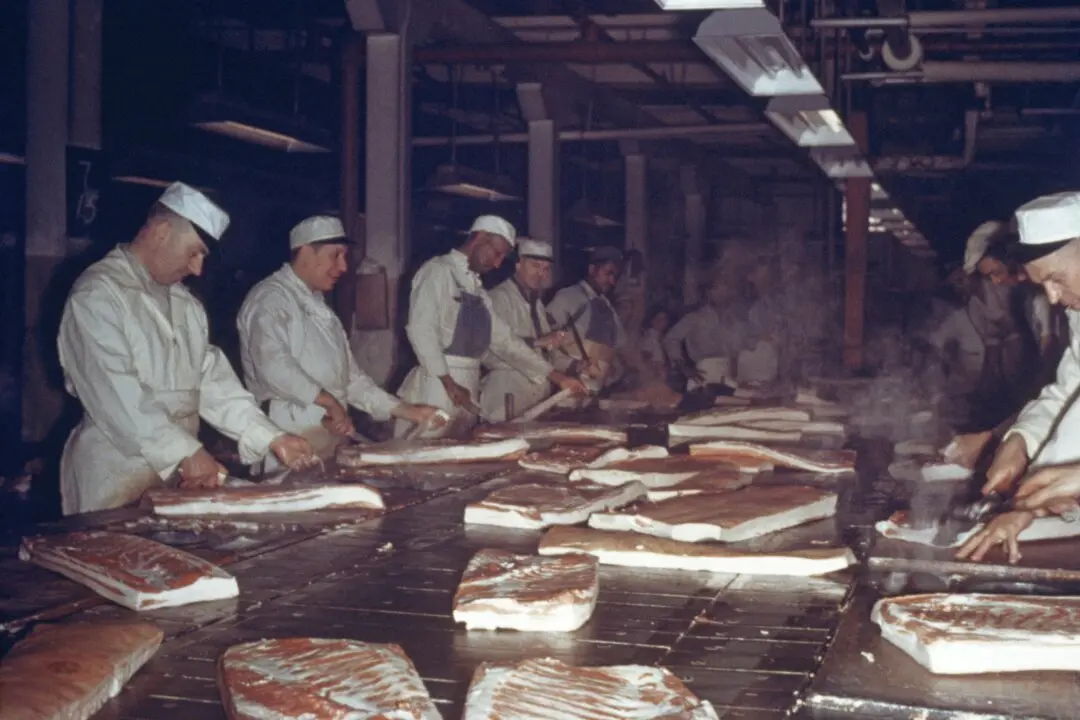
In his telling, Sinclair’s book was a good one, fiction but not wrong. It exposed brutal and unsanitary practices from this new industry. It was not some tract; it was a genuine expose, and it shocked the American reader. After the book appeared, sales from meat processors crashed by half. Rather than clean up its act and win back public confidence, the industry panicked and went to Washington for help to save it.
The president was Theodore Roosevelt. He proposed a solution. The federal government would weigh in to bolster public confidence. It would create a new bureaucracy to guarantee the safety of food. That would bring consumers back to the industry. The predecessor to the FDA was born. The food did not get safer but actually worse with federal inspectors. They used methods that actually spread disease.
But with this new stamp of approval that the food was safe, normal market signaling systems were disabled. Trust returned precisely when it should not have. The farmers were much better at processing meat than the factory processors, but now new federal regulations made on-site processing illegal and drove it all to industry, thus codifying unsafe methods, subsidizing industry, and harming farmers.
On-site processing of meat is still illegal. You cannot get it done outside USDA facilities, and those are often far away, expensive, wasteful, and pointless. The farmer has to haul all the animals there, creating a big leap between the raising of meat and its preparation for sale. Even then, the sales from the farm are itself a problem due to a huge range of restrictions including zoning.
In an ideal world, you could go to a farmer who raises the animals from farm to table and also has a gorgeous restaurant and retail store to sell it all, fully prepared. Please understand: This is impossible today. And this is precisely why the farmer is being wrecked. The last of the family farms are being sold to large-scale industrial producers. Meanwhile the quality of our food is falling dramatically and the health of Americans is failing, too.
For those of you who have some familiarity with this history, does that version of events not shock you? It really shocked me.
It makes me realize something extremely important. The usual ideological lenses through which we understand the world (not just farming) are flat-out wrong. The left thinks that the government is going to save us from industry and market forces. The right thinks that the government is the enemy of industry. In reality, the government is the best friend that big business has.
This is why the agencies are captured. They were created in cooperation with dominant players to be a tool of large industrial players.
Fleshing that out requires more time and space. What matters here and now is the urgency of change to save our farmers, save the values of agronomy, save the community, and bring healthy food to the people. Joel Salatin has the answers, which is why he is pleading for a 30-minute meeting with Trump about all these subjects. He is not looking for favors. He is only looking for freedom.
He wants to issue a food emancipation proclamation. It might start as follows:
“The bounty of the earth, sown and reaped by the hands of farmers, is the birthright of every soul, nourishing body and spirit alike. Oppressive government regulations have shackled the sacred bond between those who till the soil and those who partake of its harvest, barring farmers from freely offering their goods directly to their communities. These are woven into the fabric of a system that elevates corporate conglomerates over people, stifles the vitality of small farms, and severs the ties between neighbors and their sustenance. The liberation of our food system demands a bold reckoning with these injustices, restoring the right of farmers to share their harvest and of communities to savor the fruits of their land.”
This food emancipation proclamation is a call to unshackle our food system from the grip of overreaching regulations and to restore the farmer’s right to sell and the people’s right to eat.
Let us sow a future where fields flourish, tables brim with bounty, and the bonds of community are nourished by the fruits of freedom. Together, we proclaim a new era of food emancipation, where the harvest belongs to the growers, caretakers, and people, not the government and its cartels.