Imagine, in China today, a group of people who are arrested, detained, and even imprisoned for nothing more than holding to their beliefs and speaking a few words of truth.
They are practitioners of Falun Gong, a spiritual discipline that combines slow-moving meditation exercises with a moral teaching built on three principles: truthfulness, compassion, and tolerance.
Introduced in China in 1992, it drew tens of millions of followers within a few years. Then, in 1999, the Chinese Communist Party (CCP) banned it and set out to stamp it out. That campaign is still going on.
The picture that follows emerges from a set of 180 real legal documents: court verdicts and orders for “reeducation through labor,” a form of detention that let Chinese police imprison people for years without trial before it was formally abolished in 2013.

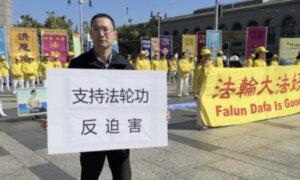
Behind the Numbers, One Living Person at a Time
Start with a handful of figures. Drawing only on what has been made public through Minghui, one can see that in the five years from 2021 through 2025, the number of Falun Gong adherents sentenced by Chinese courts was, respectively, 1,184, 633, 1,188, 764, and 751, spread across every province in the country.
Even that, in all likelihood, is only a fraction of the true total. The persecution is by design a hidden one, and China’s pervasive internet censorship means only a limited amount of information ever reaches the outside world.
Who are these people who have been seized and sentenced?
Among them are ordinary citizens, as well as government officials, university professors, senior engineers, auditors, doctors, television editors, retired military officers, bank presidents, police officers, and factory managers—professionals from nearly every walk of life.
To grasp the scale, look back to before the ban. By the Chinese regime’s own official estimate at the time, at least 70 million were practicing Falun Gong by 1999, a number that, by several accounts, had grown larger than the membership of the Communist Party itself.
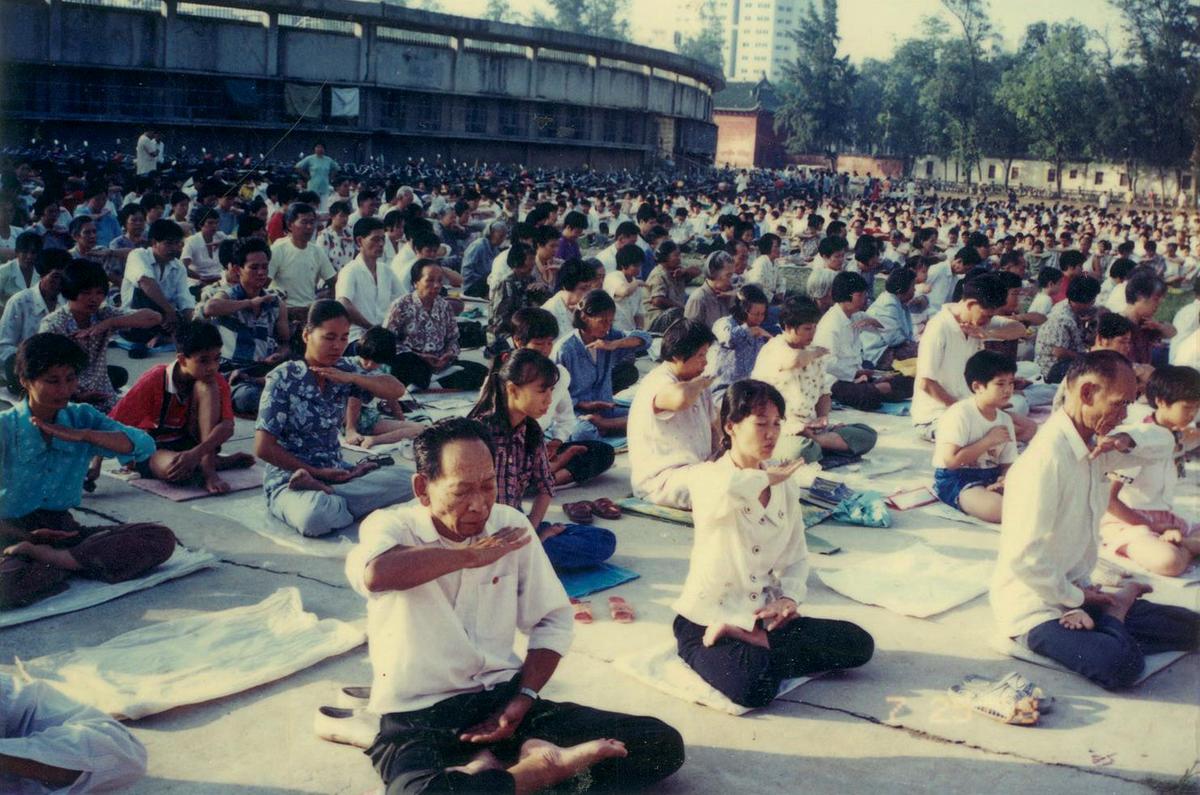
A Net Cast Over an Entire Country
It was that very comparison, observers of the period say, that alarmed then-CCP leader Jiang Zemin. Framing the practice as a threat to the Party’s monopoly on power, he ordered the full weight of the state turned against it in July 1999, a campaign human rights groups have documented ever since, including reports of torture, forced labor, and deaths in custody.
What kind of net does a Falun Gong adherent face each day?
Consider the sheer size of China’s security state. The country has roughly 54,000 local police stations and, by various outside estimates, somewhere between 1.8 million and 2 million officers on the books; counting auxiliary police, the total force may run as high as 4 million to 6 million.
Going one level deeper: nationwide there are 124,308 residents’ (neighborhood) committees, with 664,232 members, and 484,558 villagers’ committees, with 1,984,330 members. These grassroots bodies, reaching into every city block and rural village, have all been drawn to varying degrees into the chain that carries out the persecution.
More chilling still, the authorities encourage ordinary people to inform on one another. For many who were arrested and sentenced, the trail began with a single tip-off phone call from a neighbor or acquaintance. Under such a system, any citizen can be turned into an informant watching the person next door.
What ‘Crime,’ Exactly, Did They Commit?
In the face of the persecution, Falun Gong practitioners scattered across every corner of China, from the countryside to the cities, across professions and generations, launched a peaceful effort they call “clarifying the truth”: simply telling other Chinese what the practice is and what has been done to it.
They also promote what is known as the “three withdrawals,” or tuidang, a grassroots movement begun after The Epoch Times published its editorial series, “Nine Commentaries on the Communist Party” in 2004, that encourages Chinese people to publicly renounce their past membership in the Party and its two youth organizations, the Communist Youth League and the Young Pioneers.
Nearly every Chinese student joins the Young Pioneers as a child, so for most people the gesture is symbolic, a quiet declaration of conscience.
So which of these acts, exactly, did Chinese courts treat as “crimes” in the 180 documents examined here? The list includes:
1. Petitioning at Tiananmen Square in Beijing.
2. Mentioning Falun Gong, or criticizing the Communist Party, in a face-to-face conversation.
3. Making or printing informational leaflets at home.
4. Installing a satellite receiver for New Tang Dynasty Television, or tuning in to Sound of Hope radio—both U.S.-based, Chinese-language outlets founded by Falun Gong practitioners and beyond Beijing’s control.
5. Taking part in a broadcast interception—most famously the March 2002 incident in Changchun, when practitioners overrode the city’s state-run cable channels for about 50 minutes to air a program challenging the regime’s account of Falun Gong. Participants were sentenced to up to 20 years; the episode is the subject of the acclaimed animated documentary “Eternal Spring.”
6. Copying discs, including of Shen Yun, the New York-based classical Chinese dance company that tours theaters across the United States each year.
7. Hanging banners or handing out protective amulets.
8. Loading materials such as the “Nine Commentaries” onto a USB drive.
9. Spreading information by social media, text message, or phone.
10. Printing short truth-telling phrases on banknotes—a common workaround in a censored society, since cash circulates freely.
11. Providing photographs and articles to The Epoch Times. Beijing painter Xu Na, for one, was sentenced to eight years for supplying street photographs to The Epoch Times during the early days of the COVID-19 pandemic.
12. Using tools to bypass China’s “Great Firewall” to read Minghui, The Epoch Times, or New Tang Dynasty.
13. Writing or posting the phrase “Falun Dafa is good” in a public place.
14. Gathering in small numbers to read, talk, or share a meal.
15. Writing letters of appeal or of goodwill, and mailing them.
And beyond even that: simply keeping paper, a printer, blank discs, a phone, or a computer at home could be entered into evidence as preparation for a “crime.”
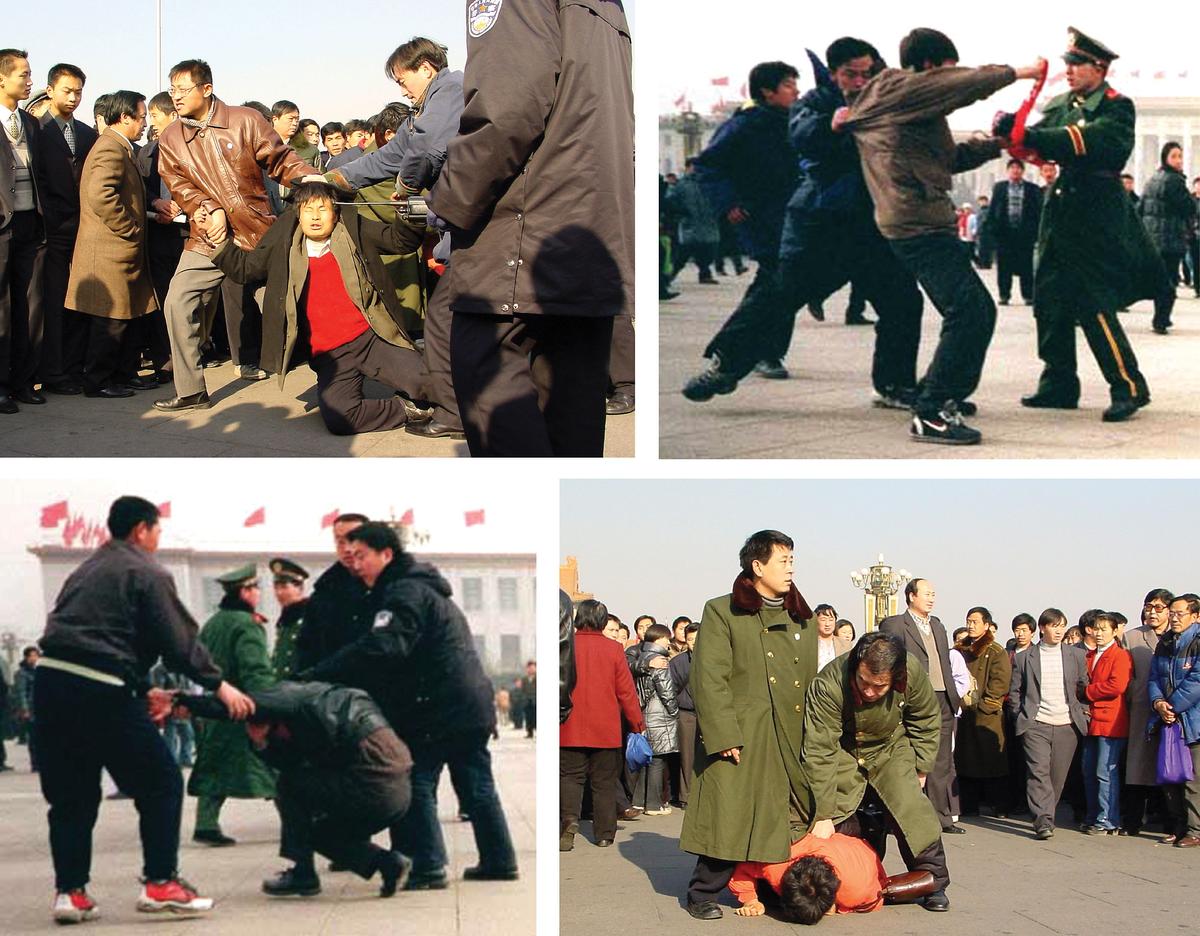
They Are the True Brave Ones
Reading through such a list, an American may be brought up short. Because nearly every item on it—speaking your mind, writing a letter, forwarding an article, sharing a meal with a friend, petitioning a government office, explaining your faith—describes the ordinary exercise of rights that the First Amendment takes for granted. In China, each carried the risk of prison.
Yet it is precisely these ordinary acts that reveal an extraordinary persistence: that of people willing to risk losing everything for the sake of conscience. Most of them are unknown and unremarkable. But they are the truly brave ones.
Under enormous pressure, these ordinary Chinese who believe in truthfulness, compassion, and tolerance would rather lose everything than surrender their faith or stop telling the truth to others.
When this chapter of history has at last been closed, they argue, every Chinese who made that quiet break with the CCP will have reason to thank the Falun Gong practitioners who paid the price to make it possible.