They each looked different on the surface: a school shooting, a refugee’s stabbing, a teenager’s private despair, a political leader felled in public view. But each of these tragedies shared a disturbing core. They weren’t just acts of violence. They were performances.
They were performances not in the sense of being faked, but in the sense of being staged for an audience. They were violence crafted for visibility, arranged for our attention via a broadcast system that rewards extreme behavior, hatred, fear, and fury.
- At Annunciation Catholic Church in Minneapolis, bullets tore through stained glass during a back-to-school Mass attended by children. An 8-year-old and a 10-year-old were killed. The shooter left behind writings about wanting infamy and attention.
- On a Charlotte, North Carolina, light-rail train, Iryna Zarutska, a young Ukrainian refugee, sat wearing headphones on her way home from work when she was suddenly, unexpectedly, fatally stabbed. Afterward, her killer walked down the aisle proclaiming repeatedly to the passengers, “I got that white girl.”
- Sixteen-year-old Adam Raine was urged and instructed by an artificial intelligence chatbot to end his life so that he would be “seen,” despite the boy telling the chatbot that he hoped that someone would find out and foil his plan so that he would live.
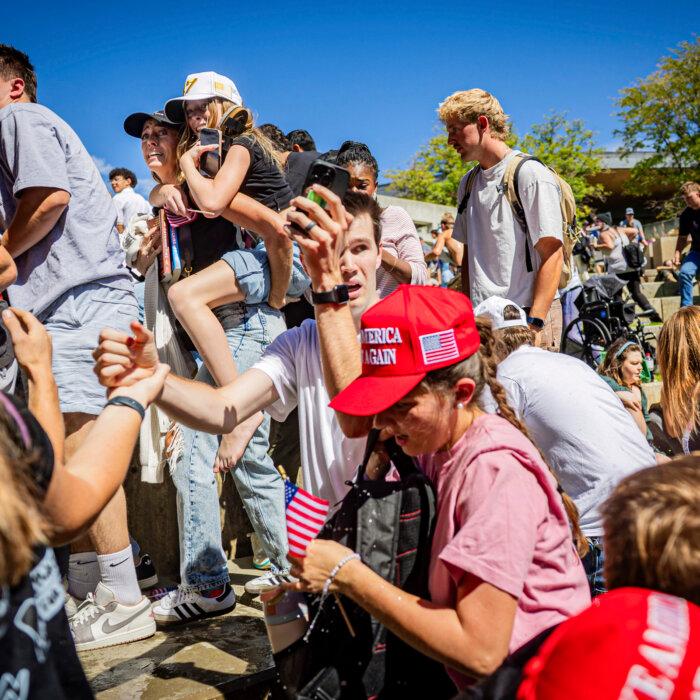
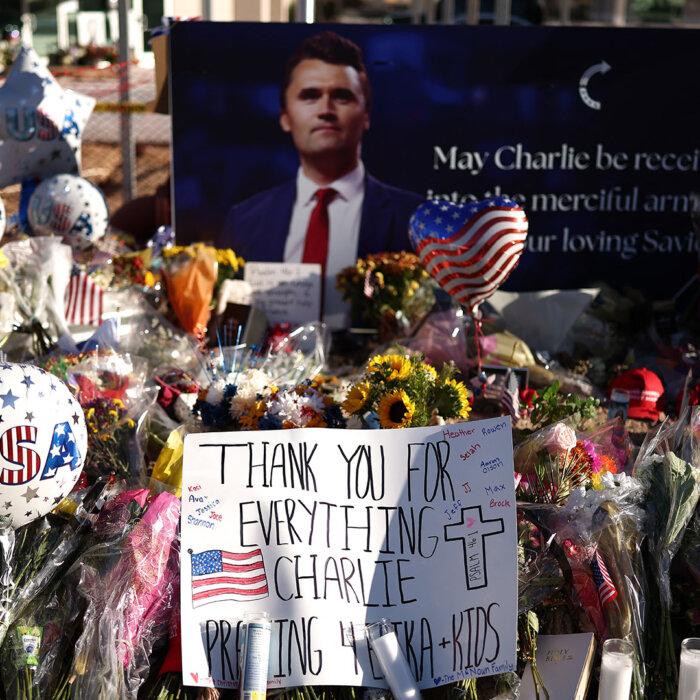
- And then Charlie Kirk, speaking before hundreds of phones held aloft, was shot dead on stage. His assassin did not hide. He chose a venue in which the images would spread like wildfire across the globe and fill Americans’ hearts with rage.
The motives, too, mirrored the logic of the systems we live in. The school shooter sought recognition, the same reward that social media algorithms offer. The chatbot whispered secrecy and control, promising intimacy but without accountability, the formula that keeps billions of people scrolling. Zarutska’s killer turned her death into a racial proclamation, echoing the identity politics that millions of feeds thrive on. And Kirk’s assassin staged his act as political theater, mirroring the endless cycle of outrage and polarization.
These were not random impulses. They aligned almost perfectly with the incentives that our digital culture prizes: recognition, secrecy, identity, spectacle. The system has trained its users on what matters for the system and its algorithms, and even killers have learned the cues.
Behind the curtains of hardware and code stand the architects—engineers, executives, media managers—who have built an environment in which extremes are amplified and nuance is drowned. Strategic product development and features such as infinite scroll, algorithmic feeds, and outrage as engagement were all designed with purpose. The people who crafted them are not naive. They have learned from decades of detailed data from casinos, slot machines, and other addictive psychology. They know what kind of behavior their systems reward. And those rewards now spill from screens into streets.
The media amplifies the script. News cycles elevate spectacle above humanity. The refugee’s murderer is described as a victim of illness. The chatbot’s role is called a “tragic error” rather than complicity. Kirk’s assassination is dissected as political fallout instead of recognized as the silencing of words by a coward’s bullet. In every case, the framing contributes to the performance and the spectacle grows, fueling social media feeds full of rage and engagement.
And yet here lies the starkest contrast. Kirk, too, was a performer, but of a different kind. He could have stayed in the safe arena of digital visibility, trading posts and clips, feeding algorithms. He and his team did post, of course, but he chose the harder work: traveling campus to campus, facing antagonistic audiences directly, taking questions from those who opposed him, and debating them with intellectual and moral honesty.
That kind of performance requires effort, courage, and presence. It is resource-intensive, uncomfortable, and real. He received constant insults, endless criticism, and even death threats. He knew the risks, and he still turned up. He sharpened his craft, listening as much as he argued, growing better because he dared to be challenged. His performance was not destruction, but dialogue. And that is why, even in death, he wins. He didn’t hide behind a feed or a phone. And he always chose the peaceful performance, the human performance of listening, engaging, and conversing.
What do we do in the face of the spectacle brutally thrust upon us all?
The temptation is always to reach for the simplest answers: more laws, more surveillance, more “guardrails” designed by the same organizations that profit from performative outrage. But if the problem is that human life has been reduced to stagecraft, then the solution must be to restore human value.
In this digital age of algorithms, performative violence now comes with a spotlight. It seeks an audience, and the systems guarantee one. But Kirk showed another way. His performance was not for spectacle, but for calm, clear persuasion, the honest kind that affirms life instead of reducing it.
- Refuse the Bait. Resist amplifying spectacle with clicks and shares. Choose and share stories that preserve dignity and respect humanity.
- Recover the Power of Words. Follow Kirk’s example. Argue. Debate. Challenge ideas. Grow skill in speech wherever you may be. You don’t have to be as practiced and articulate as Kirk to use words as weapons for truth, not rage.
- Rebuild Presence. Choose families over feeds, neighbors over narratives. Speak to one another face-to-face. Pray in ways that guide genuine action, not merely as hashtags for display or camaraderie for convenience. Let compassion and faith be louder than spectacle.