This copy is for your personal, non-commercial use only. Distribution and use of this material are governed by our Subscriber Agreement and by copyright law. For non-personal use or to order multiple copies, please contact The Epoch Times Reprints.
The term “decarbonized oil” is popping up more and more in discussions of Canada’s energy politics. The concept refers to capturing and storing carbon dioxide (CO₂) generated during oil production and processing, thereby reducing greenhouse gas emissions, in order to support the continued strength of the oil and natural gas sector, Canada’s number one export earner and crucial to the economies of Alberta and Saskatchewan.
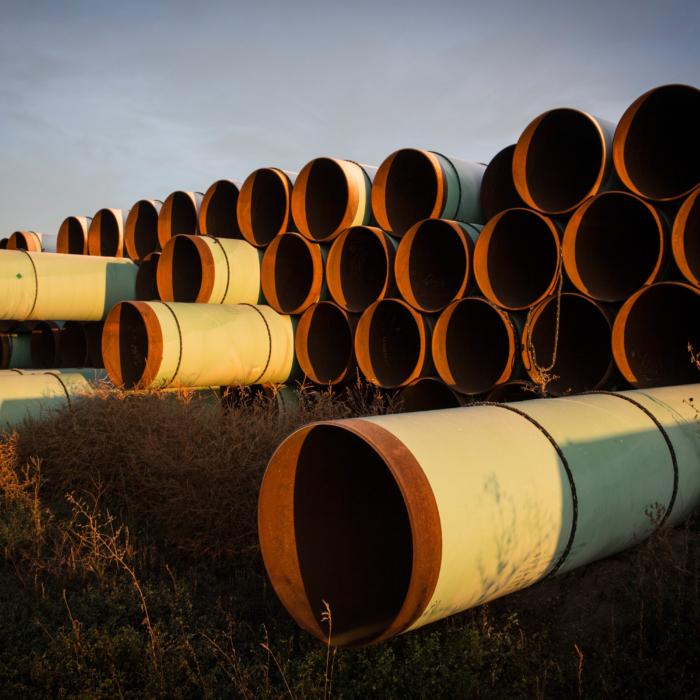
The key question now is whether this type of process can be dramatically scaled up—by anywhere from six to over 20 times—to facilitate what Alberta Premier Danielle Smith has termed a “grand bargain”: using carbon capture and storage (CCS) to gain a green light from the federal government for a new oil export line to the West Coast, enabling Alberta to continue growing oil production and generating jobs while advancing Ottawa’s climate goals. Prime Minister Mark Carney may be prone to hedging and ambiguity, but he has now made it clear that any such pipeline will indeed be contingent on Alberta proving it can “decarbonize” its oil production.
The Pathways Alliance, a group of six producers representing 95 percent of Canada’s oilsands production, has designed a $16.5 billion CCS network to capture and store CO₂ from up to 20 facilities, aiming for 11 million tonnes per year in Phase 1 and a breathtaking 40 million tonnes in Phase 2. Pathways is intended to help build consensus in favour of a new oil export pipeline that could enable up to 25 percent growth in Alberta’s oil production—generating possibly $20 billion per year in export revenues.
While credible critics, including the Institute for Energy Economics and Financial Analysis and energy economist Jennifer Considine, highlight the high costs, uncertain revenues, and poor returns from several other attempts at large-scale CCS, Alberta’s UCP government appears to view it as the way out of its current impasse with Ottawa. It believes the profits generated from exports of Alberta’s decarbonized oil could themselves help finance the CCS facilities required for the “grand bargain” to be sealed.
Smith has been keeping up the political pressure, recently announcing that Alberta will fund and lead the effort to submit a formal pipeline application to the Carney government’s new Major Projects Office. Major obstacles remain, but none is more serious than Carney maintaining predecessor Justin Trudeau’s suite of anti-energy policies, particularly the draft oil and natural gas emissions cap, as part of his government’s intention to meet net-zero targets by 2050 (although Carney has recently indicated some flexibility in this view). Smith argues that this is effectively an “unconstitutional” production cap that threatens Alberta’s economic future, and has vowed to challenge it legally if Carney doesn’t shelve it.
Smith’s government at the same time is pursuing a more conciliatory tactic, offering to help advance federal climate objectives through CCS in order to speed up pipeline approvals under Carney’s Bill C-5. In this track, there is a question as to whether Alberta may be walking into an economic and technological trap that it will regret.
That is because the “grand bargain” would create two different classes of oil in Canada, operating under different sets of regulations and resulting in different cost structures. Western Canada’s crude oil producers would shoulder costly and technically challenging decarbonization requirements—plus the threat of federal veto over any new oil projects that weren’t similarly “decarbonized.” Canadian-produced oil would enter international export markets at a significant, if not ruinous, competitive disadvantage, risking not only profitability but market share. Eastern Canada’s oil refiners, meanwhile, would remain free to import fully “carbonized” oil at the lowest prices they could get from countries with significantly looser environmental standards.
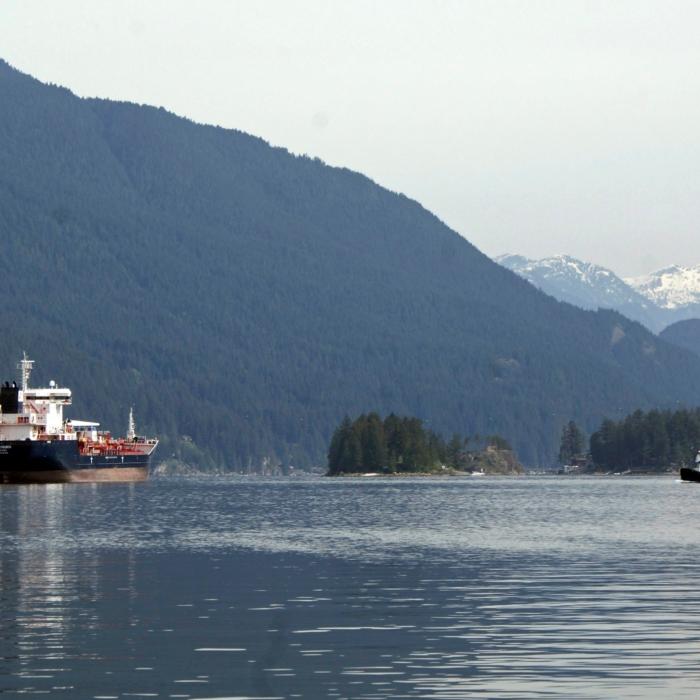
The Alberta oilsands currently generate 58 percent of Canada’s total oil output. Data from December 2023 shows Alberta producing a record 4.53 million barrels per day as major oil export pipelines, including Trans Mountain, Keystone, and the Enbridge Mainline, operated at near capacity. The same year, Eastern Canada imported on average about 490,000 barrels per day by pipeline and sea from the United States (72.4 percent), Nigeria (12.9 percent), and Saudi Arabia (10.7 percent). Since 1988, imports by marine terminals along the St. Lawrence River have exceeded $228 billion, while imports by New Brunswick’s Irving Oil Ltd. refinery totalled $136 billion from 1988 to 2020.
The economic viability of large-scale CCS projects remains completely unproven; indeed, attempts to date in other jurisdictions have performed poorly. Attempting to “decarbonize” Alberta’s oil, then, makes little economic sense. It appears to be based more on the Carney government’s ideological objectives set to achieve global climate objectives.
The question thus becomes why Alberta is agreeing to a policy that could trap its taxpayers in a hugely expensive and unfair system that could imperil consideration of any new pipelines for Canadian oil exports, especially when private capital already largely remains on the sidelines.
Not only Albertans but Canadians generally need to carefully reconsider any “grand bargain” that hinges on “decarbonization” of Western Canadian oil, because doing so threatens the economic viability of Alberta oil production and associated export pipelines—without meaningfully reducing global CO₂ emissions. And if industry proves unable to raise the vast capital required to construct the CCS projects, while lacking the cash flow to cover the steep ongoing costs needed to operate them, then where is the money to come from? At a time when Canada’s fiscal trajectory is so worrisome, the shortfall had better not be made up through public subsidies.
Even worse than the yawning fiscal risks, such an approach risks splitting the country into two economic zones: a West burdened by costly decarbonization requirements, making Alberta’s oil some of the world’s least profitable to produce, and an East benefiting as before from cheaper imported oil. This is hardly conducive to national unity. It is time for Alberta to reconsider the “grand bargain.”
Ron Wallace is a former member of the National Energy Board.
Ron Wallace is an expert in regulatory policies associated with environmental assessment and monitoring. He has served on numerous regulatory boards dealing with energy and environmental issues, in addition to extensive experience in the private sector. He is a former member of the National Energy Board.