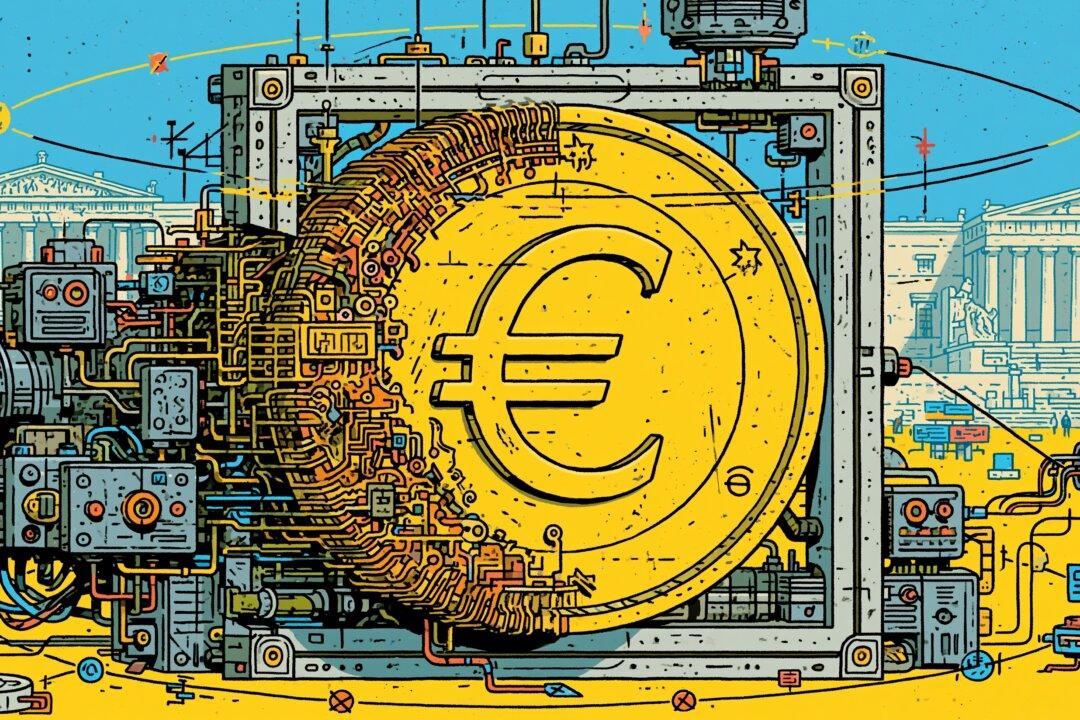
Under the guise of fighting money laundering, the European Union is making anonymous economic activity progressively harder.
What was once a matter regulated by individual countries is now becoming a uniform mandate from Brussels.
This is a thinly disguised restriction not only on political freedom, but also, above all, on economic freedom. Cash remains one of the last truly private means of exchange still available; unlike digital transactions, cash does not automatically create a centralized record accessible to banks or public authorities.
The use of cash is often associated with the intention to hide illicit activity. Yet the ability to conduct private and discreet transactions is a natural extension of property rights and freedom of contract. Many law-abiding citizens prefer cash for entirely legitimate reasons, including protection against financial instability or potential capital controls.
From that date onward, professionals will be forced to turn every transaction of more than 3,000 euros into a bureaucratic process involving identity verification, data collection, and the risk of penalties. This is yet another regulatory imposition that raises the cost of doing business, similar to the introduction of the value-added tax in Europe decades ago, which pushed many small businesses to close their doors or move into the informal economy because of increased bureaucracy and compliance costs. Small entrepreneurs, already pressured by high taxes and excessive red tape, will once again bear the heaviest burden.
What were once simple voluntary exchanges will become sources of additional costs, delays, and state intrusion.
Once again, centralized authorities are creating regulatory complexity under the difficult-to-challenge justification of fighting crime, even though each country already has its own rules in this area.
More liberal countries such as Germany will lose flexibility, since they previously had no general limit on cash payments. The uniformity imposed by Brussels ignores cultural differences, particularly differing levels of trust in institutions. In some countries, cash culture remains deeply rooted, and confidence in digital systems is significantly lower.
This measure represents a gradual erosion of individual autonomy. If using cash becomes increasingly inconvenient for merchants and consumers, people will naturally migrate toward digital payments. Over time, this initially convenient shift will make the introduction of the digital euro far easier.
Once the principle is established that the state can limit private cash transactions, there is a strong tendency for those limits to become progressively stricter. European countries themselves demonstrated this pattern when they still controlled these rules nationally. Belgium, for example, steadily lowered its cash payment ceiling over the years to the current 3,000 euros.
The most likely outcome is that the new European-wide limit of 10,000 euros, which may seem relatively high today, will gradually be reduced further until using cash for most significant transactions becomes impractical. In reality, the vast majority of cash transactions are already well below this threshold.
The digital euro, presented as a complement to cash, will arrive at a moment when cash has already been substantially weakened. Unlike cash, this system is traceable, programmable, and potentially subject to holding limits, expiration mechanisms, or usage restrictions.
These are conditions fundamentally incompatible with the freedom that cash provides.
This accelerated yet discreet path toward a fully digital monetary system opens the door to an unprecedented level of financial surveillance and control in European history. By overriding the principle of subsidiarity, it will affect almost the entire continent.
The road to total societal control passes through the restriction of economic freedom.