Something happened last week that most people scrolled past.
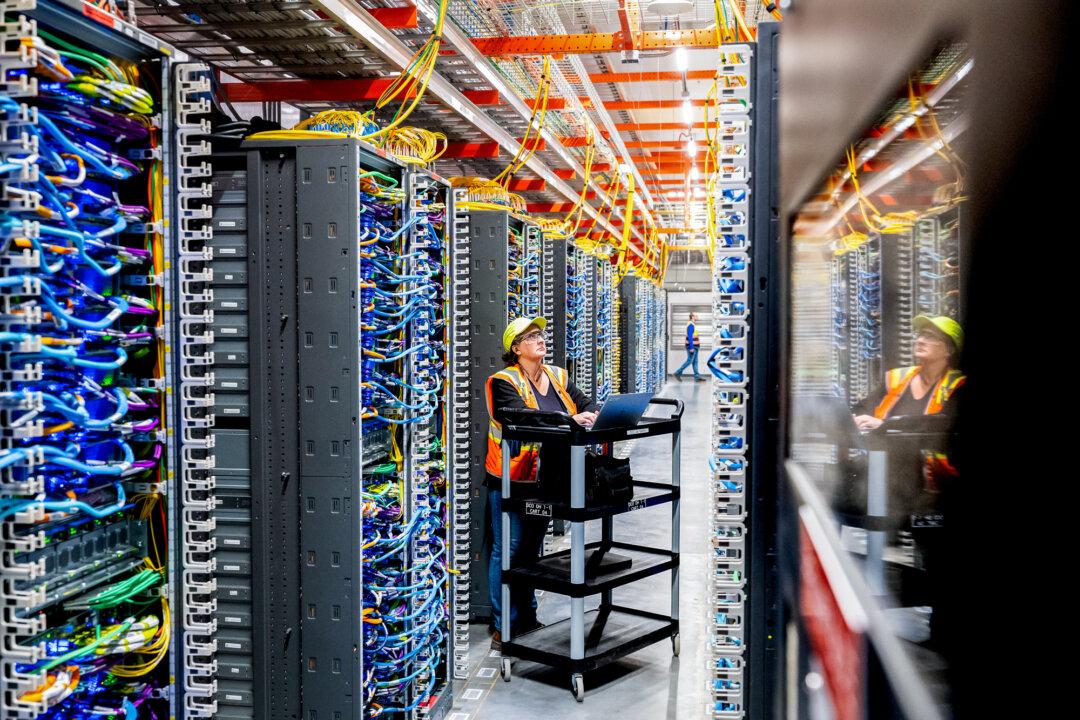
Two Amazon data centers in the United Arab Emirates were struck during Iran’s retaliation for U.S. military action. Another facility in Bahrain was reportedly damaged after a drone landed nearby. The earlier strikes that triggered the retaliation were said to have used AI-assisted targeting systems.
It was a brief moment in the news cycle, quickly overtaken by the next political story. But the implications are difficult to ignore.
Artificial intelligence has now crossed into active geopolitical conflict.
The infrastructure that powers the digital world—the same systems that store family photos, run businesses, and answer questions on our phones—has become strategic wartime infrastructure. Algorithms woven quietly into civilian technology are now helping guide decisions about where weapons land.

Humanity crossed a threshold, and most of us scrolled past it.
But we know from history that major technological shifts rarely announce themselves with a single dramatic moment. They appear first as signals in small news items, policy disputes, unexplained departures by insiders.
Another signal appeared almost at the same time.
The federal government recently removed the artificial intelligence systems developed by Anthropic from its networks. Shortly afterward, OpenAI stepped in with a defense agreement of its own.
The public does not know the full story behind the change. We do not know exactly what demands were made behind closed doors, what ethical guardrails were contested, or why one of the world’s leading AI companies was suddenly pushed out of federal systems.
But the episode itself is another signal.
And yet another signal has been appearing quietly inside the AI industry itself: the departure of safety researchers.
Over the past several years, numerous high-profile researchers tasked with studying the risks and safety of advanced AI systems have left their posts at leading companies and research labs. Many of these departures have come with little public explanation.
Those researchers rarely describe the internal debates they witnessed. Few are in a position to do so.
But patterns like this matter. When the people closest to a powerful technology begin stepping away quietly, it often means that they have seen tensions that the public has not yet been invited to examine.
History has seen moments like this before.
In the early 1940s, scientists working on what became the Manhattan Project realized that they were building something unprecedented. Some raised concerns about what the technology might mean once it left the laboratory. But those debates happened largely behind closed doors. The public understood the stakes only after the technology had already been used.
Artificial intelligence may be unfolding along a similar pattern. We are seeing the signals now—researchers leaving, governments disputing ethical guardrails, and AI systems appearing inside real geopolitical conflict.
Misconception No. 1: AI Is ‘Just a Tool’
This analogy is comforting. We imagine AI the way we imagine a calculator or a word processor—machines that perform tasks efficiently while remaining firmly under human control.Tools can become strategic assets in war. But they do not generate their own outputs in ways that their creators sometimes struggle to explain, nor do they require constant negotiation over the ethical boundaries of their behavior.
Misconception No. 2: AI Is Neutral
AI systems are trained on human-generated information. That information reflects human biases, historical conflicts, and uneven representation.When an AI system generates an answer, it synthesizes patterns that it absorbed from that material.
AI has developed fluent language skills that can create the illusion of objectivity. But confident language is not the same as truth.
Misconception No. 3: Humans Fully Control AI
Traditional software behaves according to explicit instructions written by programmers.Modern AI systems operate differently. Their outputs are probabilistic, generated through layers of learned relationships inside the model.
Developers are now using AI systems to build AI systems and to manage other AI systems. They are using AI to write code that in the past they would have written themselves, and it’s happening so fast that they cannot monitor or even understand every line of code being generated by systems that do not sleep.
Misconception No. 4: The Experts Know Where This Is Going
In most scientific fields, experts disagree within a fairly narrow range. In artificial intelligence, the range of opinion is unusually wide.Some researchers believe that AI will revolutionize medicine and scientific discovery. Others warn that the technology could produce serious societal disruption if development outruns human wisdom.
Among those raising such concerns is Geoffrey Hinton, a Nobel Prize winner and one of the foundational figures of modern AI research.
That range of opinion does not prove that disaster is coming. But it does reveal that even the people building these systems do not fully agree on where they will lead.
Artificial intelligence is integrating rapidly into the systems that shape modern life—communication, commerce, national security, and governance.
We are seeing signals across all of these domains. We can see clearly that AI is shaping our future whether we like it or not. The question is whether we will recognize the signals in time to understand what is unfolding, or whether we will wait, as societies often do, until the consequences make the signals impossible to ignore.