



The current debate over children and artificial intelligence (AI) is too often framed around cheating, especially in schools. That concern is understandable. But it is not the deepest concern. The deeper concern is human formation.
Sitting in my eighth-grade English class in 1984, I had a teacher, Mrs. Garman, who was both deeply caring and uncomfortably demanding. Every Friday, she expected us to turn in a two-page handwritten essay in cursive, written only in blue ink.
At the time, I dreaded it.
The blank pages mocked me. My hand ached from gripping that BIC pen. I hated trying to turn a half-formed thought into a sentence that made sense. There was no shortcut, no easier path, no button to press. There was only the kitchen table, the blue ink, and the work of putting one sentence after another on the page.
At the time, I thought the assignment was about handwriting, grammar, and grades. I understand it differently now, especially after years spent leading a school.

That weekly essay was not merely teaching me to write. It was teaching me to think. It forced me to sit with confusion, organize a thought, choose meaningful words, and keep working until something inside me became clearer. The paper I handed in each Friday was not the point. The thinking required to produce it was the point, and Mrs. Garman demanded it.
That memory matters more now than ever.
When a child uses AI to produce an answer without practicing the thinking, we may not be witnessing only the future of augmented learning. We may be witnessing the rise of fake intelligence: the appearance of competence without the development of capacity.
I already see this tension in school life. A student who once struggled to organize a paragraph can now submit something clean and well-structured. A teacher may sense that the work is not entirely the student’s, but cannot always prove how much help was used. A parent sees the passing grade and feels relieved. The child sees the result and may learn a dangerous lesson: I can skip the struggle and still appear successful.
That is the problem. Not that AI exists. Not that children will use it. They will. The question is whether they will still practice the struggle intelligence requires when a tool can remove that struggle in seconds.
Human beings have always used tools to make life safer and easier. That is part of civilization. We have worked to reduce physical danger, secure clean water, protect our homes, improve medicine, expand access to information, and solve problems that once consumed enormous human energy. Much of that progress is good.
But we may now be approaching a cultural convenience tipping point. Convenience no longer removes only unnecessary hardship. Increasingly, it risks removing the very friction that helps children develop.
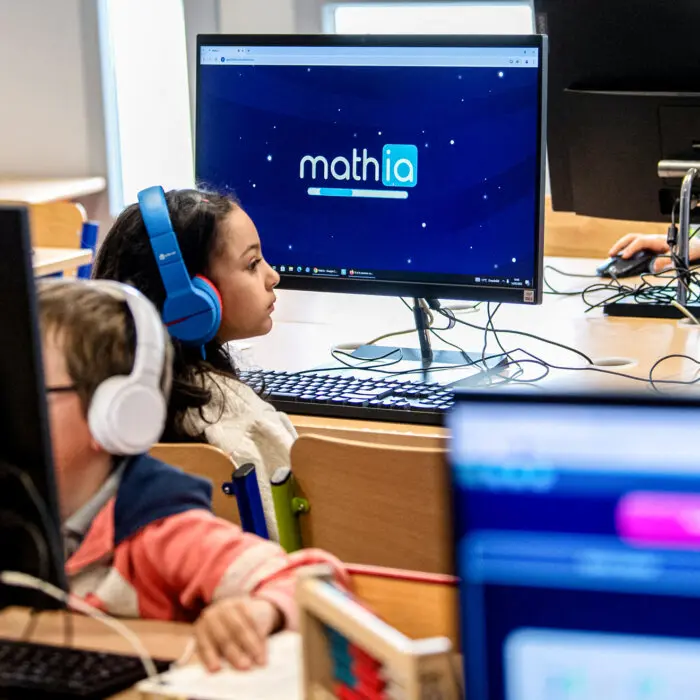
We do not hand kindergartners calculators before they understand what numbers mean. We want them to connect two apples with the symbol 2. We want them to see, touch, count, and manipulate quantities before a tool produces the answer. The answer matters, but at that stage, the process matters more.
Writing is no different. Students should learn to write before they ask a machine to polish their prose. They should wrestle with a problem before AI instantly offers a solution. Memory, attention, judgment, patience, revision, and responsibility need practice before convenience becomes the default.
This is not an argument for eliminating AI. Used well, AI can be a tutor, editor, translator, and brainstorming partner. It can help a struggling student understand a concept, support a child with disabilities, and help a teacher personalize instruction for a child who needs something different.
The tool itself is not the enemy.
The trouble starts when the product arrives before the child has done the work that makes the product meaningful.
A student who asks AI to write an essay may produce something cleaner than they could have produced alone. But if that student never sat with the blank page, never struggled to form an argument, never learned paragraph structure, never revised a weak sentence, and never discovered that confusion can become clarity through effort, then something important has been skipped.
The assignment may be complete. It may even earn an A. But the development may not be.
Children need both support and challenge.
That is what Mrs. Garman gave us. She did not abandon us to those Friday essays. She encouraged. She corrected. She expected. She gave us enough support to keep going and enough difficulty to grow. That is the kind of home and classroom that offers love with a long horizon.
If she were teaching today, I imagine her advice about AI would be simple: Think first. AI second. Reflect third.
Before using AI, students should be asked: What do I already know? What have I tried? What is my best first attempt?
The first step belongs to the child. Then AI can help. It can guide, clarify, question, organize, or suggest. It can sit beside the learner. It should not replace the learner. But after using AI, reflection should be non-negotiable: What did I learn? Could I reproduce this without the tool? Did this make me stronger, or just faster? Today’s children will live in a world shaped by AI. They should learn how to use it. But they should not confuse the use of a powerful tool with becoming a capable person.
The goal is not to keep children from AI.
The goal is to make sure AI helps children emerge more fully human—not merely appear more capable than they are.