Every year, we marvel at how much faster, smarter, and more connected our world has become. We’ve normalized the pace of a machine—always on, always responsive, always consuming. But reflecting in the glow of our screens is a human biological system that hasn’t really changed in thousands of years.
For most of human history, information came slowly. A conversation by firelight. A letter carried across land. A book passed between hands. We absorbed life in active moments punctuated by pauses, stillness, boredom, and repetition. The human brain has served us perfectly to handle this kind of world and human pacing.
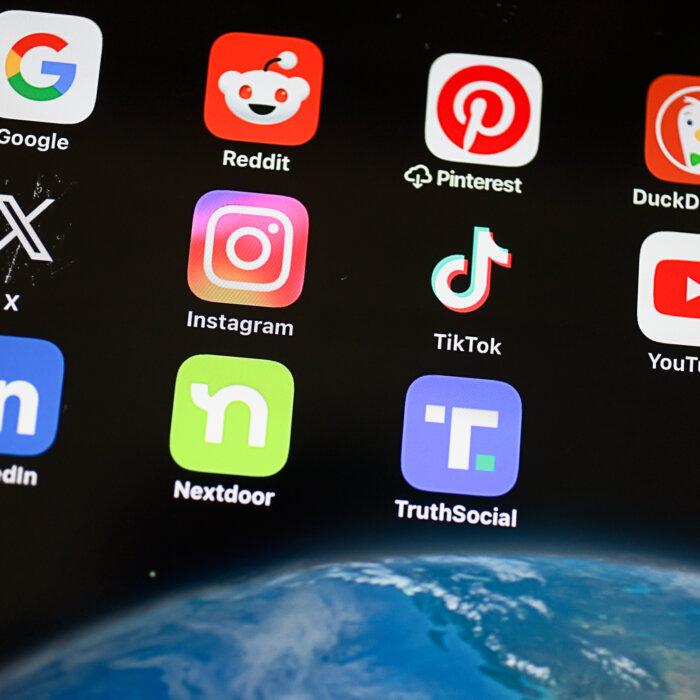
Today, however, we find ourselves suddenly immersed in a new age of uninterrupted input. From the moment we wake, our minds are flooded by news alerts, social media feeds, work messages, video clips, online advertisements, and digital notifications that compete for our attention in split-second bursts. It’s no longer about how much time we spend with media, but what that time demands of our brains.
But time is not the issue. The crisis lies in the density and intensity of what we consume. In 2008, those 12 hours were largely passive. People watched television, listened to music, read the newspaper, or browsed early websites. It was predictable, linear media on manageable human terms. Now, those same 12 hours are filled with high-frequency, high-velocity content delivered through screens we carry in our pockets. Every scroll brings a new decision, every swipe a new emotional hit, every alert an interruption demanding response. We are constantly toggling between tasks, apps, platforms, and conversations—without rest or pause.

Many of us now wake up tired, not from lack of sleep but from the endless backlog of unresolved input. Constant cognitive demand and persistent interruptions can have the same effect as losing an entire night’s sleep. We scroll through headlines we can’t act on, respond to messages we didn’t ask for, absorb outrage we didn’t seek, and try to remain informed, connected, and productive in the face of constant noise. Our minds are thoroughly saturated long before the workday even begins.
And while we carefully track our steps, our calories, and even our carbon footprints, we do not track what might matter most in the modern world: mental pollution—the relentless overflow of low-quality, high-disruption stimuli that corrodes our ability to think clearly, feel deeply, and live intentionally. And the true impact is still yet to show itself.
What makes this even more alarming is that almost no one is monitoring it. There are no federal guidelines for cognitive safety, no educational programs that teach children how to guard their mental bandwidth, and no public measurement on information overload. Governments aren’t intervening. Platforms aren’t self-regulating. There are no warnings on dopamine loops and no watchdogs for psychological saturation, and the public remains largely unaware of the neurological cost of modern media habits.
Why? Either potential regulators are caught up in the same loops of over saturation as the rest of us, or perhaps because the system is working—as intended. The more fragmented your attention, the more time you spend online. The more time you spend online, the more ads you see and the more data you generate. That data becomes profit. Your distraction and overload become a business model. Behavioral scientists, interface designers, and algorithm engineers work daily to optimize the exact mechanisms that keep your brain tethered to your device without concern for its capacity. They study how to hijack dopamine. How to create urgency. How to exploit emotional volatility, not how to create balance and mental health.
And so the question becomes: What is the limit of human mental capacity? Or perhaps more importantly, what happens when we hit it?
The question isn’t rhetorical, and the answer isn’t abstract. We see it in the growing epidemic of mental fatigue, in the burnout that arrives before lunch, and in the fog of indecision and declining health. We see it in the sharp decline of creativity and emotional regulation and in the inability to be present with those we love.
This isn’t a temporary phenomena. We cannot rely on external systems to reverse this. There is no platform update coming to restore our focus. No regulation on the horizon to return our peace. The companies profiting from our overload have no financial incentive to stop it. Which means the responsibility falls on us.
We must begin to treat attention as a finite resource. To protect our minds as we do our bodies. That means turning off nonessential notifications, carving out moments of silence, and letting the mind wander without a prompt. We must learn to look into the eyes of a loved one, in person and without a device. We must relearn to guard sleep like a sacred function and relearn boredom as a valuable process.
Leaders and educators need to reinforce the fact that the human brain is not a hard drive. It cannot be upgraded or scaled without us losing our humanity. It is a living miracle, evolved for depth, reflection, and meaning, and if we want to preserve that miracle in the age of digital excess, we must become far more intentional about what we let in—and what we leave out.
Individually, while we too often lament that we never have enough time in our modern world, it is perhaps more accurate to say that we are just out of bandwidth. And since no one is coming to give it back to us, we simply have to take it back ourselves.