“My child can’t read!”
That’s become a common complaint from parents.
Why? It might be because kids are distracted by social media and video games.
But I think it’s also because reading instruction became lazy and political.
“Progressives” at teachers’ colleges pushed a reading technique called “Balanced Literacy.”

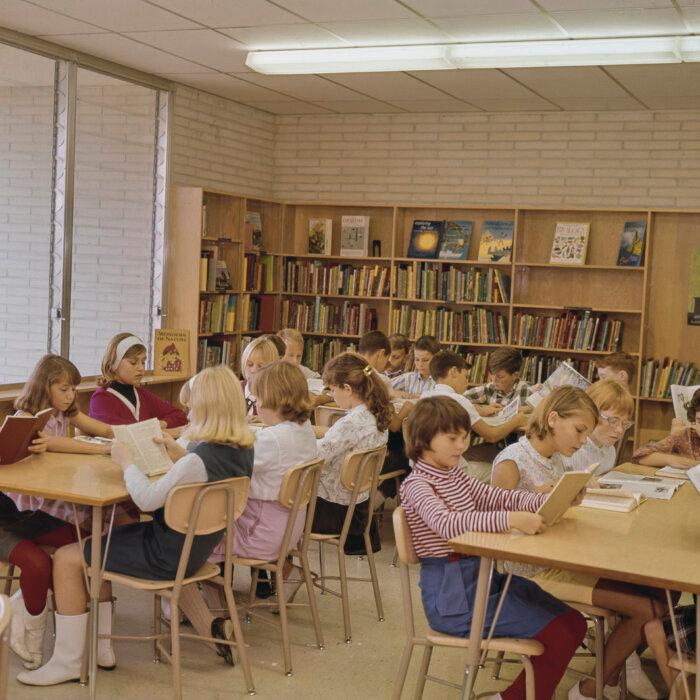
Instead of memorizing sounds and letters, teachers push what they call “cueing,” guessing words based on their context, or pictures.
Balanced Literacy downplays “structured phonics,” the older technique where kids memorize letters’ sounds and learn to sound out words.
It mostly didn’t. Yet it was largely accepted until about two years ago, when podcaster Emily Hanford released a series called “Sold a Story.” It resonated with parents who were upset that their children couldn’t read.
A teacher contacted the podcast to say: “I trained other people in balanced literacy using that cueing system. I’m mad. I’m saddened for the kids that I’ve taught.”
That upsets education professors like Andrew Johnson, who teaches teachers at Minnesota State University. “I hope they look back and call this the ‘Hanford Era’ in 10 years,” Johnson says, “when they see this house of cards come tumbling down, when they see they’ve wasted billions of dollars on this boondoggle!”
Teachers like that idea.
Not teaching phonics is popular because its “drill and kill” technique is tedious.
But phonics just works better.
“We have all these scientists, researchers who are not political, and they’ve been in the labs, looking at brain scans, looking at rigorous studies, and we know that phonics is the way that kids learn to read,” says reading app developer Niels Hoven.
A change in Mississippi schools provided more evidence. Mississippi once ranked last among states in reading.
Then Mississippi added more phonics to the curriculum and held back those who couldn’t read.
Scores rose faster than in any other state. People call it the “Mississippi Miracle.”
I confront Professor Johnson about that:
“Mississippi went up! Where’s your state? ... Fifth from the bottom! ... Because of your bad teaching!”
“I wish the world were as black and white as that,” he replies. “I wish there were an algorithm.”
“First step ... memorize the sounds the letters make. ... Second step ... learn to blend those sounds together. That’s the entire reading algorithm. It’s not rocket science.”
He boasts that with the help of apps like his, “Two-year-olds (are) now reading simple books. I think we really undersold what kids are capable of.”
Today, thankfully, parents have better choices. Lots of apps teach reading, including free ones, like Khan Academy’s.
And when it comes to kids learning to read, parents should remember that teachers can’t do the whole job themselves; they need parents as partners. What parents do may matter as much or more than school.
You teach the joy of words just by talking to your kids, singing, making up stories, reading aloud.
You can teach them regardless of the progressive idiocy they may get in school.