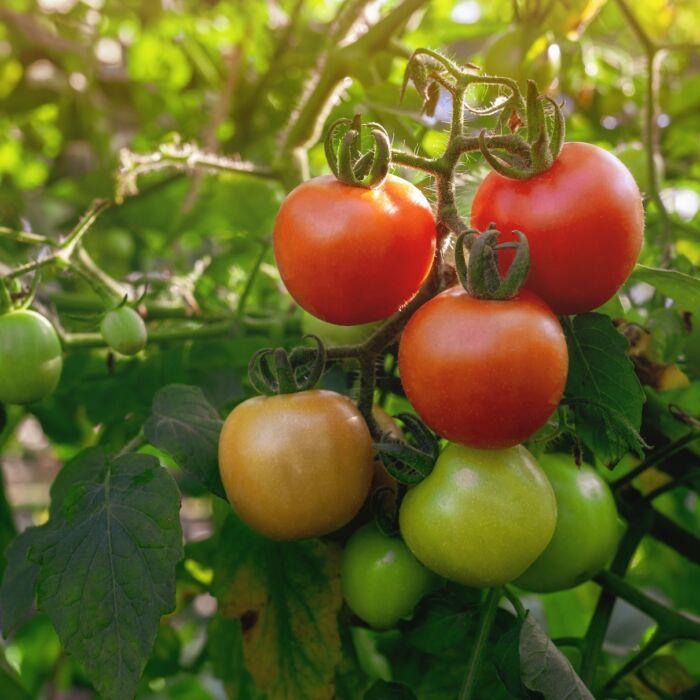
A year ago, I could buy a case of tomatoes for about $25. This year, that same case is pushing $90.
Organic Idaho russet potatoes that were once $28 a case are now closer to $69. The price of organic cacao has roughly doubled. Certain wholesale beef cuts have tripled in price compared with where they were not long ago. Even eggs, which we produce ourselves here at Sovereignty Ranch, tell the same story. If you own chickens, you may avoid the volatility of wholesale egg pricing, but you still feel the rising costs of feed, labor, fencing, water infrastructure, refrigeration, and fuel. Last year, there were periods when wholesale egg prices exploded so dramatically that restaurants everywhere were struggling to stay afloat.
People often imagine inflation as some abstract government statistic. But if you own a restaurant or a farm, inflation is not abstract. It arrives on the delivery truck every week.
At our annual Confluence festival, we feed well over 1,000 people over several days. In previous years, our wholesale food bill, not including meat, was usually somewhere between $26,000 and $31,000. Last year, we had roughly 800 people on-site. This year, we hosted more than 1,100.
Yes, more people increased costs. But that alone does not explain what happened.
This year, our food bill came in at about $70,000.
I borrowed money. I spread purchases across multiple credit cards. And I know we are not the only operators doing this quietly behind the scenes.
Restaurants are in a difficult position because customers need consistency. We can’t print new menus every Tuesday because the price of tomatoes jumped again or the price of potatoes doubled or the price of chocolate surged after another crop failure halfway around the world. Customers understandably want stability even while the ingredients behind every meal become increasingly unstable.
In our farm store, prices are not swinging wildly every week. Our ground beef has remained about $13 per pound since we opened, and now, strangely enough, it is approaching the same price as grocery store beef despite being raised entirely on our ranch. A loaf of our sourdough bread weighs a little more than 2 pounds and costs $15. That price reflects the reality of labor, organic ingredients, time, and overhead.
Sometimes I look at the old produce pricing and realize it was never realistic in the first place. I cannot grow a case of tomatoes for $25. I do not know many people who can.
And that raises deeper questions for me about the way we have designed modern eating habits.
American cuisine, Mexican cuisine, and regional food traditions all depend heavily on staple ingredients such as tomatoes, potatoes, citrus, onions, lettuce, and peppers. Of course restaurants need tomatoes. Of course customers expect salsa year-round or sliced tomatoes on burgers or fresh produce available in every season.
But why have we structured our food expectations around having the exact same vegetables available every week of the year regardless of local climate?
In Texas, many of these crops are only seasonally available. Yet modern supply chains have trained us to expect every restaurant and every grocery store in America to offer the same produce in January that they offer in June.
That expectation requires an enormous amount of infrastructure operating perfectly at all times: refrigeration, trucking, imports, cold storage, irrigation, fuel, packaging, labor, and long-distance transportation systems that most people never think about because grocery stores make abundance feel permanent.
Food appears under bright lights in perfect rows as if it naturally emerged there overnight. But food does not come from grocery stores.
It comes from people.
Somewhere, real human beings are growing our tomatoes, harvesting potatoes, feeding cattle, irrigating fields, fixing tractors, hauling produce, and hoping weather conditions hold for one more season.
A freeze in Florida can shift citrus prices nationwide. Heavy rains in Mexico can affect tomato prices in Texas. Drought can reshape cattle markets for years. We like to imagine we have engineered ourselves beyond nature, but agriculture still answers to weather, water, and seasons.
We see this regionally all the time. Right now, if I buy hay locally near our ranch, a round bale costs about $120. If I drive closer to Dallas, where rainfall has been better, similar hay may cost $30 to $40 a bale.
That difference comes down to rain.
I do not pretend to know the perfect answer to all of this. I never do. I sit down at my computer most mornings with questions, not conclusions.
I do not think Americans will suddenly abandon year-round convenience or stop wanting the same seven vegetables available every week of the year. I do not think tomorrow brings the collapse of the food system.
But I do think we are being reminded that food is not merely a product. It is a relationship between people, land, weather, animals, water, labor, energy, and time.
And I think the local farm matters for reasons beyond redundancy or nutrient density or preserving generational knowledge, although all of those things matter deeply.
The local farm reconnects people to the reality that food still comes from creation itself. That nature still sets limits. That water matters. Soil matters. Seasons matter.
For decades, we built food systems around maximum efficiency and low prices. Now we are beginning to rediscover the fragility hidden inside that efficiency.
Maybe that realization is uncomfortable. But perhaps it is also necessary.