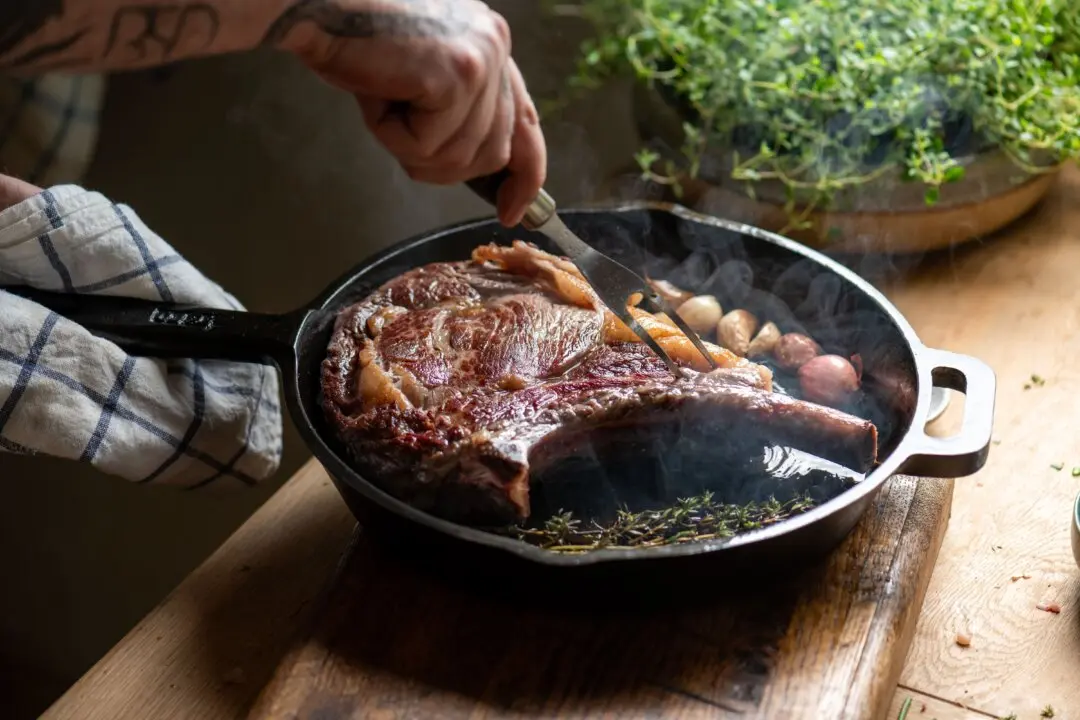
We should all feel grave embarrassment about the popularity of Ozempic and other weight-loss innovations. It’s a huge market, likely hitting $20 billion this year, one that emerges from the seeming success of the systems that gave plentiful food to humanity for the first time since time immemorial.
Sure enough, something happened that no one imagined 50 years ago. Instead of reveling in this triumph, managing it with intelligence, we got fat and unhealthy and lost discipline.
Sorry to put it that way. I get why no one wants to admit this. It’s too troubling. Too upsetting. Too strange.
Can we really not control how much we eat and what we eat? The answer seems to be, for many people, that we cannot. The expectation of three huge meals per day consisting of mostly processed foods is somehow built into the cultural fabric. We cannot shake it even if we stop fitting into clothes and lack the ability to move around.
That said, the drugs have propelled a new trend that pushes losing weight and getting healthy. That is surely a good thing. I’m here to tell you that it can be done without drugs. It happens through self-discipline.


My mother, from when I was an early teen, always said to me, with a true but droll tone that still rings in my ear, “Jeffrey, you have a potential weight problem.” Ouch. However, that warning has stayed with me, and I’ve been fighting it back all my life. That hardly makes me unusual, but it has caused a lifetime of thinking through strategies to keep from realizing my mother’s fears for me.
The single most successful path toward acquiring self-discipline over eating and drinking has been the three-day fast. Just coffee. Yes, such a thing sounds terrifying to people, which rather tells you all you need to know. I’ve even stopped recommending it to people because hardly anyone takes up the challenge. Anyone who does will experience a huge life change, a complete reset of expectations, and a renewed unity of mind, body, and spirit.
That aside, there are countless numbers of dietary regimes about which you can read everywhere. Clearly, there is no one path. That said, there is no hope for any of them if the goal is to get full three times per day plus snacks.
At that point, it doesn’t matter that much what you eat. Your body will never adjust to a normal life. Same with carb and sugar addiction: If you cannot conquer that, there is probably no hope.
So I’ll just skip ahead and announce the prompt for these reflections. I’m deeply fortunate to live near a full-fledged, old-fashioned fresh seafood market. I almost cannot believe my good luck. As much as I’m there, it is probably not enough.
They have this huge selection of fresh items: snapper, salmon, cod, king fish, swordfish, shark, crabs (live!), clams, octopus, mussels, branzino, every color of bass, skate, monkfish, mackerel, shrimp, and much more besides. I find one and cook it up and love it, each and every one.
I wasn’t raised with fish (in West Texas), so all of this is new and delightful to me. I never know which one to buy, much less how to cook it. But I’m getting the hang of it.
I have a friend who makes the claim that real men should eat only strong fish, not weak fish. So he avoids all shellfish because they are obviously lazy through no fault of their own. Not even the crab passes the test because this crustacean is capable only of pinching things. At the same time, he avoids pathetic and floppy fish such as cod and tilapia. He goes for big, mean, fast-swimming fish with strong names such as swordfish, kingfish, and shark.
OK, that’s a weird theory. Maybe it is right. I have no idea.
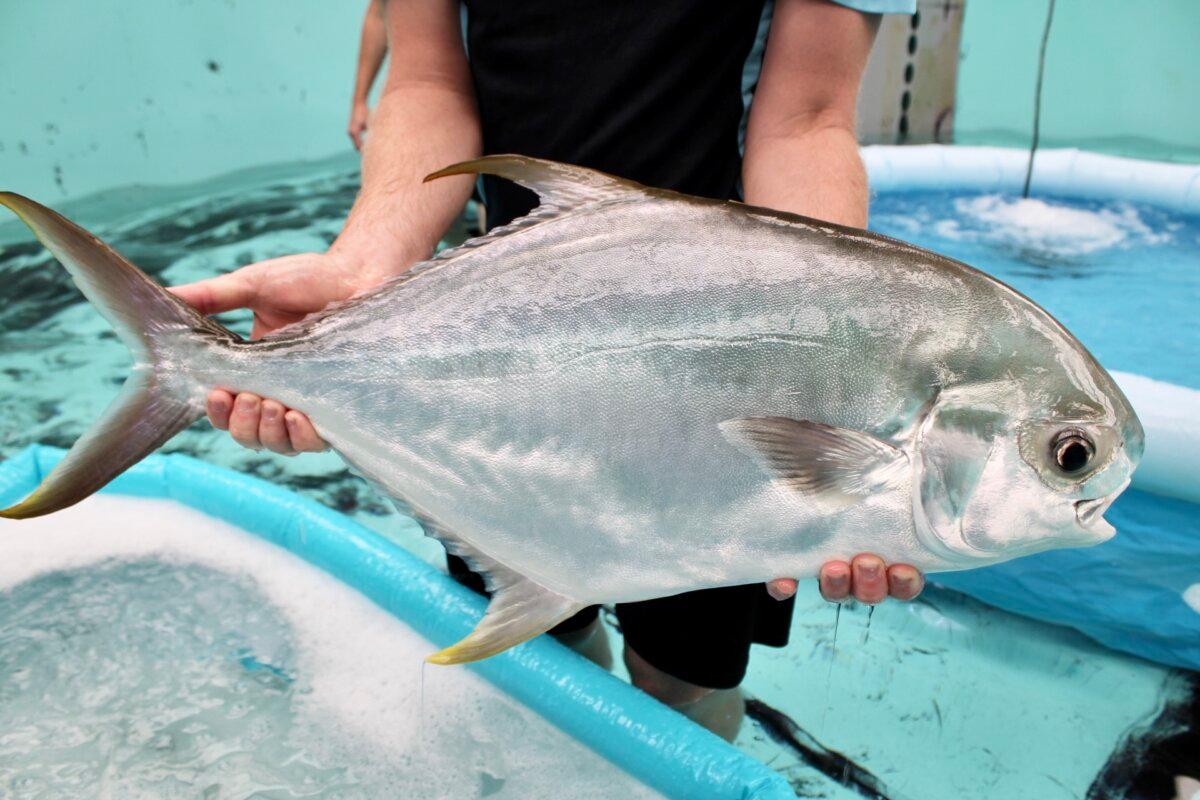
All the while, this one fish sat there on ice, beckoning me. It’s called the pompano. It’s a seasonal saltwater fish. It’s pretty, but I had never heard of it, even if there are beaches and towns named after it. Finally, I decided to go for it, asking the fishmonger to give it to me without the head just because.
I heated the oven to 375, put olive oil on a cookie sheet, squeezed some lemon inside the fish, set it down with salt and pepper, and put it in. Twenty-five minutes later, I took it out, let it rest for a bit, and dug in.
The bone structure is different from others. The ribs are thick and easily avoided while eating. The backbone is hard and not really delicate at all. There are few small bones, meaning that you are really looking at the equivalent of a thick, round, and tender steak from the sea.
I took my first bite and nearly fell into delirium. It’s not fishy. It is sweet and buttery, like a dessert. Nor is it weak like tilapia. It is substantial but without the edge of a mackerel. Truly, I’ve never experienced anything from the sea that is this wonderful. One fish feeds one person, a full meal with no sides. It sticks with you, too, for a very long time—a genuine culinary experience.
Thinking more about this, I almost cannot believe it. We have here a fish that is a self-contained meal on its way. It has no scales, so its skin, tightly fitting around the entire round package, creates a kind of natural Dutch oven that bakes the meat while losing no moisture. It’s actually indescribable.
Then it occurred to me. What if I adopted a little dietary regime of eating one of these per day and nothing else? That would not be difficult. True, one fish costs about $10, but you save on all other groceries. So your entire food budget would be $3,600 for the whole year. What would happen to your health? I’m willing to bet that you would be the healthiest person alive. You certainly would look amazing in your clothing.
Let’s just call this diet OPAD, or One Pompano A Day. To be sure, they might not always be available, and, actually, they are hard to get too far inland, so this is not for everyone. Also, let’s say you did this for a month or a week. Is there any doubt that you would be on the track to health? And isn’t this less risky than taking some crazy drug?
Some people say they don’t like fish. Sorry, but that’s ridiculous. Human beings evolved eating fish. That’s why the edge of rivers is the birthplace of humanity and civilization. We’ve been doing it for 2 million years. All anthropological evidence points to this. The vitamins and minerals of fish are brain food, which is why humans emerged as the smartest among all living things. Thank you, seafood!
In the creation story, God made a third of the world land and two-thirds water and packed the waters with a replenishing variety of swimming things for us to eat. It’s a good deal for us! I simply cannot fathom a person who just dismisses all of this with the line “I don’t like fish and seafood.”
Another factor in late-stage ill health is that we don’t like our food to look like actual food. People eat only fish sticks or McFish but not anything that looks like it could swim. Again, this is lame. If you work on it, you can change your tastes and outlook.
Let’s face it: Part of our problem with eating is that we are not interested in real food anymore. If we change that, we change everything.
Seems to me that the pompano is the best possible start. This fish is a dream come true and so incredibly easy to cook, one pan straight to the plate and done. Can you even imagine?
To be sure, no global corporation holding patents is going to get rich from my proposed pompano diet. That, more than anything else, explains why Ozempic is the rage but not fresh seafood. What’s better for you, what makes you strong and human, what makes you thrive, surely is not in question.