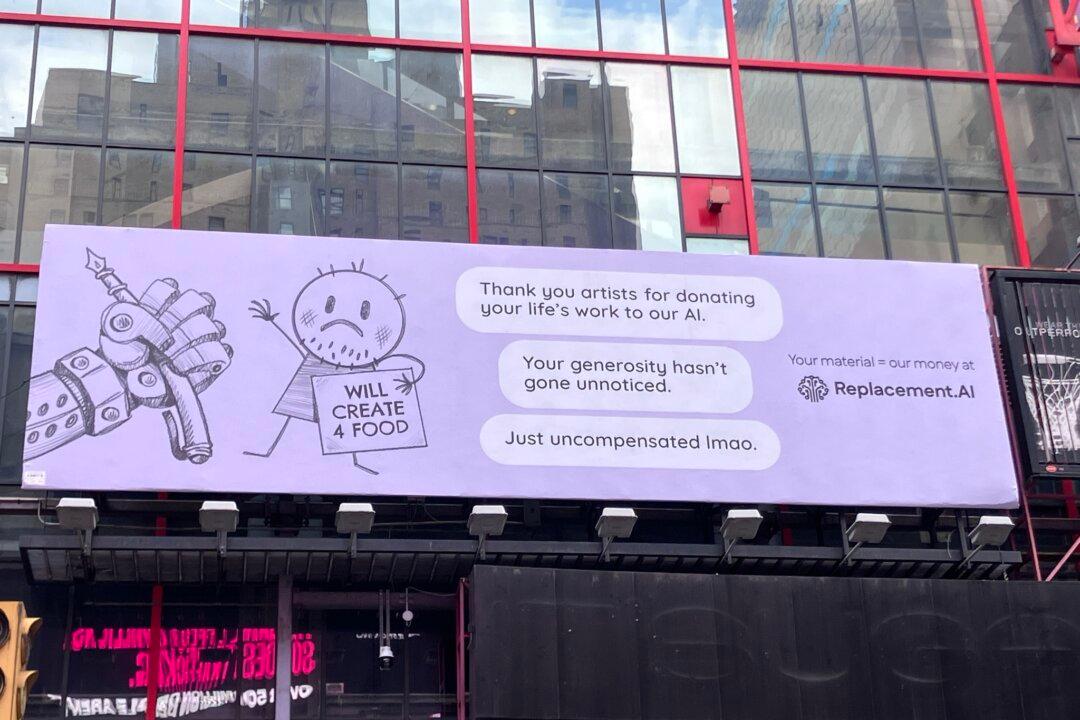
Eric Schmidt hadn’t finished the word “artificial” before the booing started.
The former Google CEO stood at the University of Arizona’s commencement last month, ready to deliver the kind of speech he had probably given a dozen times before: AI as the next great transformation, graduates as its rightful authors.
He got as far as telling them the technology would “touch every profession, every classroom, every hospital, every laboratory, every person, and every relationship you have.” The boos rose before he could finish his own sentence. “I can hear you,” he said gently. The boos continued, as did Schmidt, who was unable to fully conceal the awkward embarrassment.
He wasn’t the only one. A week earlier, at Middle Tennessee State University, Big Machine Records CEO Scott Borchetta told graduates that “AI is rewriting production as we sit here.” The boos from graduates started immediately. He responded with tough love: “I know it. Deal with it.” But the boos only grew louder.
A week before that, real estate executive Gloria Caulfield barely got through the phrase “next industrial revolution” at the University of Central Florida before the crowd erupted. “Okay, I struck a chord,” she said, turning around with her hands up in disbelief and clearly caught off guard.
They were all caught off guard. This isn’t how graduations usually go.
Older generations had their own frustrations with the people steering their world, but they rarely stood up at their own commencement, in front of their families, and told a stranger they didn’t believe them or what they had to say about their future.
It would be easy to read the response as simple nerves about a tough job market and leave it there. But when you look more closely at how this generation actually lives with technology, their worldview takes a different form.
A recent Gallup survey found that Gen Z’s use of AI has leveled off, but their feelings about it have not. Excitement has fallen 14 points in a year, to just 22 percent. And anger has climbed 9 points, to 31 percent. Even among those who use it every day, enthusiasm dropped by 18 points over 12 months. Eight in ten now believe AI will make learning harder. Forty-two percent believe it will hurt their ability to think carefully. Only a quarter believe it will help. Nearly half say the risks of AI in the workplace now outweigh the benefits, which is a sharp rise from the year before. And when asked whose work they actually trust, 69 percent said human work. Only 3 percent said AI’s work alone.
A separate Gallup study found that 47 percent of college students have seriously considered changing their major because of what AI is doing to the job market. Sixteen percent have already changed. The students who use AI most, such as in technology, business, and engineering, are also the ones most likely to be reconsidering whether they picked the right field at all.
The kids know the use of artificial intelligence is built into every device they touch throughout their day. It is being wired to replace the skills they were once told to seek in every career they had been advised to pursue.
They know it is being promised to make their lives “better” and “easier,” while they feel it is chipping away at their cognitive abilities and sense of challenge and fulfillment, and the adults in the room—or those being offered as role models on commencement stages—are wondering why youth aren’t as excited about AI as they expected.
And we should have seen this coming. According to researchers, Gen Z is the first generation in modern memory to test less cognitively capable than their own parents did at the same age, despite having more schooling and more access to information than any generation in human history.
In January, neuroscientist Jared Cooney Horvath told the U.S. Senate Commerce Committee that attention, memory, literacy, numeracy, reasoning, general IQ—key cognitive performance indicators among young people—have stalled or reversed across much of the developed world over the past two decades. He points to classroom screens and education technology as the cause, arguing the brain was never built to learn the way these tools teach. More tools. More data. Less mind.
For nearly two centuries, every generation had tested smarter than the one before it. Researchers called it the Flynn effect, and it held through wars, depressions, and the collapse of empires. It was a 200-year winning streak. Horvath told lawmakers the streak is over.
The graduates booing those speakers are not confused about this. They are living it. They are the data.
A year ago, I wrote about a different version of this same generational response. Vinyl records were outselling CDs, mostly bought by people under 35. Journaling by hand, crochet, taking silent walks, and a trend called “Posting Zero,” in which young people stepped back from performing their lives online. That calm rebellion looked like withdrawal, but it has given way to something louder and bolder. It is a signal that we older folk need to pay attention to.
Older generations tend to see AI the way we see most new technology: as a tool that does or doesn’t work, that we adopt or resist on our own terms, in our own time. Younger generations don’t have that luxury of distance, and there is a fury at being told how to feel about it by people who built it, sold it, or profited from it first without understanding the consequences of using their youth as part of a larger experiment.
This next generation may not hit all the test scores that their forbears did, but they still have human wisdom intact. Children don’t get a vote on the experiments run on their own development, and yet these graduates found a way to cast their vote loudly. Either way, I hope their votes will be counted.