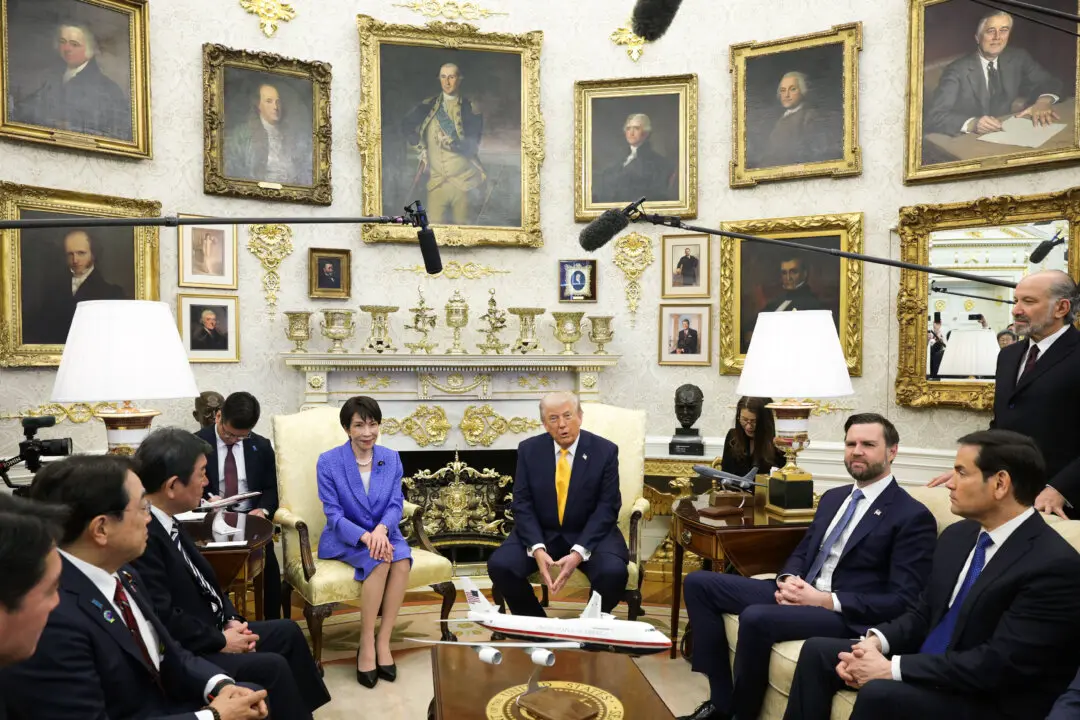
Picture this: You’re at a family gathering or having coffee with an old friend, and a political topic comes up. Ten years ago, the conversation might have ended in a debate; you would agree to disagree, pass the salt, and move on.
Today, disagreement no longer registers as a difference of opinion. You are no longer someone with a different view of policy; you are a threat to democracy, or to society, an existential enemy.
Political scientists call this “affective polarization”—a condition in which citizens stop evaluating opponents by the substance of their ideas and instead regard them with visceral hostility and moral contempt. Something even stranger is also occurring.
Both reject classical liberalism’s emphasis on cultural integration and universal values. Both abandon free expression and objective truth in favor of rigid tribal loyalty.
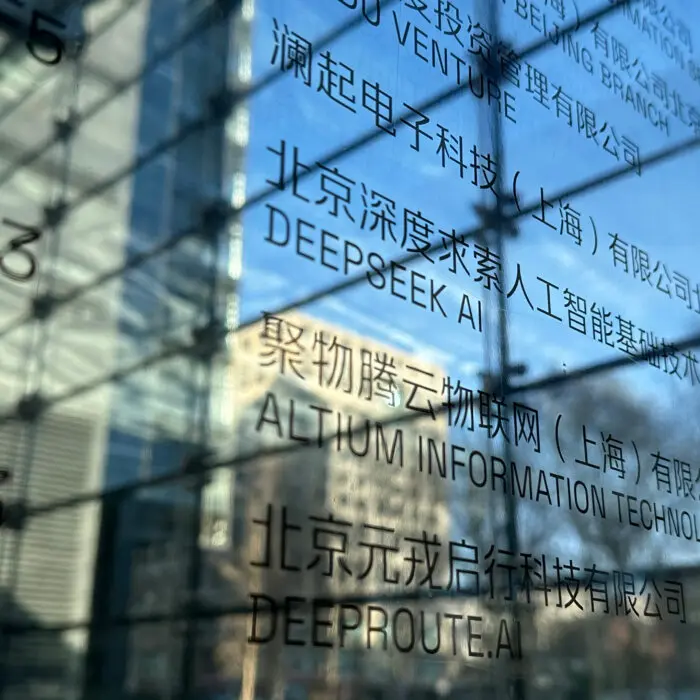
Part of the engine driving this is in the palm of our hand. Social media algorithms optimize for engagement, and nothing generates engagement faster than moral indignation, fear, and out-group hostility. Influencers and media outlets are rewarded for escalating hostility.
The result is a daily feed of the most extreme examples from the other side, accompanied by the same message: Look how dangerous these people are. That justifies whatever we do to stop them.
Most of the people caught in this loop, though, are not its architects. They are its captives. Many are responding to real grievances—mistreatment of women, workers, an ethnic or religious group—or simply absorbing the emotional climate of their social circle and algorithm.
But what if this outrage engine is not merely a technological glitch or cultural phenomenon of our time?
What if the hyper-polarization is being actively amplified as part of a deliberate political warfare campaign?
The Invisible Hand
In the 1980s, former KGB officer Yuri Bezmenov warned the West that roughly 85 percent of its foreign intelligence effort was not classic espionage but “ideological subversion” or “active measures.”
The goal was not to blow up bridges, but to alter a population’s perception of reality so thoroughly that, despite abundant information, people could no longer reach sensible conclusions in defense of themselves, their families, or their country.
Subversion works by seizing existing domestic grievances and radical fringes, then pushing them toward internal crisis.
Today, the Chinese Communist Party (CCP), along with other regimes that are all its allies, has turned this playbook into a high-tech science. They do not particularly care which Western faction wins a given election.
Their strategic interest is sustained paralysis through mutual radicalization. On the left, they amplify post-modern critical frameworks and the dismantling of institutional trust. On the right, they harness legitimate populist anger while injecting isolationism and soft sympathy for strongmen.
Each side’s radicalization justifies the other’s panic, locking the system into a doom loop. This also translates into governments, where successive elections bring alternating policies supportive of either extreme.
This is not theoretical. The CCP openly calls its United Front Work Department one of its “magic weapons”—an apparatus designed to co-opt, neutralize, or divide foreign societies from within.
At the grassroots level, for example, a 2023 New York Times investigation and subsequent reporting revealed that Shanghai-based tech mogul Neville Roy Singham channeled hundreds of millions of dollars through nonprofits into activist networks that organize disruptive protests and amplify narratives aligned with Party talking points.
When this logic enters a free society—whether through far-left identity frameworks or far-right tribal reflexes—it functions like an institutional virus. Trust among the citizenry collapses, and institutions hollow out.
The Blind Spot
Faced with the resulting volatility, many Western institutions have defaulted to managerial suppression: content moderation, speech codes, de-platforming. From an administrative perspective, this looks like risk management.
But in a hyper-polarized environment, it is never seen as neutral. It feeds the fire—appearing as censorship to one side and insufficient zeal to the other—while further eroding the principle of consent of the governed.
Subsequently, the CCP’s direct and indirect propaganda machine cheerily proclaims that the West is in decline and sick (and its own rule is superior and ascendant). This is like an arsonist coming to “rescue” people from the fire he had lit.
Underneath lies a deeper cultural shift. When transcendent moral anchors decay, materialist cynicism fills the vacuum. Two linked blind spots appear: power reductionism (the assumption that everything is only ever a power play) and spiritual atrophy (the inability to recognize genuine conscience or self-sacrifice).
The clearest recent case study is the CCP’s campaign against Falun Gong, launched in July 1999. A traditional spiritual discipline centered on truthfulness, compassion, and forbearance, with no political platform, was met with mass detention, the extralegal 610 Office, torture, and forced organ harvesting. An independent moral framework outside Party control was treated as an existential threat. Western governments and corporations, eager for market access, largely met the campaign with silence.
When its diaspora built independent media and advocacy to break the information blockade, many Western commentators, and others, viewing the world through a purely materialist lens, misread these self-defense efforts as mere commercial or political power plays, or as proselytizing—missing the cause-and-effect relationship. While also misreading the practical necessity of sustainability, to turn bootstrapping volunteer startups into viable businesses for long-term survival and impact, and that such transitions are rarely smooth.
This is the systemic trap: A culture that loses its moral anchor loses both the capacity for deep conviction and the ability to recognize it in others. It becomes blind to the mechanics of subversion.
Restoring the Anchor
More laws will not save us, as external regulation cannot, on its own, restore a foundation that has eroded. Eastern traditions of self-cultivation and Western civic thought, since the ancient Greeks, converge on the same insights and emphasis on virtue, or 德 (dé) in Chinese.
John Adams warned that the American constitutional system was made “only for a moral and religious people” and is “wholly inadequate to the government of any other.”
Bezmenov, after detailing the techniques and steps of subversion warfare, reached a similar conclusion: The ultimate defense is the revitalization of basic moral values, self-restraint, and faith. Subversion succeeds only where it finds an already-decayed moral center.
Thus, this work does not begin and end in Washington or Brussels. It is in the daily refusal of cheap outrage, the disciplined pursuit of objective truth over party lines, and the cultivation of character in families and communities.
Restore that internal anchor, and we do more than resist foreign active measures or domestic managerial overreach. We reclaim human dignity and the foundation of a free society.