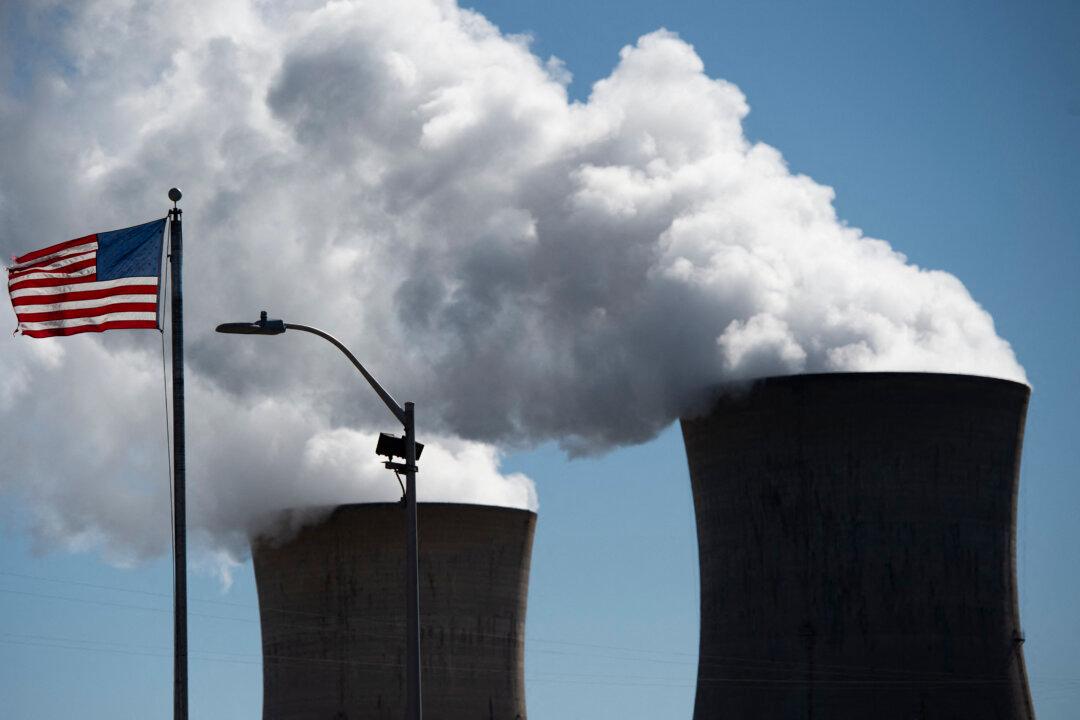
Nobody is saying it, but the advent of artificial intelligence and machine learning may be springboarding the increased intensity of the competition for nuclear fusion—which many are now saying is far less than “30 years away.” The burning question among the few who are fully aware of the stakes in this race is “Who will get there first?” coupled with “Does first matter more than best?”
The greatest obstacle to fusion supplying the world with limitless electricity is learning how to maintain a balance between magnetic confinement and the severe heat of 100 million degrees Celsius (about 180 million degrees Fahrenheit). Fusion produces cleaner energy than fission (its only byproducts are helium and other greenhouse gases—not radiation), and its fuels—deuterium and tritium—can easily be sourced from seawater and lithium. Scientists today are trying multiple ways to skin this cat.
This first phase features hydrogen and deuterium-deuterium plasmas that culminate in operating the machine in long pulses at full magnetic energy and plasma current. The goal is to achieve full magnetic energy by 2036 and the start of the deuterium-tritium operation phase in 2039 (rather than 2033 and 2035, as originally planned).
Meanwhile, both public and private (and public–private) entities have not sat around waiting for ITER to generate limitless energy in southern France. Instead, there is a growing race among nations and corporations to find quicker ways to turn straw into gold—or rather, hydrogen into electricity and more. Western nations, already left in the dust on lithium-ion battery and other technologies and supply chains by the Chinese, now fear that China may win this race, too.
Until recently, the MIT report states, the United States and Europe were the dominant public funders of fusion energy research and home to many of the world’s pioneering private sector fusion projects. But in the past five years, China has upped its support for fusion energy to the point at which it threatens to dominate the industry.
To compete, the United States and its allies and partners must invest more heavily not only in fusion itself—which is already happening—but also in those adjacent technologies that are critical to the fusion industrial base. The MIT report states that China already has leadership in three of the six key industries needed for constructing tokamaks: thin-film processing, large metal-alloy structures, and power electronics. The West has little time to cash in on its opportunity to lead in cryo plants, fuel processing, and blankets—the medium used to absorb energy from the fusion reaction and breed tritium.
China is the world leader in thin-film, high-volume manufacturing for solar panels and flat-panel displays, with the associated expert workforce, tooling sector, infrastructure, and upstream materials supply chain needed to manufacture rare-earth barium copper oxide superconductors—the highest performing materials for use in fusion magnets. China’s high-speed rail industry, renewable microgrids, and arc furnaces give it an edge as well in large-scale power electronics, and China’s manufacturing capacity and metallurgical research efforts position it well to outcompete the world in specialty metal alloys machined for fusion tokamaks.
At a gathering of politicians and stakeholders at a Fusion for Energy event, Grudler said, “There is a lack of political leadership [at the European Commission] when it comes to nuclear energy in Europe. ... Only 2 percent of the global amount of fusion investment is currently going to Europe, while 75 percent is going to the U.S.”
Seconding his concern, Massimo Garribba, deputy chief of the commission’s energy department, said the intent is there for fusion but that there needs to be a larger strategic focus that goes beyond financing. According to him, there is plenty of money and enough wonderful people, but “you don’t have an ecosystem of facilities which actually drives toward having a functioning system at the end of the day.”