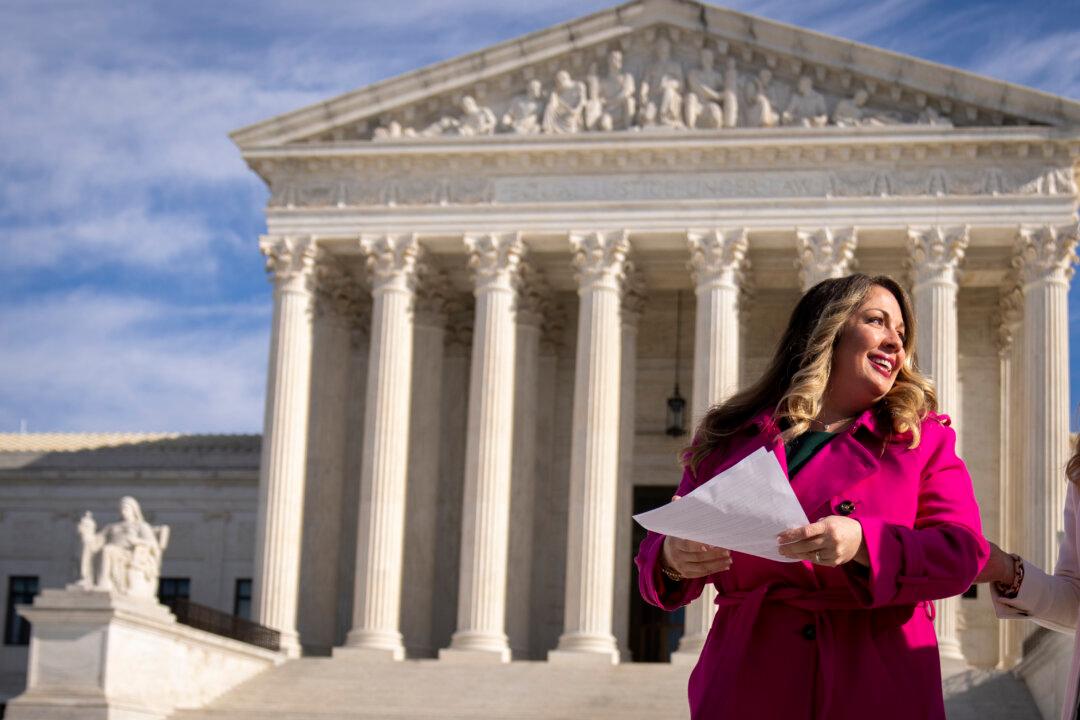
The Supreme Court was right to affirm that states can keep men from competing in women’s sports.
This decision wasn’t issued in a vacuum. The battle to protect women’s sports has been years in the making.
About a decade ago, Alliance Defending Freedom, where I serve as chief legal counsel, began to witness the real-world consequences of rejecting God’s created order of male and female and started to engage in legal and advocacy work to combat the lies of gender ideology.
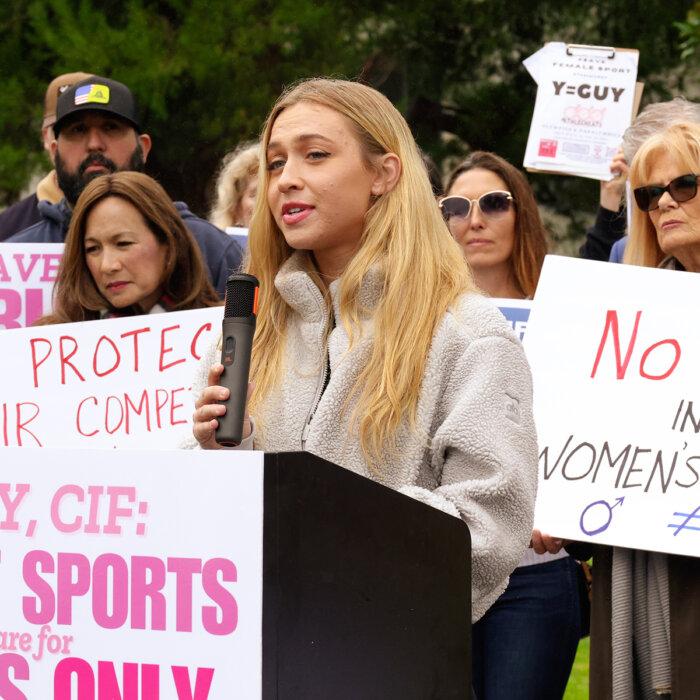
In under four years, two males broke 17 girls’ track meet records in Connecticut, deprived girls of more than 85 opportunities to advance to the next level of competition, and took 15 women’s state track championship titles. For four of those titles, ADF client Chelsea Mitchell was the fastest female in a women’s state championship race, but each time she watched that title, honor, and recognition go to a male athlete instead. Over the course of her high school career, Mitchell lost to these males more than 20 times.
Heartbreaking. Demoralizing. Defeating.
As a legal organization dedicated to preserving the right to live and speak the truth, ADF could not sit idly by and allow this to happen on our watch.
Because of the courage of a few high-school girls in Connecticut who were willing to stand up and speak out against this grave injustice, a groundswell of awareness about the harms of denying biological truth began to emerge.
In Idaho, Madison Kenyon and Mary Kate Marshall, who ran track and cross country at Idaho State University, were forced to compete against a male athlete and were pushed down in the rankings as a result. More and more girls began to share their heartbreaking stories of the real-life consequences from allowing males to compete against females. So we were blessed to help Idaho craft the first law protecting women’s sports.
As states began to enact these laws to protect women’s sports, the American Civil Liberties Union showed up, representing male athletes who identify as female and want to play on the girls’ teams. But playing on the girls’ team is not fair because males have inherent athletic advantages over women and girls.
The ACLU’s challenge to the states’ women’s sports laws was flimsy from the beginning and lost credibility as the cases proceeded.
And in Idaho, shortly before the state’s opening brief was due at the Supreme Court in the fall of last year, the male athlete who had been challenging Idaho’s law disclaimed any intent to participate in women’s sports and asked the trial court to dismiss the case and the Supreme Court to dismiss the appeal as moot.
Thankfully, the trial court, and the Supreme Court, saw it for what it was—a desperate attempt to save face amid a losing battle—and denied the request.
Indeed, the majority of Americans, from all political stripes, know that men can’t become women, and they certainly don’t belong in women’s sports. You can’t build fairness from falsehoods.
Special congratulations are in order for Idaho Attorney General Raúl Labrador and West Virginia Attorney General JB McCuskey. They should be applauded for their courageous stand in defending these laws and declaring that women and girls are valued and that their dignity and safety will be upheld. It was our honor to serve as co-counsel with them in these lawsuits.
The Supreme Court’s decision is already echoing across the country. It’s a win for every girl playing basketball, volleyball, and other contact sports. And it’s a sigh of relief for every female high school athlete looking to earn a college athletic scholarship.
Additionally, the court’s ruling empowers all states to restore common sense, fairness, and safety for women and girls. This includes the 23 states that have yet to protect women’s sports. The time for action is now.
But most important of all, the Supreme Court’s ruling affirms biological reality. A just society respects the inherent differences between men and women. This decision ensures the government can do that.