Imagine you’re choosing a long-term business partner. The smartest question you can ask isn’t about their balance sheet or their promises. It’s simpler: How do they treat their own employees? Because sooner or later, you will also be at their mercy.
The Chinese Communist Party (CCP) has given us the clearest possible answer to that question.
Since its founding in 1921 as a Soviet-backed revolutionary party, the CCP has been defined by violence, deception, and the ruthless pursuit of absolute power. It infiltrated the Kuomintang, sabotaged the Northern Expedition, incited peasant revolts by unleashing the scum of society, and turned the “Long March” into a strategic flight after military defeat.
Once in power in 1949, the CCP unleashed one terror campaign after another: the land reforms that slaughtered landlords and rich peasants, the man-made famine of the Great Leap Forward that killed tens of millions, the Cultural Revolution that devoured its own children and destroyed thousands of years of traditional Chinese culture, and the 1989 Tiananmen Square massacre, in which the regime sent tanks and troops to gun down its own unarmed students and citizens demanding basic freedoms.
In every era, the Party has treated its own people not as citizens with rights but as disposable instruments of its will.
This is not the history of a normal government learning from mistakes. It is the consistent record of a regime whose very nature demands total domination and views human life as expendable raw material. So when the brutal clampdown on Falun Gong began in 1999, the regime simply turned that same machinery to a new purpose.
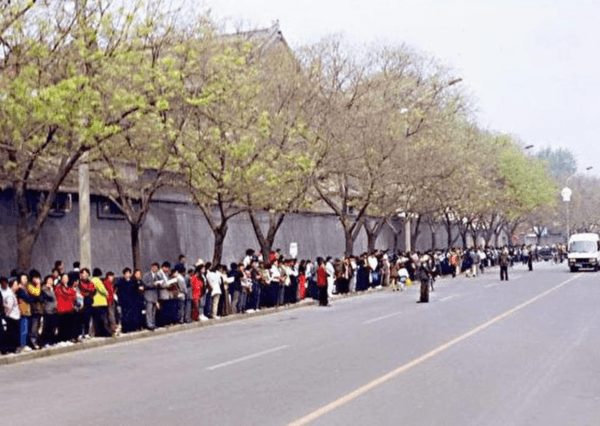
On April 25, 1999, more than 10,000 Falun Gong practitioners gathered peacefully outside Zhongnanhai, the CCP leadership compound in Beijing—the largest spontaneous, nonviolent appeal in China since 1989. They sought only an end to the escalating harassment and media attacks that they were facing.
The response was merciless. Then-CCP leader Jiang Zemin, fearing any group he could not control, ordered the nationwide ban in July 1999 and launched a campaign to “ruin their reputation, bankrupt them financially, and destroy them physically.”
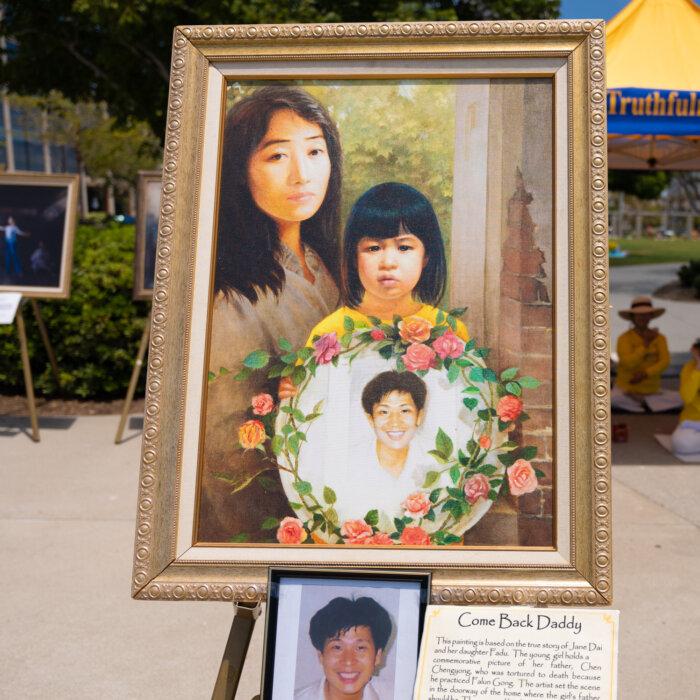
The regime created a state-sanctioned system of forced organ harvesting from prisoners of conscience—its own people. To this day, Falun Gong practitioners have been the primary victims.
The same infrastructure was turned on Uyghurs, Tibetans, Christians, and other minorities. Detainees are blood-tested and organ-scanned not for their health but to stock a living organ bank. When a paying customer needs a heart, liver, kidney, or cornea, a matching prisoner is killed on demand.
Independent evidence is overwhelming. The China Tribunal—an international panel chaired by a former U.N. war-crimes prosecutor—examined mountains of data, hospital records, and witness testimony. In 2020, it concluded, unanimously and beyond a reasonable doubt, that forced organ harvesting had been committed on a significant scale for years, with Falun Gong practitioners as the primary source. It found no evidence that the infrastructure had been dismantled. The practice continues.
What does this tell us about the regime itself?
It tells us that the CCP views human beings not as citizens with rights but as raw material—disposable resources to be harvested for profit and power. It has industrialized the atrocity. It lies without hesitation to the world, claiming a “voluntary donation” system while the bodies keep disappearing.
A government that systematically murders its own people for their organs has no moral floor. It respects neither life nor law.
The answer, I believe, is no. And that is why the idea that Beijing would honor international commitments, trade deals, or strategic agreements was always a pipe dream. If the CCP treats its own people this way, why would it treat foreign partners any differently when it becomes convenient?
Nations that have tried to build long-term relationships with Beijing have learned this the hard way. Israel sought constructive business ties, yet the CCP has worked against Israeli interests at every turn—most notably by refusing to condemn the Oct. 7, 2023, Hamas massacre and by remaining a longtime supporter of Iran.
Even the regime’s so-called allies, such as Iran, have been treated purely transactionally. Beijing eagerly buys Tehran’s discounted, sanctioned oil and sells it dual-use technology, but it offered no meaningful aid when Iran came under attack last summer and again this spring. The only time that China reliably shows up is when the fighting ends and multibillion-dollar reconstruction contracts are on the table.
The choice before us is whether to continue ignoring the warning signs, or to finally act on what the evidence has been telling us for more than 77 years.