Most Americans think nothing of referring to our nation’s birthday as “the Fourth of July.” But I learned the hard way not to do that in my Army Reserve Officer Training Corps (ROTC) days in college.
I’ll never forget one of the times Sgt. Thayer, a regular Army soldier, decided to randomly quiz our ROTC squad on military regulation and history while we were in formation, following an early-morning inspection. One of the questions was:
“What American holiday do we celebrate in July?”
“The Fourth of July, Sergeant.”
Thayer’s response?
“GET ON THE GROUND! COUNT THEM OUT!”
Then he called on another cadet. Same question, same answer, more pushups.
This pattern repeated several times until one of the putatively better-educated members of the squad, whose family had an extended and extensive military past, finally answered: “Independence Day.”
I suppose I had never really given it due consideration until then.
I learned plenty from being a cadet, but the appropriate labeling of this historically significant event is one lesson that I think all Americans should also commit to as we prepare to celebrate the 250th anniversary of our Founding Fathers’ declaration of colonial independence from Great Britain.
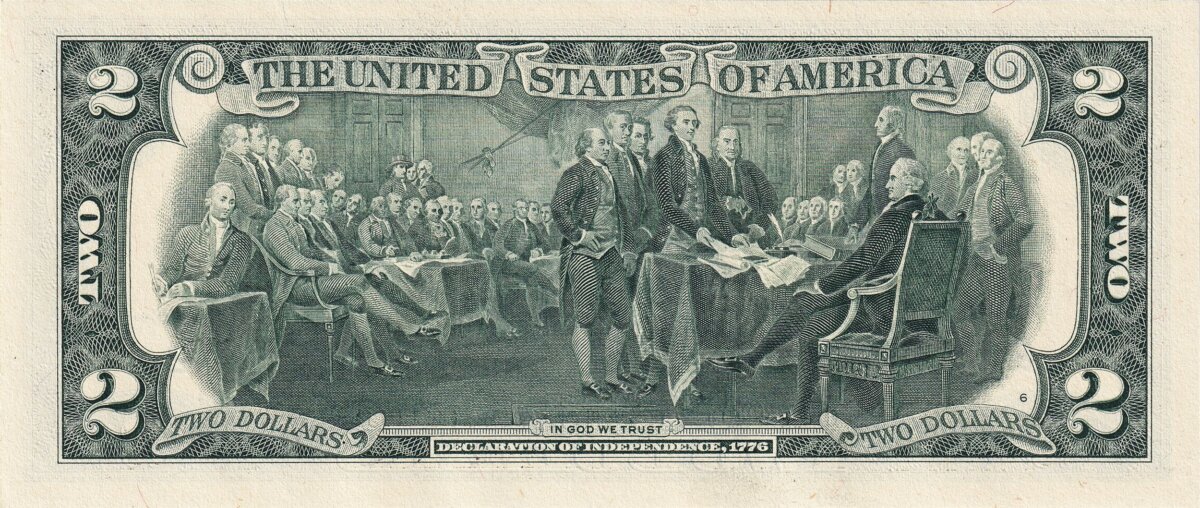
America was founded on a set of beliefs and convictions—what Thomas Jefferson described as self-evident truths (actually, Jefferson originally wrote “sacred and undeniable” which was revised to the more secular “self-evident”) that were proclaimed in the 1776 Declaration of Independence and then protected by the Bill of Rights and the Constitution.
The Declaration established the first modern country founded on principles of individual freedoms. It also led to the selection of U.S. government leaders by the people, rather than through an inherited bloodline of kings and nobles.
Stating a Date Versus an Occasion
Why is the U.S. holiday reduced to its calendar date by seemingly everyone? Can you recall the last time anyone wished you a Happy Independence Day versus a curt Happy Fourth? That kind of labeling debases the magnitude of what the day represents. And the problem seems to get worse with every passing year.Nobody refers to Christmas Day as the 25th of December. Nobody greets you on New Year’s Day with “Happy January first.” Calling it Independence Day honors the foundational designation and the values of liberty and freedom that the holiday represents.
A True Celebration of America
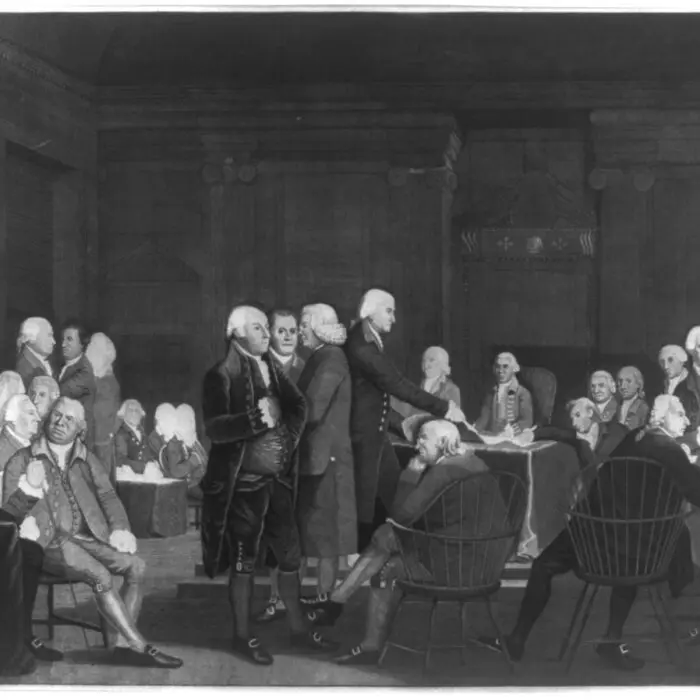
Independence Day is unlike the adjacently occurring Memorial Day, which was intended as a somber day meant to valorize those who died in wars to protect our liberties. Many Americans unfortunately see Memorial Day as nothing more than a long weekend for vacations, barbecues, and other leisurely indulgences. Even outspoken “progressive” Democratic members of Congress endlessly lecturing Americans about our Constitution and fairness pathetically fail to comprehend the solemn meaning of Memorial Day—which incidentally seems to be on-brand with their particular political platforms.The Fourth of July is just a date on the calendar. What happened on the Fourth of July in 1776 was the Continental Congress voting to adopt the written Declaration of Independence, but just “declaring” it wasn’t enough. The preceding and subsequent American Revolutionary War to actually make it part of history took more than eight years (April 19, 1775, to Sep. 3, 1783).
Besides, there is historical disagreement over the exact date on which we should celebrate, illustrating that the date itself seems far less important than the actual celebration of American Independence.
It was also Adams who presciently warned us that:
“Our Constitution was made only for a moral and religious people. It is wholly inadequate [for] the government of any other.”
One of those morals must be to teach its citizens about the excellence and successes of the American experiment and why our independence, freedoms, and historical successes are special and the envy of others.
Independence Day is a monumental occasion meant for celebration and festivities, but Americans should at least label the occasion by its official title to invite reflection rather than just say a date.
America’s freedoms did not emerge organically. They was born out of the honor, courage, and sacrifices of our Founding politicians, soldiers, and citizens.
We owe it to ourselves and our history that we live up to the principles of America’s Founding Fathers.
Don’t take the sacrifices of others and our freedom for granted. Start by teaching yourself to label the occasion by its name: Independence Day.
You will remind yourself and others what the day represents.
And if you forget, drop and give yourself 20.