Commentary
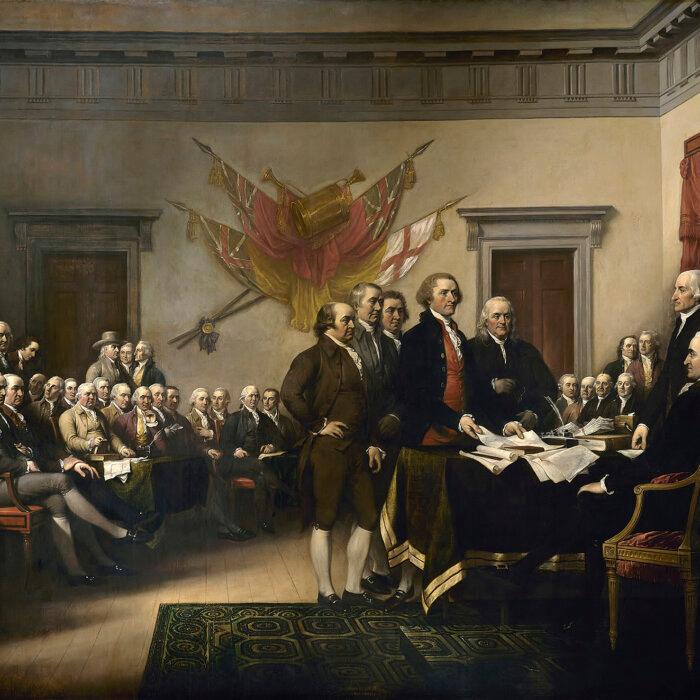
When the Continental Congress approved the Declaration of Independence on July 4, 1776, its immediate purpose was practical: to justify severing ties with Great Britain and explain to audiences both foreign and domestic why rebellion had become necessary. Yet the document’s historical importance extended far beyond the 13 colonies. The American declaration not only created a new nation, but helped establish a new political language: a language rooted in natural rights, popular sovereignty, and the legitimacy of political self-determination. It was a language that would reverberate across continents for centuries.
The Declaration was not created in an intellectual vacuum. Many of its ideas had antecedents. English constitutional traditions such as the Magna Carta (1215), the English Bill of Rights (1689), and the political philosophy of John Locke had already challenged arbitrary power and emphasized limits on government. Earlier independence struggles, including the Dutch revolt against Spain in the 16th century and Switzerland’s gradual emergence from Habsburg domination, demonstrated that political separation from empires was possible. But these examples differed in important respects. Most sought restoration of ancient privileges or dynastic autonomy, rather than asserting universal rights applicable to all people.
The Declaration of Independence represented something different. Thomas Jefferson’s famous claim that “all men are created equal” and were endowed with “unalienable Rights” transformed political separation into a moral argument grounded in universal principles rather than tribal, dynastic, or exclusively territorial claims. Equally important was its assertion that governments derive “their just powers from the consent of the governed,” and that people possess the right to alter or abolish destructive governments. That argument was revolutionary not merely because it justified American independence, but because it implied that political legitimacy rested within citizens rather than the divine or inherited rights of nobility.
The first major echo came in France. French officers who fought in the American Revolution returned home with firsthand exposure to republican ideals, while France’s own fiscal crisis intensified political tensions. The French Revolution of 1789 differed dramatically in temperament and outcome, but the language of the “Declaration of the Rights of Man and of the Citizen“ unmistakably reflected that American influence, emphasizing as it did liberty, equality before the law, and sovereignty of the nation. The Marquis de Lafayette, the French officer who had volunteered under George Washington, worked closely with Jefferson while drafting portions of the French declaration.
American independence also resonated powerfully in Haiti. Inspired partly by both American and French revolutionary ideals, enslaved Haitians launched the only successful slave revolt in modern history, culminating in Haitian independence in 1804. Although the Haitian Revolution exposed contradictions within colonial societies that proclaimed liberty while tolerating slavery, it was also a crucial extension of the language of rights and independence beyond its original context. Jefferson’s words, and the tradition that he was adding to, could inspire oppressed peoples to demand equal treatment under the laws of their own lands.
Nowhere was the American example more influential than in Latin America. Revolutionary leaders such as Simón Bolívar, José de San Martín, and Francisco de Miranda studied the American founding closely. Between 1810 and 1830, much of Spanish America declared independence, producing constitutions modeled in part on the American experiment with republican government and written constitutions. Although many of these republics struggled politically or abandoned the economic implications of the American founding, the notion that colonies could become sovereign constitutional states had become increasingly imaginable post-1776.
Jefferson’s proof of concept expanded its influence through the nineteenth century. Greece’s war of independence against the Ottoman Empire in the 1820s, Belgium’s independence in 1830, and the revolutions of 1848 across Europe all reflected growing demands for national self-government and constitutional protections. Even when revolutionary efforts failed, the principle that governments required legitimacy from the governed gained ground. Written constitutions proliferated, and representative institutions gradually spread.
The twentieth century brought a new wave of independence movements shaped, at least indirectly, by the precedent of 1776. After World War I, Woodrow Wilson’s language of national self-determination drew on principles familiar to the American founding. Following World War II, anti-colonial leaders in India, Africa, Southeast Asia, and the Middle East increasingly justified independence through appeals to self-rule and political rights. Ho Chi Minh explicitly quoted the American Declaration in Vietnam’s 1945 declaration of independence, while numerous postcolonial constitutions borrowed structural ideas from the U.S. model. To be sure, many movements drawing upon or invoking the Declaration of Independence did so selectively, opportunistically, and at times disingenuously, employing its language more as a source of political legitimacy than as a genuine statement of principle or guide to action.
Was July 4, 1776, truly unprecedented? In the strictest historical sense, no. Human beings had long resisted empires, revolted against kings, and sought personal and commercial autonomy. The American founding borrowed heavily from Enlightenment philosophy, English constitutional traditions, and older republican ideals. Yet in another sense, it was profoundly unprecedented. Never before had a colony articulated independence so explicitly through universal principles, justified revolution through natural rights, and successfully institutionalized those ideas within a durable constitutional order.
The Declaration’s greatest contribution may therefore have been not invention, but demonstration. It showed that a people could justify independence through ideas rather than ancestry, establish government by consent as opposed to inheritance, and sustain a republic based on written constitutional rules. In doing so, the American Revolution expanded the realm of political possibility.
For millions around the world, July 4, 1776, became more than an American event. It became evidence that liberty, having been declared, might also be achieved.
Reprinted from The Daily Economy, a publication of the American Institute for Economic Research.
Views expressed in this article are opinions of the author and do not necessarily reflect the views of The Epoch Times.