



Americans, it seems, have aliens on our brains.
President Donald Trump, who has ordered the government to release files on UFOs, recently said the disclosure process has “found many very interesting documents,” and “the first releases will begin very, very soon.”
Meanwhile, U.S. House Rep. Tim Burchett (R-Tenn.), who helped lead Congress’s 2024 hearings on unidentified anomalous phenomena, has recently been on a media blitz saying that the public would be “up at night” if “the things that I’ve seen” were released.
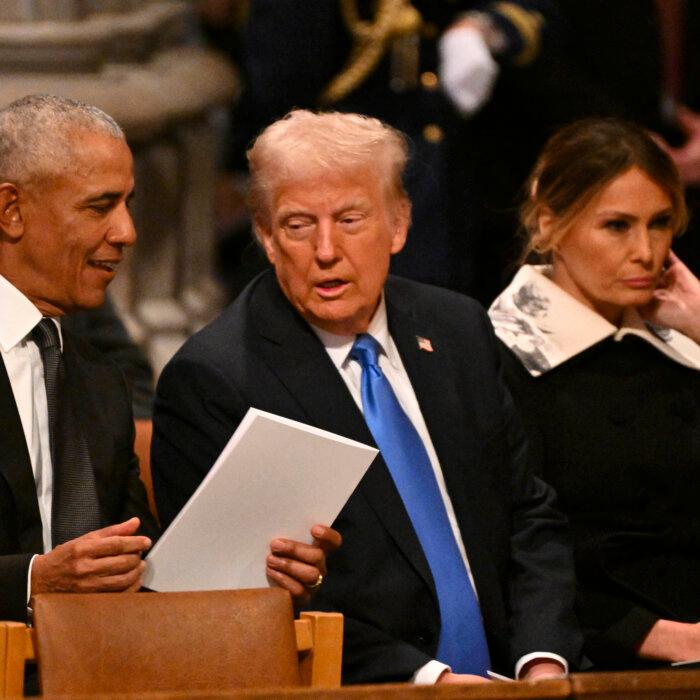
Even the more demure former President Barack Obama has waded into the conversation. In February, he stated that, “Statistically, the universe is so vast that the odds are good there’s life out there.”
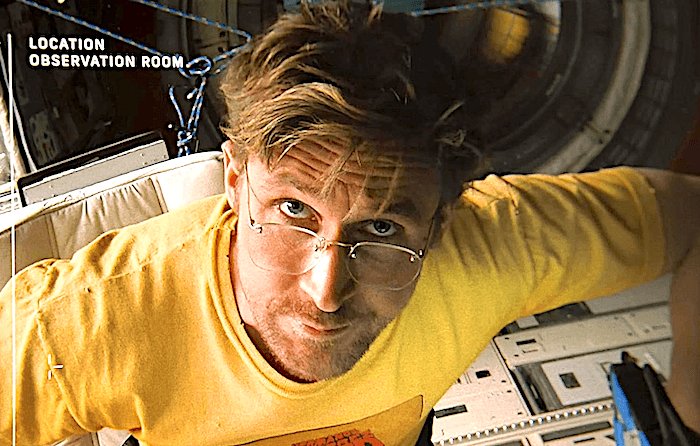
How many times have we heard that before? I first heard it in college, in the 1997 movie “Contact,” in which Jodie Foster’s character says, “the universe is a pretty big place,” so “if it’s just us, seems like an awful waste of space.”
It’s a very safe argument. No hard evidence of aliens is required. It’s just a supposition, with a dash of science, that they “ought” to exist.
Yes, the universe is vast, but the logic about aliens is loaded with dubious assumptions.
First, it assumes that life evolved naturally on Earth. If so, it follows that life should evolve anywhere under the right conditions. If the universe is big enough, then “statistically,” life “must” have evolved elsewhere.
As a Christian, I would have no problem with ETs. The Bible doesn’t say whether there is or is not life on other planets.
However, as a scientist, I have major reservations about the alien argument. Its first premise—that life evolved naturally—isn’t supported by compelling evidence.
Some might recognize life’s design, but claim aliens were our designers. Even the Nobel Prize-winning scientist Francis Crick proposed “directed panspermia”—the idea that life on Earth was seeded by aliens. But that just kicks the can down the road—where did the aliens come from?—and fails to explain other key data.
The astronomer Allan Sandage—whose research was crucial to supporting the Big Bang—saw it that way. He remarked that, “God to me is a mystery but is the explanation for the miracle of existence.”
Moreover, the laws and constants of nature are balanced on a knife’s edge: If they were only slightly different, life could not exist. As the Nobel Prize-winning physicist Charles Townes noted, “intelligent design ... seems to be quite real” because “if the laws of physics weren’t just the way they are, we couldn’t be here.”
Again, aliens—subject to physical laws just like we are—cannot explain why the universe is exquisitely fine-tuned for life.
Our vast, beautiful universe wasn’t the work of aliens but of a single transcendent creator who crafted the cosmos, its laws, and all its inhabitants—whether they be human, alien, or something else.