Joint Chiefs of Staff Chairman Gen. Dan Caine highlighted the Warthog’s southern-flank contributions in a March 19 briefing, noting its ability to provide persistent overwatch where speed and altitude are actually negatives when it comes to the kind of clearing operations for which the A-10’s versatility and toughness make it ideal.
The A-10’s versatility starts with its enormous loadout capacity. A single Warthog can haul up to 16,000 pounds of mixed ordnance across 11 hardpoints. Current missions have it carrying AGM-65 Maverick air-to-ground missiles for precision strikes on boats or armored vehicles, APKWS II laser-guided rockets that deliver low-cost kills against cheap drones and agile fast boats, and AIM-9 Sidewinder missiles for additional air-to-air or anti-drone capability. The A-10 can also deliver general-purpose bombs with great precision, and it can dispense mines. All of this is in addition to the aircraft’s legendary 30mm GAU-8 Avenger seven-barrel Gatling gun, firing 3,900 rounds per minute. With 1,174 rounds, the GAU-8 can shred all but the heaviest armor, small vessels, structures, and personnel with devastating kinetic energy.
No other fixed-wing platform or helicopter combines this sheer volume of firepower with the flexibility to switch seamlessly among missiles, rockets, guns, and bombs on the same sortie. And its drone-killing rockets cost just $25,000 to $35,000 each, compared with the hundreds of thousands to more than a million for the missiles an F-35 would have to use to kill a $20,000 drone.
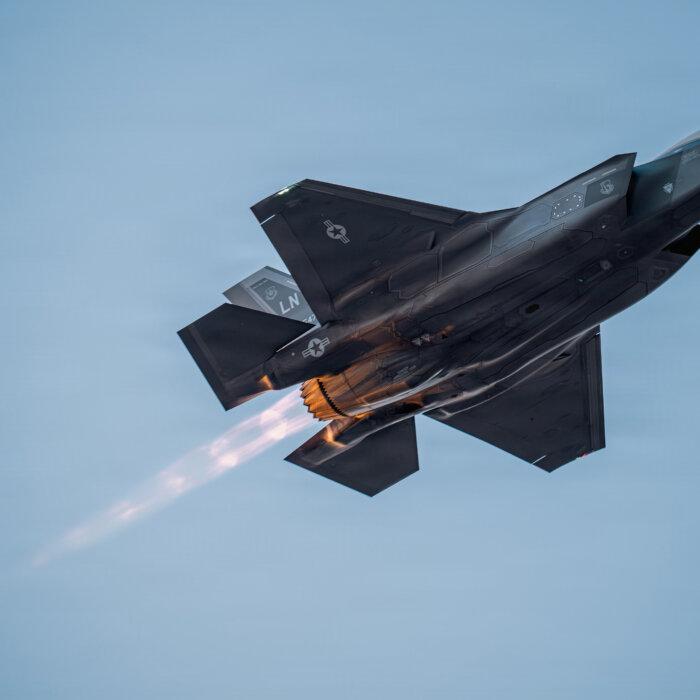
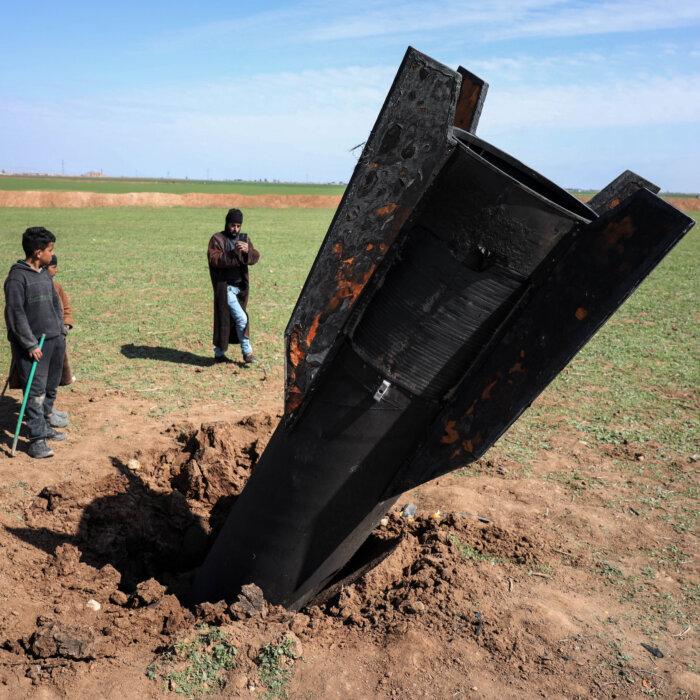
That versatility is amplified by the A-10’s unmatched ability to hit a target, duck behind a ridge or other terrain feature, and then come back to hit another target. Fast, high-flying fighters launched from hundreds of miles away from the target burn through fuel rapidly and typically must return to base after a single pass. Advanced, very expensive drones such as the MQ-9 Reaper offer endurance but lack the Warthog’s raw destructive power and survivability. The A-10, by contrast, can loiter for hours at low altitude, engage multiple IRGC fast boats or a flight of drones, pull back beyond visual range or behind terrain to avoid return fire, and then reenter the engagement minutes later with its gun, rockets, bombs, or even air-to-air missiles. This capability is invaluable in the ongoing, extremely important efforts to break Iran’s control of the Strait of Hormuz.
Of course, the Warthog is far from invulnerable. Yet its unmatched toughness, coupled with its unparalleled ability to use low-level flying and terrain masking and an extensive suite of defensive countermeasures, allows it to operate in environments that would be more perilous for any other aircraft. Twelve hundred pounds of titanium armor form a “bathtub” around the cockpit and critical systems. Double- and even triple-redundant systems enable the plane to get its pilot home after sustaining damage that would be fatal for any other aircraft. Chaff, flares, and electronic warfare jamming pods help it avoid having to demonstrate its toughness. And its legendary low-and-slow flight profile lets pilots hug the earth or duck behind ridges to break line of sight with enemy radars and gunners. Where other aircraft need to remain at high altitude or engage from large standoff distances, the Warthog operates where the fight actually is. And with Iran’s air defenses much degraded, the Warthog’s chances of returning from a mission become all that much better.
Retired A-10 pilot Lt. Col. Thomas Norris, who has more than 3,000 hours in the cockpit, stated, “Unless you have lived and breathed CAS 24/7, you don’t know CAS and are likely to underestimate how hard it is and how important it is.”
A veteran Air Force joint terminal attack controller echoed this in past operations: “I have worked with F-16s, B-1B bombers, F-15s, F-111s, F/A-18s, etc., and no other [close-air-support] plane comes even close to the A-10.”
These words continue to ring true as the Warthog loiters over the Persian Gulf, delivering what fast jets and drones cannot.
But the troops on the ground and the joint terminal attack controllers who have called in A-10 strikes under fire know better. And the combat record in 2026 is making the case once again. Sure, drones can provide some types of close air support, but the robust, heavily armed, unjammable A-10, with a moral agent going into harm’s way at the real point of the spear, brings something to the battlefield a drone with its operator safely ensconced far away from the line of contact cannot—and that is precisely why the A-10’s retirement should be canceled for the foreseeable future.
So, as the battle for the Strait of Hormuz ramps up, the “obsolete” A-10 is once again providing bang-for-buck lethality unmatched by any other U.S. aircraft, proving that on the modern battlefield, durability, reliability, and an ability to operate at the line of contact are hard to beat.