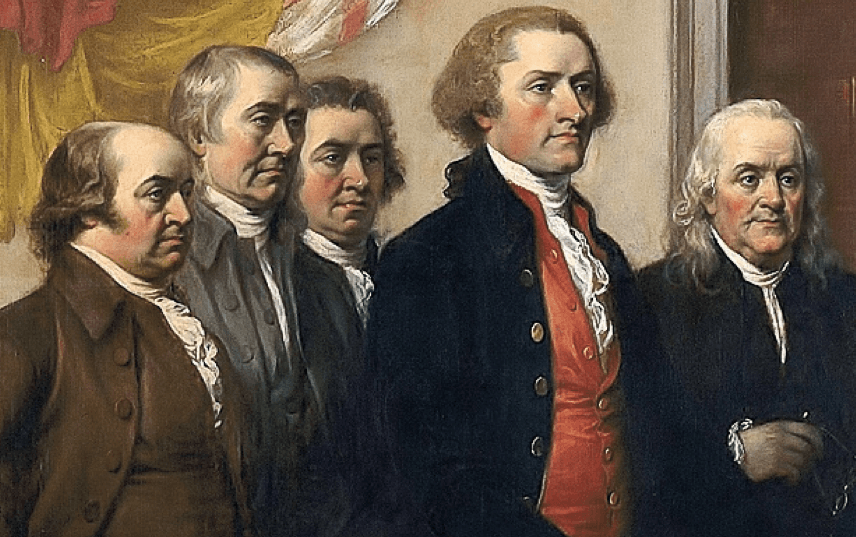
Expand the number of core ideas under consideration to three and you get unalienable rights, self-evident truths, and free market economics.
You could call them the three pillars of the American Idea.
These three pillars are the direct gifts to America of three great thinkers of the Scottish Enlightenment: Francis Hutcheson, Adam Smith, and Thomas Reid.
Francis Hutcheson
Francis Hutcheson: “Our rights are either alienable or unalienable ...”
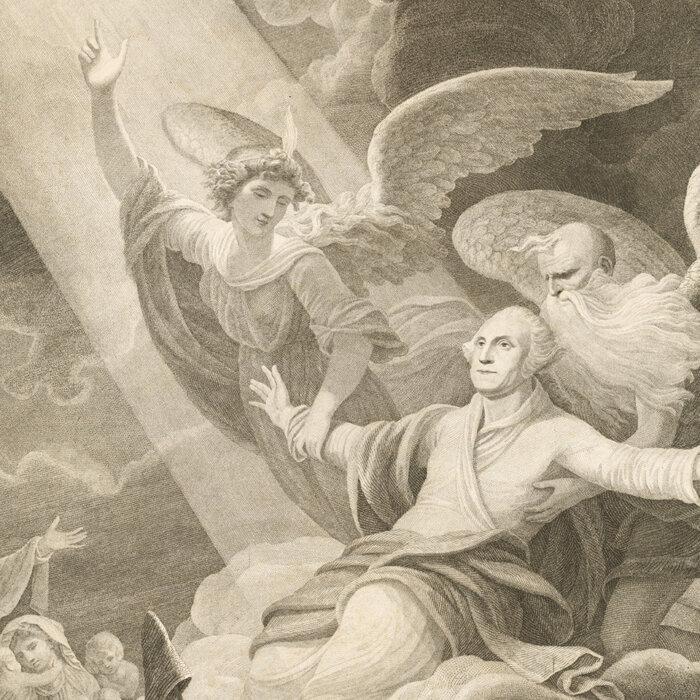
A revolution in thinking about our rights preceded the American Revolution. In the words of George Washington, America’s founding took place during a time “when the rights of mankind were better understood and more clearly defined than at any former period.” Hutcheson’s analysis of our rights showed the way.
The meaning of Hutcheson’s distinction was sharp and clear in the founders’ time but to understand it today you and I must first be clear about the meaning of “alienable.” Here is its complete definition in my dictionary: “adj. Law. Capable of being transferred to the ownership of another.” Your right to your car is an alienable right; because your car is your property, you can sell your car or give it away—but our rights to our lives and our liberty are unalienable, that is, not property, not capable of being transferred to the ownership of another.
Locke: “Man ... hath by nature a power ... to preserve his property—that is, his life, liberty and estate.”
According to Hutcheson and the founders, our rights to our lives and our liberty are not property; those rights are unalienable, inherent, essential, and not transferrable.
Hutcheson’s distinction provided the intellectual foundation for two of the greatest achievements in world history: Adam Smith’s “The Wealth of Nations” and the Declaration of Independence. Adam Smith’s focus was our alienable rights; the American founders focused on our unalienable rights.
The Declaration and “Wealth” both entered the world they were to transform in the same year, 1776.
Adam Smith
Francis Hutcheson mentored Adam Smith. Upon Hutcheson’s death, Smith was appointed to the prestigious professorship at the University of Glasgow that Hutcheson had held.Smith’s epoch-making “Inquiry into the Nature and Causes of the Wealth of Nations” is the foundation of free market economics. Hutcheson’s analysis of our rights set the direction Smith took. In “Wealth,” Smith famously demonstrated that the division of labor is the source of the wealth of nations.
In one of the most frequently quoted passages from “Wealth,” Smith makes clear the source in human nature of the all-important division of labor: “This division of labour ... is the necessary ... consequence of a certain propensity in human nature ...; the propensity to truck, barter, and exchange one thing for another.”
The social order that resulted from the new thinking of the Scottish and the American enlightenments was a far cry from the world that assigned supremacy to hereditary monarchs and hereditary aristocrats.
Thomas Reid
When Thomas Jefferson wrote “We hold these truths to be self-evident,” he was relying on the thinking of Thomas Reid.Reid’s “An Inquiry Into the Human Mind on the Principles of Common Sense” was published in 1764, the same year he was awarded the prestigious professorship formerly occupied by Francis Hutcheson and Adam Smith.
I write in my book “Reclaiming Common Sense”: “Reid’s philosophical purpose was to provide a foundation for morality and knowledge. He argued that there is an endowment of human nature that makes both morality and knowledge possible, and he called it common sense. ... With it, we are able to make rational judgments and moral judgments. Common sense is the human attribute that makes it possible for us to be rational creatures and moral agents.