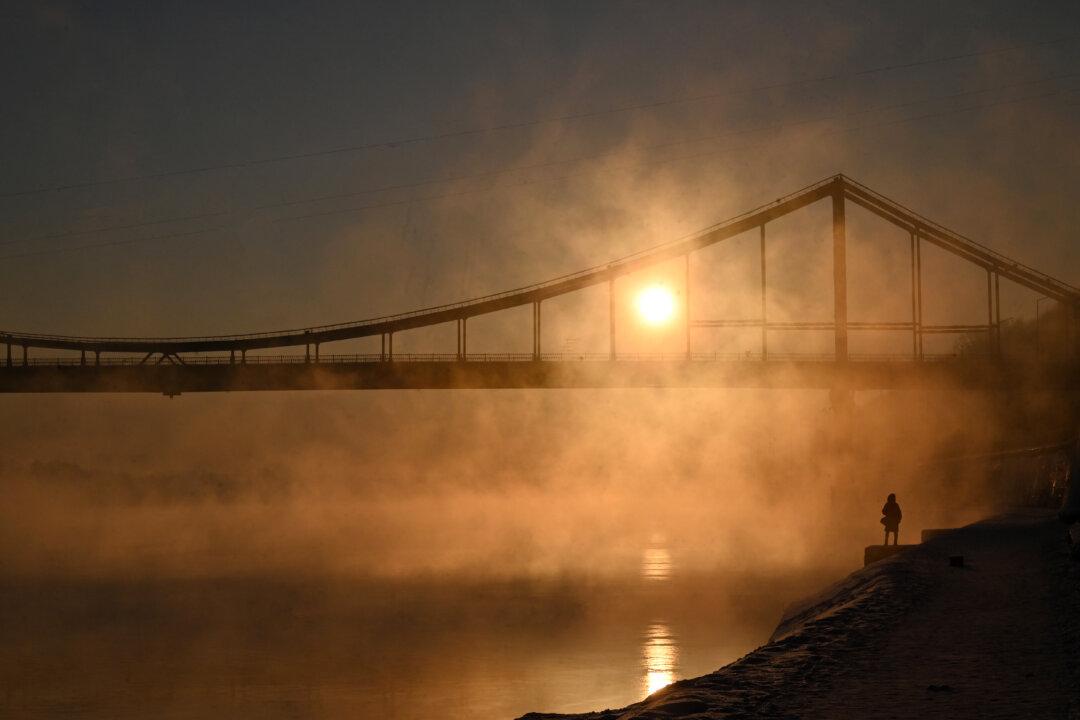
Something is happening right now that has no hashtag, no influencer, and no algorithm promoting it. It’s a silent revolution that won’t be televised, livestreamed, or even posted.
In 2023, the Surgeon General issued an advisory declaring loneliness a national health crisis. Approximately half of U.S. adults report experiencing measurable loneliness. Not sadness, and not some kind of social inconvenience. Full-blown loneliness. The kind that increases your risk of heart disease by 29 percent and stroke by 32 percent. The kind that, between 2003 and 2020, added 24 hours per month to the average American’s time spent alone.
We are, by every official measure available to us, a nation of people who are deeply, structurally disconnected. And yet we have never been more “connected” in the history of human civilization. Something doesn’t add up. And a growing number of Americans are starting to act on that feeling.
Every month, nearly 2 million U.S. users search for how to delete or deactivate a major social media account. Instagram leads the exodus. TikTok follows. Then Facebook. Then X.
I find that interesting, as X has the least “social” component to it, if you ask me, whereas the others have a “profile” and a very obvious front-facing social “identity” aspect. All these in digital departure aren’t teenagers having a bad week. These are people—living, breathing human beings, many of them younger than the age of 25—who have looked at the thing that was supposed to connect them and quietly decided that it wasn’t doing what it promised.

Johann Hari, in “Stolen Focus: Why You Can’t Pay Attention—and How to Think Deeply Again” (2022), presented an extended investigation into what he called a “global attentional crisis.” In it, he put the attention research plainly: College students in one study could focus on a single task for an average of 65 seconds before switching. Office workers managed about three minutes. And in a Carnegie Mellon experiment, students who received text message interruptions during a test performed roughly 20 percent worse than those whose phones were off.
We are not just distracted. We are being cognitively restructured. And the people leaving social media aren’t running from something abstract. They’re running toward something they can feel in their bodies with somatic urgency: The need to be present, to think clearly, and, as Ram Das invited, to be here now.
Cal Newport called it digital minimalism—the idea that technology should serve your values, not the other way around. Jenny Odell went further in “How to Do Nothing,” arguing that reclaiming attention means turning toward local life, toward ecology, toward the people physically in front of you. I had to Google what ecology was. Ecology is the scientific study of how living organisms interact with each other and their environment. Sounds like we need more of that, as our environment is newly (extremely) digital, and we need more solutions for our newfound situation. Forty-six percent of Gen Z now say they are actively taking steps to limit their screen time. That’s not a trend. That’s a generation making a choice.
But the exodus from screens is only half of what’s moving. The other half is geographic.
Since 2020, two-thirds of all population growth among Americans aged 25 to 44 has occurred in small towns and rural counties—reversing a decade-long pattern in which some 90 percent of that same demographic flowed into the largest cities. The University of Virginia’s Cooper Center called it the highest rate of young adult migration to small towns in nearly a century. The Department of Agriculture confirmed that rural domestic migration jumped from near zero in 2019 to more than 0.35 percent by 2023—and has held.
People are moving. Not in enormous waves. Quietly. Deliberately. Toward smaller places, slower rhythms, and more room to breathe.
And many of them are homesteading. Between 180,000 and 750,000 U.S. households now live off the grid to varying degrees—generating their own power, growing their own food, and managing their own water. A 2023 poll of nearly 4,000 members of Homesteaders of America found that more than one-quarter had begun within the previous three years.
These are not people who grew up on farms. They are millennials and younger adults who looked at the systems they inherited—the speed, the noise, and the screen-mediated everything—and chose to build something different.
There’s a word for what this is, and it isn’t rebellion.
Rod Dreher called it the Benedict Option—named after St. Benedict, who, in the fifth century, as the Roman Empire fractured around him, didn’t fight the chaos. He built monasteries: small, intentional communities in which people could live by rhythm, practice, and presence, insulated enough from the surrounding disorder to actually function as human beings. I’ve heard dozens of my millennial-aged friends share a vision for this same kind of thing. Living off-grid, in a customized community, with way tighter social-spiritual protocol than they can find anywhere near a big city.
I don’t think Dreher’s point was that the world should be abandoned. It was more that the world cannot be saved from the outside until someone first builds the inside, meaning that you can’t pour from an empty vessel. You can’t restore what you haven’t first preserved. It’s not a “top-down” approach. It’s a “ground-up,” or “roots-to-clouds,” approach.
Political scientist James C. Scott wrote about what he called “weapons of the weak”—the quiet, unglamorous ways that people throughout history have resisted systems that threatened to swallow them. Not through big, ornate protests that demand attention, but through a subtle, nuanced revolution that retracts from the large popular-group-herd patterns of the moment. Through practice, showing up, and doing the small, invisible things that keep the larger thing alive.
Homesteading is a weapon of the weak. Deleting your Instagram is a weapon of the weak. Moving to a town of 3,000 people and starting a garden is a weapon of the weak. Choosing not to join in on an argument is a weapon of the weak. None of it makes headlines. All of it is working.
German sociologist Hartmut Rosa spent decades studying what he calls social acceleration—the way modern societies demand that we move, produce, and consume at ever-increasing speeds. His research concluded that acceleration eventually destroys the very thing it’s supposed to enhance: cultural resonance. The capacity to feel genuinely connected to your life, your relationships, and your surroundings—basically, how you can optimize everything around you and yet still end up hollow inside. That sounds familiar.
Byung-Chul Han argued something similar from a different angle. He described the modern individual as an “achievement subject”—like someone who has internalized the demand to perform, to optimize, to be productive at all times. The achievement subject doesn’t burn out from being oppressed. It burns out from trying to be everything the system asks it to be. The exhaustion isn’t imposed from outside; it’s self-generated.
What’s interesting to me is that the people leaving social media, moving to small towns, and homesteading aren’t reading Rosa or Han. They don’t need to. They can feel it. They can feel the burnout. It’s an ontological, spiritual, metaphysical crisis before it’s socially obvious. People can feel the hollow hum within a life lived at a certain speed. And they’re choosing—instinctively, somatically, in their bodies—to slow down. There is a kind of spiritual warning light that goes off in all of us, some quicker than others, that demands a pivot—or else. That choice has a name, and I’m not sure it’s worth putting a name to right here, right now. But it’s there, and silently, it resists the social-cultural patterns that cause the soul sickness.
I’m not putting forth an “anti-technology” thesis. I don’t think we can be at this point. It isn’t even necessarily political, although it will be read that way by people who need everything to be political. It’s something quieter and more durable than politics. It’s the ancient, recurring human response to a world that has accelerated past the point of meaning: to build something that holds.
A garden. A family. A faith practice. A neighborhood where people know each other’s names. A morning without a screen. A meal made from scratch. A Sunday that belongs to no one’s algorithm. Maybe even a Facebook group or Reddit thread. A Trojan horse of sorts.
These are not radical acts in the grand historical sense. They are the most ordinary acts imaginable. And that’s why they work. Chaos can’t touch what it can’t see. And the quietest revolutions are always the ones that last.
There is someone in my life who, every time that person pops up, it’s guaranteed drama. Every time, I block that person and keep it moving, as I don’t believe that the solution is in matching the flame with more flame. Call it passivity, wisdom, or whatever you want. But I believe that there are millions among us who notice that same situation on a grand scale, and when they take action, only those with eyes to see even notice.
Those young adults moving into small towns aren’t rejecting the future; they’re sculpting one. The homesteaders aren’t retreating from civilization; they’re building a version of it that sustains a human life instead of endangering it. The Gen Z kids deleting TikTok aren’t technophobes; they’re the first generation to grow up inside the machine and decide, with open eyes, that something better is possible.
They’re not rebels; they’re silent revolutionaries. So here’s the question, and it’s not rhetorical: What would you build if no one was watching?
Not what would go viral. Not what would get likes, followers, or validation from the feed. What would you build if the only measure of success was whether it actually made your life—and the lives of the people closest to you—more whole and fulfilled?
I believe that’s what’s happening right now, in small towns and homesteads and quiet mornings and deleted apps across this country. People are answering that question. Not loudly, not publicly, not in ways that trend.
Quietly. Persistently. One small, invisible choice at a time. And it might be the most important thing happening in the United States right now.