For more than a decade, Canada has allowed the official residence of its prime minister to sit vacant and deteriorate. What should be one of our country’s most recognizable national symbols has instead become an international embarrassment. It is time to restore 24 Sussex Drive. This should never have become a partisan issue. The residence belongs neither to a prime minister nor to a political party. It belongs to Canada.
Like Parliament, Rideau Hall, and the Supreme Court, 24 Sussex is one of the institutions that reflects the continuity of our democracy. Countries reveal much about themselves by the way they treat their public institutions. Nations that respect their history preserve it. Nations confident in their future invest in it. Canada should do both.
Critics point, understandably, to homelessness, the housing shortage, and growing federal deficits. These are serious national challenges, but governments are expected to address more than one priority at a time. Repairing an important public asset does not prevent Canada from building homes, strengthening the economy, or restoring fiscal discipline.
Indeed, postponing repairs has only made the problem more expensive. Deferred maintenance is rarely economical. Every homeowner understands that a leaking roof eventually becomes structural damage. Governments should be expected to understand the same principle. Neglect is not thrift. It is simply delayed spending at a higher cost.
The real debate should therefore not be whether 24 Sussex should be restored, but how to restore it responsibly. The objective should be straightforward: preserve the historic residence while modernizing its infrastructure, strengthening security, improving energy efficiency, and ensuring it can properly serve the practical needs of a 21st-century prime minister. If additional office or reception facilities are required, they should complement the residence rather than overwhelm it.
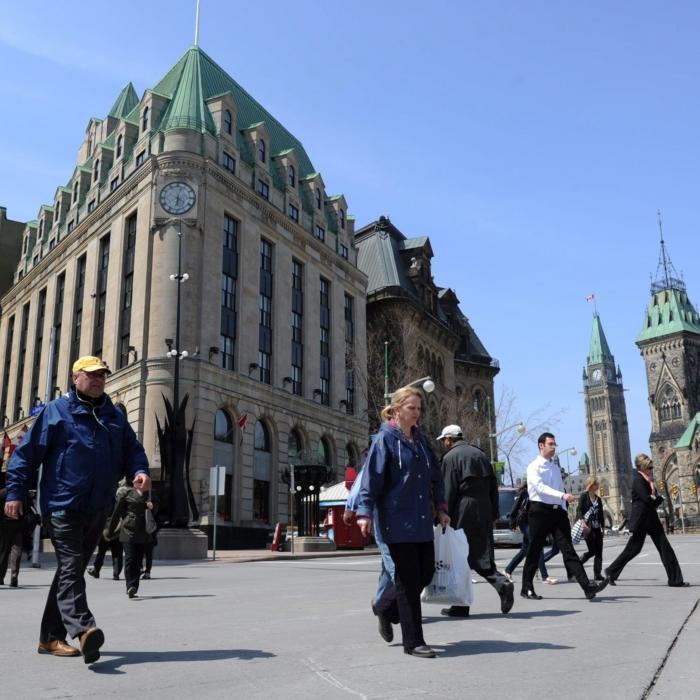

Canada does not need a palace. One of the defining virtues of 24 Sussex has always been its modesty. Unlike many presidential residences elsewhere in the world, it reflects Canada’s political culture: practical, democratic, and understated. That character should be preserved while ensuring the building meets modern standards of safety, security, and functionality.
Its location also matters. Overlooking the Ottawa River and situated only minutes from Parliament Hill, 24 Sussex has hosted presidents, monarchs, prime ministers, and countless international guests. Its historical significance cannot simply be transferred to another property. Restoring an existing federal heritage building is both the more respectful and, in many cases, the more prudent course.
Prime ministers come and go. Institutions endure. Whether the occupant is Liberal or Conservative is entirely beside the point. Every future prime minister deserves an official residence that reflects the dignity of the office, and every Canadian deserves confidence that important public assets are responsibly maintained. Prime Minister Mark Carney’s decision to restore 24 Sussex is therefore the right one, provided it is carried out with transparency, fiscal discipline, and careful oversight.
A nation that neglects its symbols eventually weakens the institutions they represent.