Imagine taking the subway to work, when the train comes to a sudden halt halfway between scheduled stops. You pull out your smartphone to go online and see what the problem is, but you have no reception—no cell signal, no internet.
Hours later, rescue workers arrive to extract you and your fellow passengers from the stalled train. You make your way to the street in hopes of taking a taxi or an Uber. But without your phone apps and with credit card machines inoperable, you are forced to search for an ATM—only to discover that those aren’t working, either.
You soon realize that everyone else is in the same predicament. Hospitals operating on emergency backup systems. People trapped inside elevators. Traffic snarled because of inoperable stoplights. Gas station pumps not functioning. Airport terminals closed. People in darkened homes desperately searching for candles and battery-operated radios to learn what’s happening.
On April 28, the residents of Spain, Portugal, and parts of France didn’t have to try to imagine this nightmare scenario. They found themselves prisoners of it for hours when an unprecedented blackout impacted at least 55 million people after the Iberian Peninsula electrical grid system failed.
The outage, described as one of the worst ever in Europe, “disrupted businesses, hospitals, transit systems, cellular networks, and other critical infrastructure,” according to the France 24 news channel.
Many news agencies, particularly in the United States, insisted for days that it was too early to say what caused the massive blackout. Others, though, acknowledged the obvious. The Reuters news agency reported early on, “Redeia, which owns Red Electrica, warned in February in its annual report that it faced a risk of ‘disconnections due to the high penetration of renewables without the technical capacities necessary for an adequate response in the face of disturbances.’”
While many observers did their best to point fingers at alternative causes, others were more straightforward in identifying the culprit.
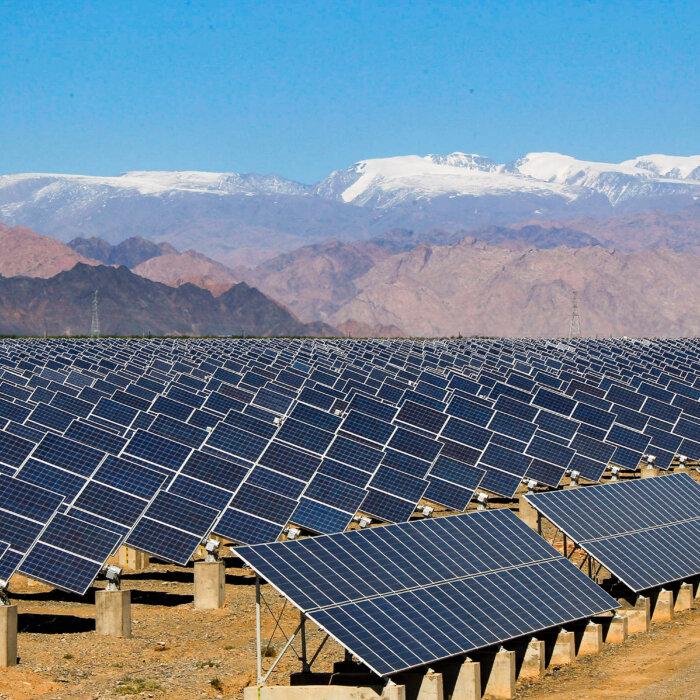
“By contrast, conventional technologies, such as gas-fired and nuclear power plants, comprised only around 15 percent of the total generation mix. This configuration is not unusual in Spain or Portugal, where high shares of renewable generation are common, particularly during sunny and windy days,” Buenestado said.
“What sets April 28 apart, however, is that, according to Spain’s national electricity grid operator (Red Eléctrica de España), two consecutive generation loss events occurred in southwestern Spain, likely involving large solar installations.”
He noted that “the risk of large-scale blackouts in electricity systems with high shares of renewable energy is well-established. However, the Iberian blackout of April 28 brings these long-recognized vulnerabilities into sharp focus.” Buenestado explained that unlike conventional power plants, solar and wind installations “depend on a stable grid to function correctly and cannot autonomously support grid stability during disturbances.”