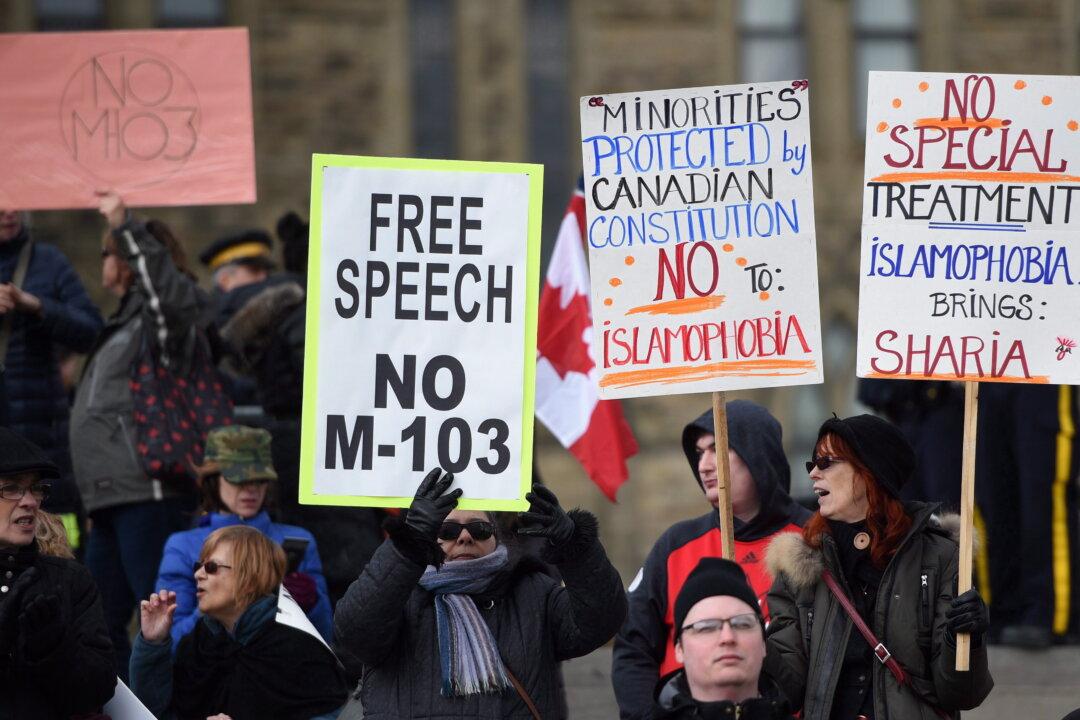
A friend of mine is German Canadian. He was born in Germany, came to Canada at the age of 5, and speaks German fluently today. My own story is similar: I was born in the Netherlands, came to Canada at the age of 7, and speak Dutch fluently.
He and I are friends, but our grandparents were not.
My own grandfather fought against the Nazi invasion of the Netherlands in May 1940, and spent years in a prisoner-of-war camp in Germany. He returned home in 1945 with severe and permanent psychological damage. My grandmother, along with the entire Dutch population, suffered through five years of brutal German occupation. This included the Hunger Winter of 1944–45, when tens of thousands of people in the Netherlands starved to death.
Does my German Canadian friend owe me something (or anything) in 2025, based on the conduct of his grandparents or homeland?
If ethnic guilt can be transmitted from generation to generation, we face never-ending conflict and strife, to the exclusion of harmony, unity, and friendship. Hence, Canada (and any other country for that matter) would be wise to reject laws and policies that are based on race or ancestry. While the application of the principle “Equal rights for all, special privileges for none” will not by itself create a perfect society, following this principle will create more trust, more justice, and more social cohesion than basing laws on ethnicity or descent.
Another friend of mine has 1/32 aboriginal ancestry, or perhaps 1/64 or 1/128. On the basis of his ancestry, my friend’s son received a special $5,000 grant when attending university; my son did not. I’m truly happy for my friend and his son. Who would not want a friend (or his son) to get an extra $5,000? But it’s not fair. Based on his ethnicity, my friend also has better legal access to hunting and fishing opportunities than I do. I’m really happy for him. And it’s not fair.
Race-based government policies predictably and inevitably produce inter-ethnic animosity, resentment, friction, and conflict. When laws are based on ethnicity or descent, people develop an unhealthy obsession with skin colour, blood lines, and other ancestry-based features—their own and those of their neighbours. This obsession is alive and well in Canada today. Canada’s race-based laws and privileges have been implemented with the good intention of helping the disadvantaged, but this discrimination based on ancestry nonetheless damages harmony, unity, and friendship within society. Today in Canada, legislators, law enforcement, university admissions and awards departments, and school boards carve the people of this country into ethnic categories, and mete out different privileges to each, supposedly to advance “social justice.”
This divisive and destructive conception of “social justice” is fiercely protected, to the point of silencing alternative views in the public square.
Land acknowledgements are hypocritical virtue-signalling. I have yet to hear of a non-indigenous Canadian transferring the title of his or her home to an aboriginal for free, as part of a serious effort to return “stolen” land. Proponents of land acknowledgements will sell their property at market value, or bequeath it to their children or perhaps to a charity. They won’t give it away to aboriginals (or anyone else) for free on the basis of it having been “stolen.”
Land acknowledgements often include inaccurate claims about “unceded” territory when, in fact, numerous treaties formalized the sovereignty of the British Crown over the lands that are today’s Canada. The treaties formalized British (and later Canadian) rule over the lands and over all of the people living on them. In areas where no treaties were signed, the British and French nevertheless imposed their agriculture, industry, technology, economy, roads, bridges, laws, courts, police, armies, politics, religion, language, and culture.
Land acknowledgements presuppose that the massive non-indigenous immigration into what is today Canada, starting in the 1500s and continuing to the present, is a bad thing. Land acknowledgements suggest that Canadians of Chinese, Polish, British, Punjabi, Nigerian, or French ancestry should feel guilty about living in Canada, even if their Canadian-born ancestry goes back multiple generations. And yet, supporters of land acknowledgements will not put their money where their mouth is, and give away their own homes or lands to aboriginals.
While promoting unfounded and unnecessary guilt, land acknowledgements do nothing to help aboriginals on reserves who face unemployment, poverty, alcoholism, drug abuse, family violence, high suicide rates, and often the tyranny of corrupt local government.