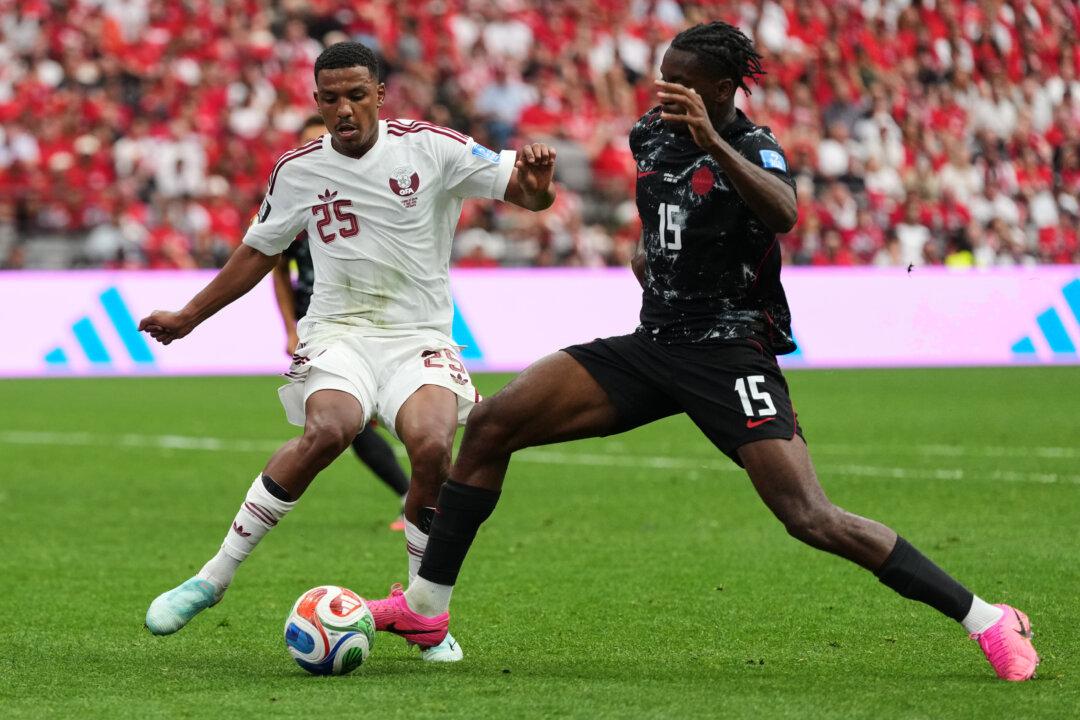
Late last month, NATO and the Canadian government declared that the latter had fulfilled its commitment to spend 2 percent of its gross domestic product on defence, ending decades of being one of the alliance’s chronic underperformers.
Many people were left with the impression that Canada was finally taking its defence obligations seriously, even while its spending still ranks in the bottom third of member nations. At 2.01 percent of GDP, Canada is tied with Italy and Albania for 22nd among the 32 countries involved. Those below it are all at 2 percent as, after years of being lectured for their poor behaviour by the USA—particularly its current president, Donald Trump—all of NATO’s member countries hit the minimum required figure.
I don’t know how the other countries managed their numbers but, in Canada’s case, the spending increase for this past year had as much to do with a sustained accounting offensive by bureaucrats as it did with bullets or bombs.

In 1956, when the population of Canada had just ticked over 16 million, its army, navy, and air force boasted more than 100,000 active duty personnel. The Royal Canadian Air Force consisted of 40 squadrons, the army had close to 48,000 active soldiers and the Royal Canadian Navy consisted of 100 vessels, including an aircraft carrier, with another under construction that later assisted during the Cuban Missile Crisis blockade.
Sixteen new vessels were under construction to bolster a fleet that included one cruiser, 15 destroyers, 10 frigates, and 10 minesweepers.
Twelve of the air force squadrons were based in Europe, and the primary fighter aircraft were all-weather interceptors—CF-100 Canucks and F-86 Sabres. The navy’s three submarines were loaners from Britain’s Royal Navy while its own fleet of, eventually, four subs was under construction. The nation was spending 5.7 percent of GDP on its defence, about triple what it says it achieved last year.
Today, in a nation of 42 million people, Canada’s Armed Forces consist of roughly 67,000 active personnel. That means that while the population has grown by 260 percent, its military capacity, in terms of active soldiers, sailors, and air personnel, has declined by 33 percent since 1956.
The army currently has about 80 tanks, down from 112 a few years ago due to donations to Ukraine and other factors. In 1956, it had close to 300 Centurions, 300 Shermans, and some light Stuart tanks for a total of 650 tanks, about eight times more than it has today.
Today’s navy is about 70 percent smaller than in 1956 and consists of about 30 primary vessels composed of 12 frigates, 4 submarines (only one of which is serviceable at last report) and a variety of other coastal and support vessels. Canada has no aircraft carriers, destroyers, or cruisers.
I could go on, but suffice to say that when it comes to its ability to defend itself, let alone its allies, Canada is but a shadow of its former self. Its people and its politicians have been more than happy to, essentially, outsource defence of its sovereignty to the USA which, having grown tired of that arrangement, lowered the boom.
So, congrats to Canada for getting it to the 2 percent of GDP minimum that it promised NATO 12 years ago it would get to. That’s a good sign. Suffice to say, however, that if it ever wants to be the country it once was, it’s still got some work to do.