



Two weeks ago, premiers from five provinces asked Prime Minister Mark Carney to back off. They got a flat “no” from Justice Minister Sean Fraser.
The court case is about Bill 21, Quebec’s law barring certain public servants from wearing conspicuous religious symbols like hijabs and kipahs while they’re working. Quebec protected this law by invoking Section 33 of the Canadian Charter of Rights and Freedoms, the “notwithstanding clause,” which basically says courts can’t overturn this law. Now, Ottawa is asking the Supreme Court to limit when provinces can use this clause, arguing it can be misused.
People make mistakes: politicians, judges, everyone. When politicians mess up, they can fix their own laws, or we can vote them out. But the Supreme Court’s mistakes create precedents that may last for decades, binding everyone. There’s no way to vote out a bad Supreme Court decision.
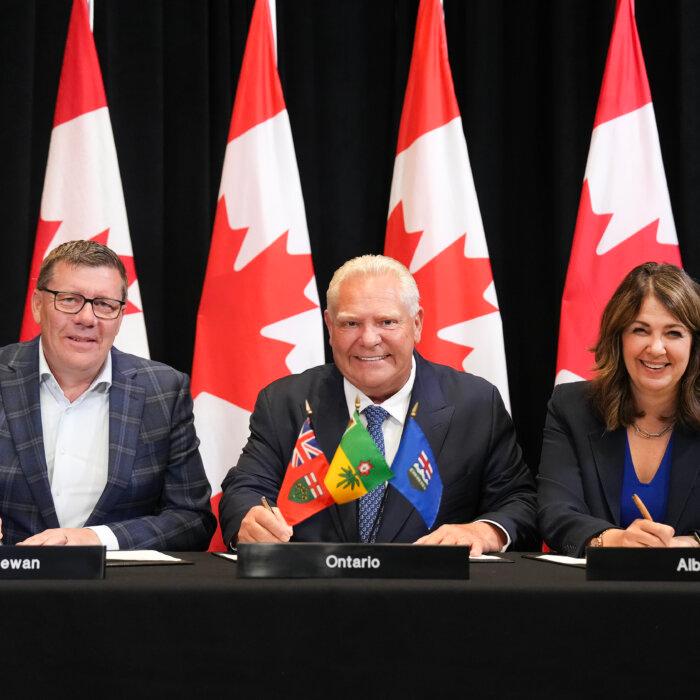
Section 33 is the provinces’ one tool to avoid or push back against judicial mistakes. Ottawa wants to take that away or at least make it harder to use. And there’s a good chance it will succeed, since the Supreme Court has the incentive to increase its own powers by limiting the notwithstanding clause.
At its core, this case asks: who should make the big decisions? Elected representatives are supposed to create the laws, while courts protect our rights and freedoms. Both claim to speak for us.
But, as prominent journalist Andrew Coyne’s new book “The Crisis in Canadian Democracy” points out, Parliament isn’t exactly a model of democracy. MPs and cabinet ministers don’t have much real power. Most important decisions come from the Prime Minister’s Office, which is run by staff nobody elected. It’s much the same in provincial governments.
Our elections aren’t perfect either. In 2021, the Liberals won less than a third of the popular vote but got almost half the seats, letting them stay in power. Thus, two thirds of us voted for parties other than the governing party. And some ridings have many times more voters than others, so your vote doesn’t always count for the same. This reality makes it hard to argue that Parliament truly represents all Canadians.
But the courts have their own issues. Supreme Court judges are chosen by the prime minister, and six of the current nine were appointed by the Liberals. While judges don’t owe any loyalty to whoever appointed them, they’re rarely chosen if their views conflict too much with the government’s. Plus, when judges make mistakes, there’s no direct way for the public to fix them. This makes it harder to justify giving judges the final say over elected representatives.
Section 7 of Canada’s Charter, which talks about “life, liberty and security of the person,” is like a Rorschach test—meaningless without interpretation. Liberty to do what? Security from what? A judge gets to decide, finding whatever meaning seems appropriate. This has let judges find new rights that the politicians who wrote the Charter never imagined.
A Charter challenge can often take years for the courts to decide. Quebec’s Bill 21 has been in judicial limbo for six years, yet it still isn’t clear when and how it will end.
Canada’s Constitution is built on high ideals, but with a lot of uncertainty. Ottawa’s move to use the Supreme Court against the provinces is an attempt to tilt the constitutional see-saw by putting a heavy weight on the judicial side.
No constitution is perfect; neither are judges or politicians. In the end, Canadians have to decide which risks they’re willing to take: trusting imperfect politicians, or letting imperfect judges have the last word. That’s the real choice at the heart of this Supreme Court drama.
