



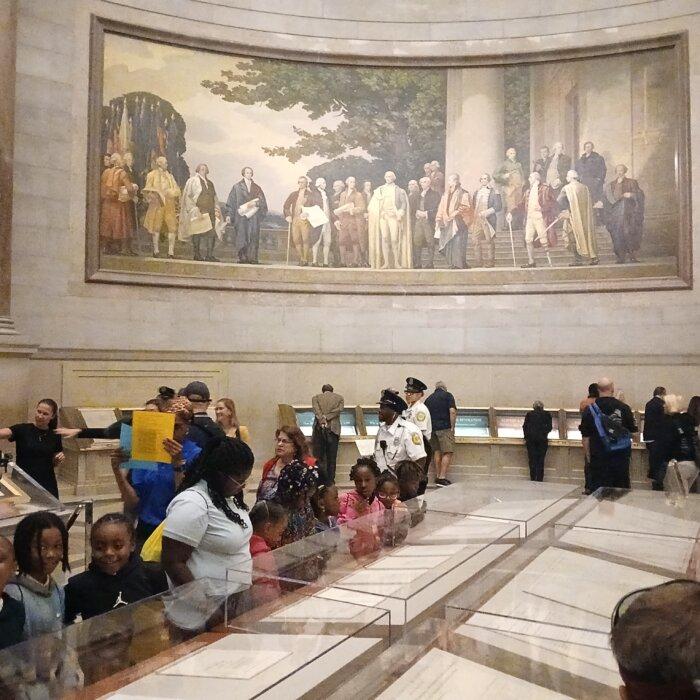
Each September, we celebrate Constitution Day, honoring the document that defines our government and secures our rights. But constitutions don’t defend themselves. They work only when citizens understand them, test them, and expand their promise.
Few Americans modeled this better than the suffragists.
For more than eight decades, these women organized, lobbied, protested, and even went to prison for the radical idea that they were citizens worthy of the vote. They studied the Constitution, exposed its gaps, and demanded change until the nation ratified the 19th Amendment in 1920.
We have a civics crisis in the United States today, and it’s hurting our democracy. According to Annenberg, less than half of Americans can name the three branches of government in our Constitution. Not enough time is spent teaching civics, and even more importantly, we fail to tell compelling stories that engage imagination and inspire action about our constitutional system.
Enter the suffragists: America’s most effective constitutional disruptors.
What other American story combines the high stakes of a political thriller with the strategic brilliance of a grassroots campaign and the moral force of a social justice movement? These women, long dismissed as polite reformers in petticoats, were in fact master tacticians. They studied the existing constitutional system, challenged its flaws, and ultimately rewrote the rules.
If we want to cultivate the next generation of informed, engaged citizens, we’d be wise to start with the suffragists—not just as historical figures, but as role models for what civic engagement can achieve.
First, they were architects of civic action. They understood the levers of constitutional democracy and pulled every one of them. The suffragists circulated petitions, organized parades, distributed pamphlets, and staged protests. They built from the ground up—through churches, schools, and neighborhood clubs—while also lobbying national leaders and forming powerful coalitions.
This is civics at its core: knowing how the system works, when to compromise, and when to press harder for justice.
Second, long before social media, the suffragists used images and spectacle to win public sympathy. When President Woodrow Wilson ignored their calls, they lined the White House gates in silence, holding signs reading “Mr. President, how long must women wait for liberty?” For their defiance, they were jailed, beaten, and force-fed. But they turned repression into strategy, smuggling out photographs that shocked the nation.
This is a valuable civics lesson for kids to digest. It’s not simply about who can amass the most followers on social media or speak the loudest. It’s about linking message to action while shifting hearts and minds.
Third, the suffragists failed—often and publicly. The campaign for women’s suffrage was the longest-running civil rights movement in American history. They tried everything, including a 14th Amendment challenge, which was crushed by the Supreme Court in 1875.
Undaunted, they regrouped and launched a new federal campaign for a constitutional amendment. That path required additional decades of organizing, reversals, and hard-won victories.
That’s a lesson young people need to hear. Real change in a democracy takes time. In an age of instant gratification, the suffragists remind us that our Constitution, anchored in checks and balances, is designed for deliberation, not speed. Change demands patience, persistence, and broad consensus. It demands a willingness to lose battles on the way to winning the war.
At a time when many young Americans feel disillusioned about politics or even the Constitution itself, the suffragists provide a necessary counterpoint. They didn’t just win the vote—they modeled the civic virtues we need most today: courage, resilience, hope, and above all, the belief that democracy is worth the fight.
Constitution Day should remind us that our framers left room for growth. The suffragists didn’t discard the Constitution; they perfected it.
Sept. 17 is not just about celebrating a document. It’s about passing on the knowledge that keeps it alive. The suffragists are ready to help.