This copy is for your personal, non-commercial use only. Distribution and use of this material are governed by our Subscriber Agreement and by copyright law. For non-personal use or to order multiple copies, please contact The Epoch Times Reprints.
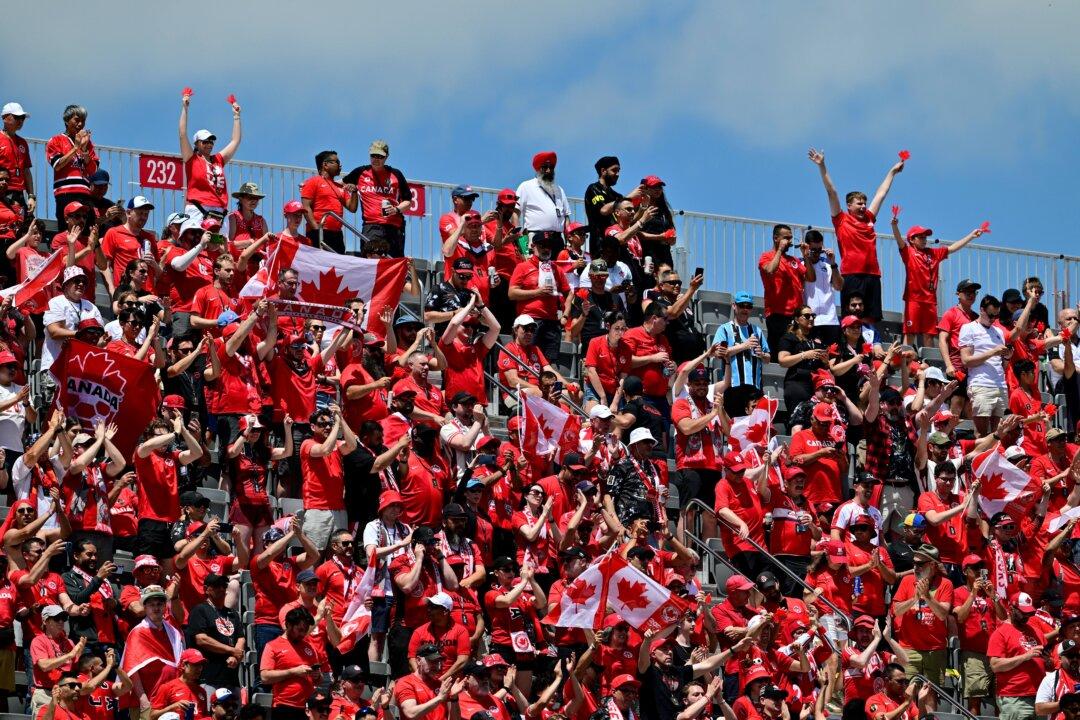
For many people, it seems to be a chore trying to feel pride in our country as our national holiday approaches. A survey in 2024 found that only 34 percent of Canadians were “very proud” to be Canadian, down from 52 percent in 2016 and 78 percent in 1985. The share who were either “proud” or “very proud” fell from 79 percent in 2016 to 58 percent in 2024, indicating a substantial erosion of intense attachment.
And who could blame them? For the past few years, federal politicians have used Canada Day to generate not gratitude and delight for the privilege of living in one of the most congenial nations in human history, but as the moment for all of us to engage in reflection and contrition for imagined sins and past oppressions. Recently, indigenous groups and leftist activists have rallied under the banner “Cancel Canada Day,“ a temptation that the British Columbia government and dozens of municipalities actually yielded to five years ago.
Well, glum as I am with some recent developments in our country, I’m not willing to give up just yet on pride in Canada (or Dominion Day as it’s known in the home of this historian.) Here are the stories of two of my fellow countrymen whose actions should stir feelings of satisfaction with our past and possibly hope in our future.
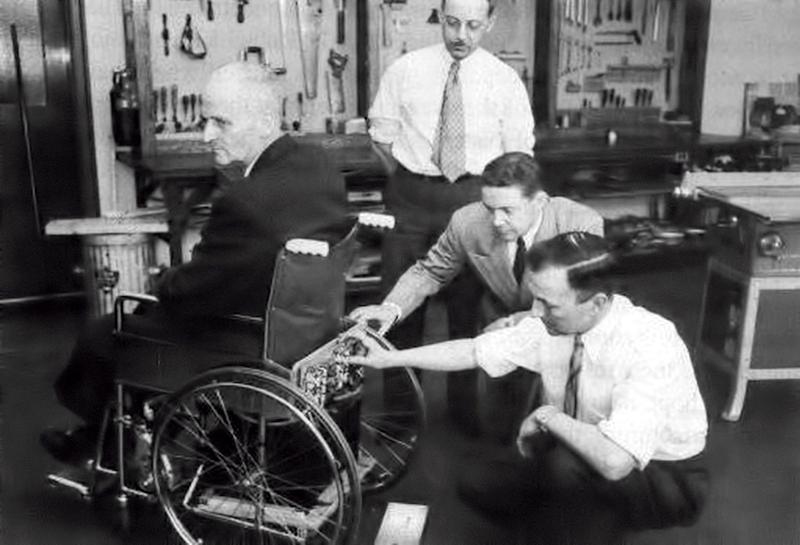
The first name to bring forward is that of George Klein (1904–1992), the greatest Canadian inventor of the 20th century. A graduate of the University of Toronto Faculty of Applied Science and Engineering, Klein worked for 40 years at the National Research Council labs in Ottawa. There, he built the first military snow machine which, nicknamed “The Weasel,” was adopted by the Devil’s Brigade special forces unit, and worked on aiming devices for artillery.
George Klein (R) demonstrates his electric wheelchair at the National Research Council of Canada in 1953. Public Domain
After World War II, he helped develop the world’s first mass-produced electric wheelchair, which was aimed at improving the lives of wounded veterans. When the design of the “Klein Chair” proved a success, the prototype was given royalty-free to the U.S. Department of Veterans Affairs to encourage mass production.
Klein went on to feature in the invention of a microsurgical suturing device to repair damaged veins and arteries, develop wind tunnels to test airplane and engineering designs, and engineer ZEEP, Canada’s first nuclear reactor. He also found time to develop a space antenna used in the Apollo moon program, to be part of the Space Shuttle’s Canadarm team, and to become a world expert on snow cover. Klein lived a long life of service and innovation, honoured by his profession and country for making the world a better place. He was made an Officer of the Order of Canada in 1968, and in 1995 he was inducted into the Canadian Science and Engineering Hall of Fame.
Early in the 21st century, Canadians and Western allies were at war with a barbaric regime in Asia: the fanatical Islamists of the Taliban in Afghanistan. As part of an allied effort to defend a fledgling democracy in the country, Canadian soldiers were tasked with clearing out terrorist bases in Kandahar Province; Operation Medusa was our largest combat operation since the Korean War a half-century earlier.
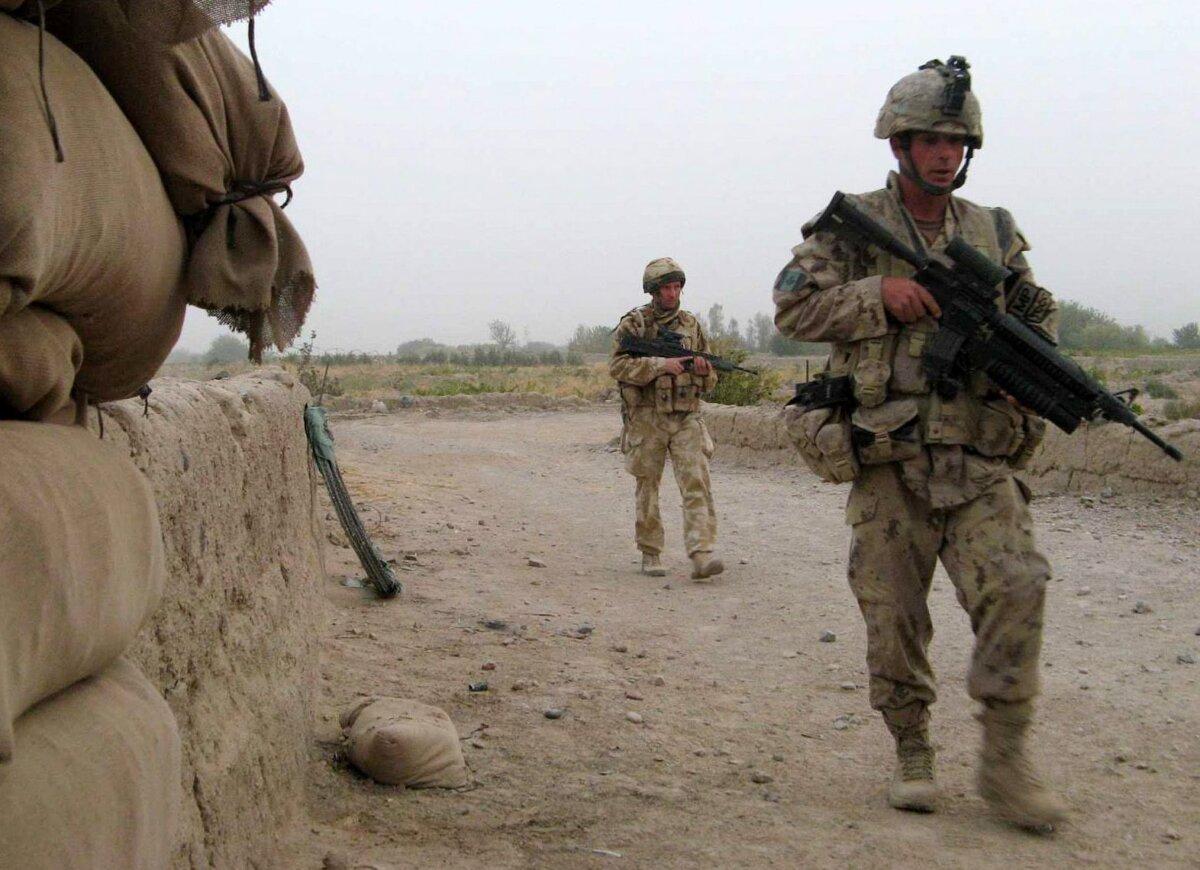
On Oct. 14, 2006, an observation post near Pashmul, manned by troops of the Royal Canadian Regiment, came under attack by the Taliban. An enemy rocket-propelled grenade killed or wounded everyone in the post. Pte. Jess Randall Larochelle (1982–2023) was severely injured, hit in the neck, bleeding, and half-blinded. Yet under continuous heavy fire, Larochelle repelled attacks with his rifle and rockets of his own, keeping his platoon’s position from being overrun. His actions won him the Star of Military Valour, Canada’s second‑highest decoration for bravery in combat. His wounds were so severe that he was discharged from the armed forces, and his final years were spent in pain and suffering from post-traumatic stress disorder.
Canadian soldiers patrol in Pashmul, the area where Pte. Jess Larochelle fought off a Taliban attack in October 2006, in Afghanistan on Sept. 23, 2007. The Canadian Press/Dene Moore
So, two Canadians, born generations apart and serving their country in different ways. Both men of whom we can be proud. But since our politicians and deep thinkers demand that we spend Canada Day in pious reflection, let’s examine these two careers and see if there are any lessons in them for us today.
What occurs to me at once in looking at the contributions of George Klein is the possibility that, in the moral climate of 2026, he might never have been hired by the National Research Council in the first place. Under the diversity guidelines mandated by the current government’s science funding agencies, Klein, as a healthy, white, heterosexual male, would be forbidden from applying for many positions.
Consider recent job postings—dozens of them—for Canada Research Chairs and university professorships in fields such as AI-driven navigation, computational biochemistry, musculoskeletal health/genomic mapping, and computational biology, which are reserved for “women, 2SLGBTQIA+ people, Indigenous peoples, racialized persons, and persons with disabilities.” Poor George Klein and many other brilliant men would have been on the outside looking in, and Canada would have been the poorer for it.
As for the heroism of Jess Larochelle and his companions, the Canadian military that took up the cause of civilization in Afghanistan does not exist any longer. More than 40,000 Canadians served there between 2001 and 2014, in what was Canada’s largest and longest conflict since 1945. But today? Demoralized and under-resourced, with military families relying on food banks and soldiers often embarrassed and betrayed by their outdated gear, the gutted Armed Forces of 2026 simply would not be able to heed that call. Our army, navy, and air force have been world famous for punching above their weight, but now can scarcely punch at all.
Canadians have every reason to look back at our history and contributions with pride, but what we desperately require now are politicians and civil servants we can be proud of.
Views expressed in this article are opinions of the author and do not necessarily reflect the views of The Epoch Times.