



Consistent with being the United States’ first true “builder” commander-in-chief, President Donald Trump can further reduce the United States’ rare earth vulnerability by using his executive authorities to grow a finished rare earth element stockpile and begin the construction of processing plants within the United States.
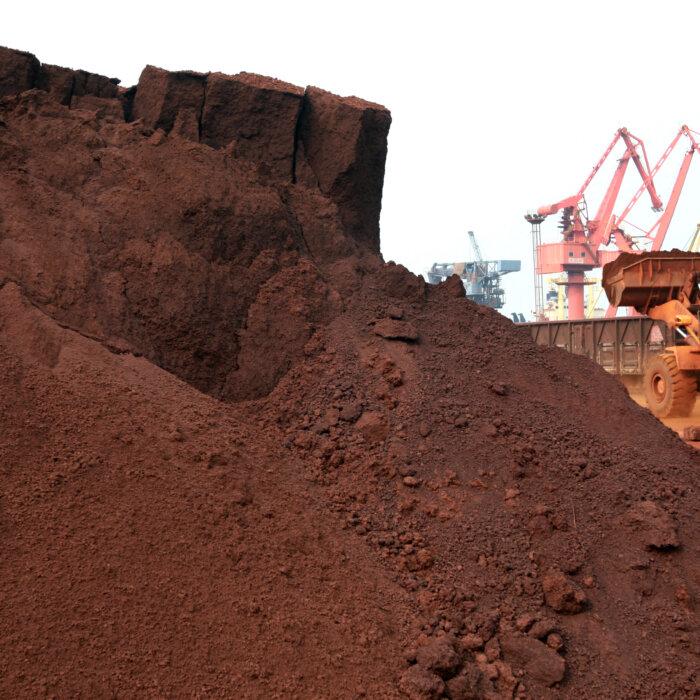
Despite their indispensability, refined rare earths will never be generated in adequate supplies by the private sector responding to the usual market forces and government incentives. Even in China, with vastly lower labor and regulatory costs, heavy state subsidies are required to sustain production. The Chinese Communist Party recognizes the strategic value of such critical mineral production—and dominance of finished global rare earth supply chains—and acts accordingly.
It has taken the United States much longer, too long, to reach that same conclusion. As with maintaining a modern military or building public infrastructure, there are certain things the government must pay for, such as a military, because the national interest, indeed, survival, demands it.
The Pentagon is driving an effort to generate additional supplies of critical minerals needed for weapons production and to refill the stockpile managed by the Defense Logistics Agency (DLA).
Nonetheless, even if the United States were to tap ground deposits instantly, most of the rocks would still go to China for refinement and separation.
The United States, using the Defense Production Act, the Office of Strategic Capital, and the Development Finance Corporation, should finance the construction of half a dozen to a dozen geographically dispersed manufacturers for separating heavy and light rare earths. The plants could be government-owned, operated by the private sector. A hefty, expensive undertaking, yes. However, having redundant processing plants would break China’s chokehold and avoid the trap of a single point of failure. Some of those facilities could feature remarkable new American separation technologies that use lasers, providing a clean alternative to Chinese environmental abuses.
Nonetheless, even with welcome actions, investments, and reforms pursued by the Trump administration, it will, under the best of circumstances, take years to establish sufficient domestic processing capacity. Yet, by some informed estimates, conflict with China, which would effectively cut off the supply of commercial-grade rare earth magnets and metals, could come at any time.
Consequently, the DOW needs a crash program for DLA to buy and stockpile finished rare earth mineral powders, oxides, and parts irrespective of their country of origin—including, if necessary, China. Congressional lawmakers in both parties have proven receptive to urgent appropriations requests when presented with solid facts.
The United States can move fast when there’s a will to do so. Take the first Trump administration’s launch of Operation Warp Speed, which defied expectations (and critics) to produce and distribute a coronavirus vaccine in under a year. Building the capacity to ensure reliable supplies of processed rare earths will take longer. But that is all the reason to start now.