As a little girl growing up in the 1960s, I measured the week by Wednesday nights. It was mahjong night.
Every Wednesday night, everything changed. My mother was a serious mahjong player, and when “the mahj girls” came over, the house took on the feeling of a celebration. She baked her best pastries. Platters of fresh fruit appeared on the table. The coffee was ready long before the first guest arrived.
I would eventually be sent upstairs to bed, but long after the lights were out I would lie awake listening.
The rhythmic click of ivory tiles. “Eight crack.” “Four bam.” Conversation. Laughter. Those sounds floated up the stairs until I drifted off to sleep.
At the time, I thought I was listening to a game.

Only years later did I realize I had been listening to friendship.
Today, mahjong is enjoying a remarkable resurgence. Young women are discovering the game, clubs are springing up across the country, and colorful designer tiles have introduced a new generation to a timeless tradition.
I smile every time I read about it because, in our family, mahjong never disappeared.
Thirty years after those evenings with my mother and her friends, life came full circle. My mother moved into our home, where she shared life with our family—including her two granddaughters.
It didn’t take long before she decided they were old enough to learn. They were 6 and 12.
They giggled far too much. They squealed every time they pulled a joker. They celebrated spectacular victories one minute and dissolved into dramatic disappointment the next.
Truth be told, we needed them to make a table of four.
Looking back, none of us realized something far more important was happening.
My mother wasn’t simply teaching them how to play mahjong. She was inviting them into a family tradition—and without realizing it, creating a fourth generation of players.
Today those two little girls have children of their own.
And somehow, almost by osmosis, the next generation has found its way to the table.
By the age of five, they begin lobbying for their own seat.
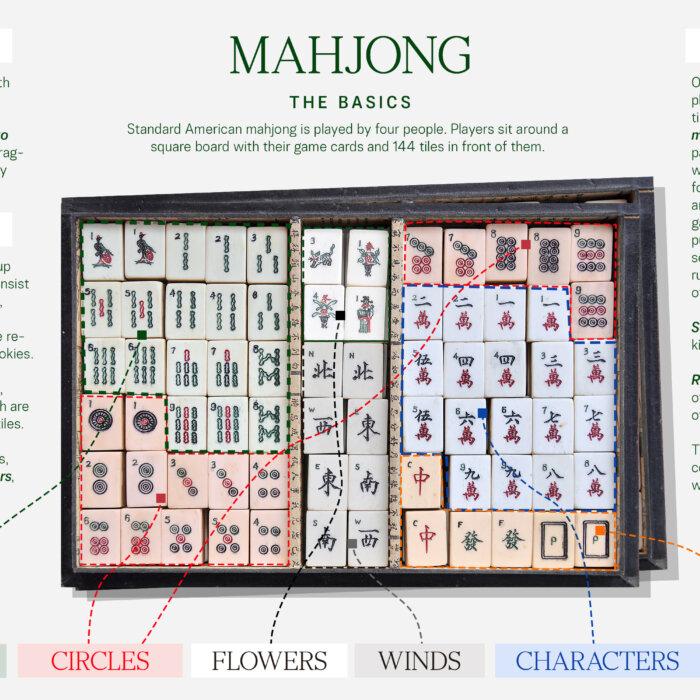
They learn to count almost without realizing it. They recognize patterns before they understand multiplication. They proudly collect flowers, delight in jokers, and become fascinated with winds and dragons long before they grasp the game’s deeper strategies. When all else fails, they discover the satisfaction of building simple consecutive runs.
The game teaches arithmetic and critical thinking, but that’s not what keeps them coming back. They come because this is where the family gathers. The game gives us an excuse; the real purpose is being together.
There are no phones.
No television.
No one scrolling through social media.
Just four people around a table, talking, laughing, teasing one another, celebrating good fortune, and occasionally groaning when someone else draws the tile they desperately needed.
The recent attention surrounding mahjong often focuses on women rediscovering an old game.
I see something different. I see four generations connected by the same set of tiles. I see children learning patience from grandparents. I see grandparents passing along more than the rules of the game. I see memories being made that have nothing to do with winning.
When my grandchildren hear the click of mahjong tiles, I wonder if they hear what I heard all those years ago.
Perhaps someday, decades from now, they‘ll remember the laughter before they remember the rules. They’ll remember the conversations before they remember the score. They'll remember that there was always room at the table.
My mother has been gone for years now, but every time we open the mahjong case and begin washing the tiles, she joins us in a way that needs no explanation.
Her hands taught my daughters. Now my daughters’ hands teach their children. The tiles have passed from one generation to the next, but what they carry has never changed.