Suppose you asked a movie critic whether they watched the latest blockbuster movie they critiqued in their review. “No,” they reply, “but I saw the two-minute trailer, so that’s just as good as seeing the whole movie.” They go on to explain that they don’t have time to watch entire movies, but they more than make up for it by checking out a wide variety of trailers.
Would you trust this critic to accurately review new movies? Probably not. So why do we allow our schools to de-emphasize the importance of reading books.
Except it doesn’t. By not assigning entire books to students, teachers are depriving students of the educational benefits of grappling with a single text for an extended period. If we want students to develop critical thinking skills, we need them to read entire books, not just short excerpts. That’s because critical thinking takes time. Not all concepts worth learning can be grasped in less than an hour.
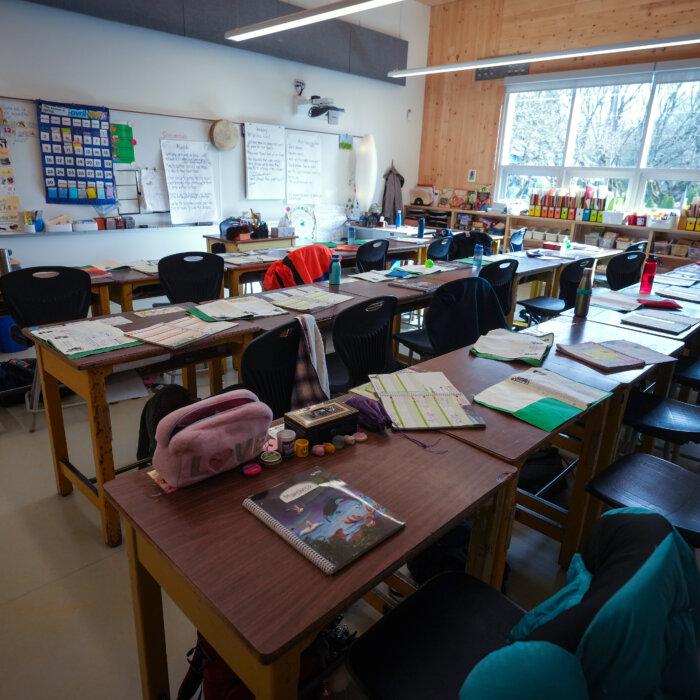

In other words, B.C. moved away from a knowledge-rich curriculum and embraced an approach that focuses on the so-called core competencies. Instead of ensuring that all students graduate from school with a comprehensive shared knowledge base, B.C. teachers are encouraged to pick and choose the specific content that their students learn.
This doesn’t mean that no B.C. student will read an entire book during their ELA classes. Because teachers have a significant amount of flexibility, a teacher could take a traditional approach and assign several complete novels each year to students. However, this flexibility also means that there’s no requirement for teachers to do so. A teacher who gets students to read a mishmash of book excerpts, short stories and graphic novels, could follow the provincial curriculum without any difficulty. Frankly, a teacher could even meet most of the ELA outcomes by doing a bunch of puppet shows throughout the semester.
It’s a problem that curriculum guides are so vague that teachers can teach whatever they want. Instead of providing teachers with vague outcomes that can be met by using pretty much any content, they need curriculum guides that identify clear academic standards and specific content that must be learned by all students.
Clearly, it would be a mistake to continue with the same failed approach in B.C. schools. Just as it makes little sense to watch only the trailer of a movie before reviewing it, it’s ridiculous to encourage teachers to get by with novel excerpts and short stories in their ELA classes. It’s time for B.C. students to start reading entire books again. The thin gruel they’ve been served just isn’t enough.