There’s a lot of confusion, controversy, and disagreement about the latest phase of the Iran war. Remember, we bombed kinetically for 38 to 40 days, then we had 60 days of negotiation, then here we are in mid-June, and President Donald Trump has announced yet another time that there is going to be a peace deal coming with a 60-day period for all the elements of the deal to be enacted.
A lot of people are upset. They feel that Iran was on the ropes, it was going broke, and that had we continued, or if we were to continue now, we could put it out of commission and then dictate a nonconditional surrender to it.
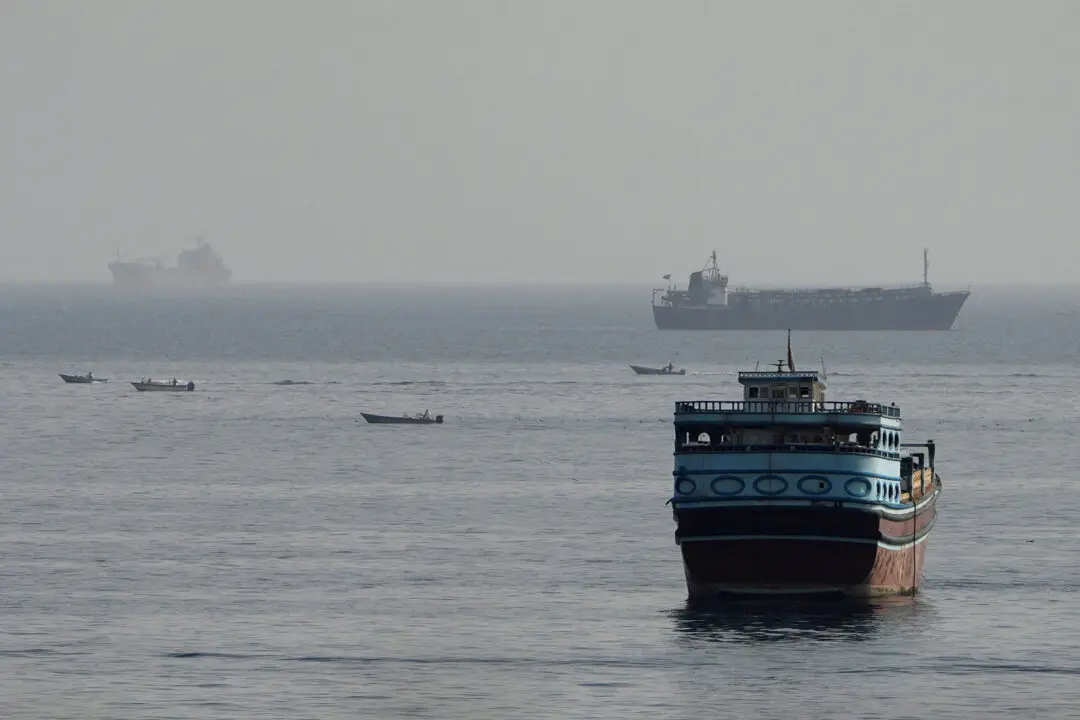
That’s absolutely true, but what this deal then hinges on—because there’s no history of Iran ever keeping its word or following any agreement, explicit or implicit—is the willingness to keep maybe one carrier group in the region to ensure that the strait stays open, that the missiles are not launched against our allies, and, of course, that the enriched uranium is turned over.
And if we’re willing to do that and hit Iran hard every time it breaks it, then it might eventually work.
There’s a lot of misconceptions, though, about the deal and the war in general. I’d like to address just a few of them. A lot of the critics of this administration, including, I think, House Minority Leader Hakeem Jeffries (D-N.Y.), said not long ago: “Well, the strait was open and now it’s closed, so the deal didn’t accomplish anything. In fact, it made it worse.”
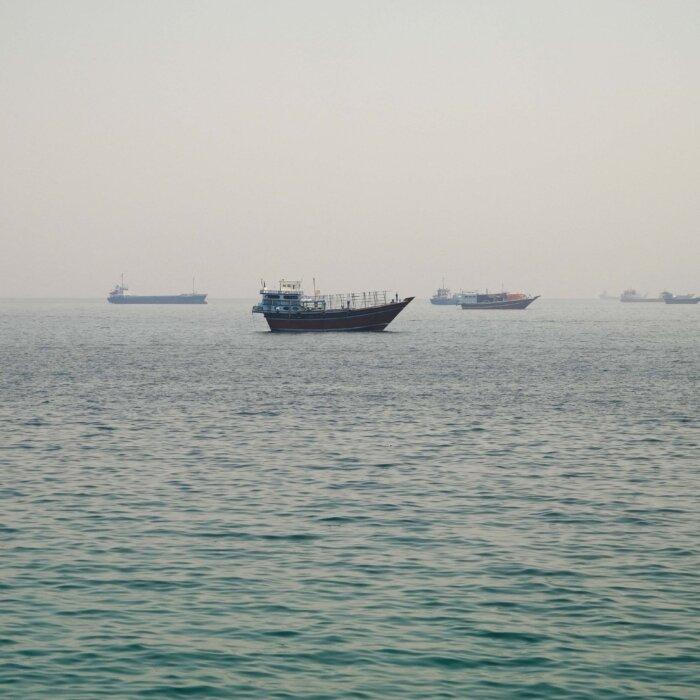
Well, the strait was open because Iran had no reason, as it did now, to close it. And the reason it didn’t have any reason to close it was because the seven previous U.S. presidents—Jimmy Carter, Ronald Reagan, George H.W. Bush, George W. Bush, Bill Clinton, Barack Obama, and Joe Biden—didn’t want to disarm Iran. They didn’t want to go in there and try to stop its proliferation agenda. Trump did. Anybody who did was going to be confronted with a desperate effort of Iran to close the strait. Now we’ll open the strait. But the idea that we made things worse is ridiculous.
And then, second, people are saying: “Well, it’s just like the Obama deal. Why did Trump get out of the Obama deal?” Well, the Iranians enriched uranium all through the Obama deal. We know that. They wouldn’t let inspectors in. During Biden’s presidency, he begged them to go back into the Iran deal. They didn’t want to do it.
Why? Because we now know that they had pretty much already enriched to the point, 60 percent or more, at which they could make a bomb in a month should they want to.
But here’s the big difference. In the Obama-era atmosphere of that deal of 2015–2016, Iran was ascendant. Everybody was scared of it. Its military was heavily equipped with Chinese and Russian weaponry. People were afraid of it. Israel didn’t want to attack it. The Gulf States didn’t want to attack it.
Europe was advising caution. It was an appeasing deal because nobody wanted to use force. Now, we don’t have boots on the ground, we don’t have journalists on the ground, but whatever your disagreement is with the current war, most people agree that the Iranian military and its economy have been devastated through 40 days of intense bombing with probably 1,000 planes in the air at any one time.
So we’re dealing with a much-diminished Iran that we can hit again and again because it has no air defenses. Obama was dealing with an ascendant Iran and he was scared to even mention the use of force to make them comply.
There’s a third misconception. People say: “Well, now we’re isolated. We’re all isolated. We have no allies. China and Russia are ascendant.” Nothing could be further from the truth.
This is the first time in all of our lifetimes that the Gulf Council, for all its double-dealing over the years, basically is more attuned to an alliance, maybe unspoken, with Israel than it is with Iran.
We know now that some of the 600 combat aircraft based in the Gulf were stealthily flying missions, and that meant alongside the Israelis.
We know that there are Israeli technicians in the Gulf helping them with missile defense. We know that the Gulf States and most of the moderate Arab countries believe that Iran, not Israel, is the existential threat.
In other words, we’ve never had a closer relationship with the Gulf States vis-à-vis the United States, nor has Israel.
As far as Russia and China, they’re both shut out of the Middle East. They have lost their client in Syria. They have lost, and they’re going to lose, their client in Iran. They have lost their client in Venezuela. They have an enormous problem. Russia cannot sell weapons to Iran anymore. It may smuggle some in, and China can’t get discounted oil anymore.
There’s another misconception, that the apostate right—that is, the Tucker Carlson, Candace Owens right—has said that it is going to fracture the party, and that maybe its influence will turn the Make America Great Again movement against Trump.
Well, first of all, on all the other issues, maybe except the Iran war, most of the conservatives, if not all, agree with Trump. Even Carlson would agree with Trump’s crime policy, his border policy, the wall, the deportation policy, the rejection of the green energy mania.
But on this question of the war, Make America Great Again and the Republican Party still overwhelmingly, 75 percent, support Trump.
And the reason they do is they don’t feel that this is a forever endless war, as the apostate right does. They believe that we have not used ground troops and that we have lost fewer soldiers than the accident rate that the military suffers daily over that period of 38 to 40 days of kinetic operations.
Finally, everybody says we’ve lost the midterms.
The midterms are 4 1/2 months away. If the strait is open, suddenly you’re going to have a traffic jam of two things. One, tankers leaving, trying to get out full of oil, and tankers waiting to get in.
But there may be 200 or 250 tankers full of 1 million to 2 million barrels at a time when the United States and Russia and the Middle East and Venezuela are upping production.
So, there could be a substantial drop in prices.
And if you do get a deal the left is going to be sort of flummoxed because it said that we had lost the war and we didn’t achieve our objectives. But if you do get a deal and the deal is enforced by military action on the part of the United States, it wouldn’t hurt Trump, it could help him.
And then there’s a larger context of redistricting. In this redistricting war, it turns out that so far the Republican legislatures will outdo the Democratic legislatures, and the Republicans may pick up anywhere from three to four to five seats.
And the Supreme Court that said it is a racial obsession, a fixation to create congressional districts on the basis of race, and you can’t do it, may lend the Republicans another four to five.
I’m not suggesting that Trump can overturn historical precedent. Remember that of the past 40 presidents, 95 percent lost their first midterm election. So, his history is on the wrong side, but he will not lose the Senate. And it doesn’t really matter, to tell you the truth, if the Republicans lose the House.
It would be nice to get legislation through, but most of his legislation has already been through. He can still use executive orders, but most importantly, they can’t. They may impeach him as a performance art act, but the Senate will never convict him.