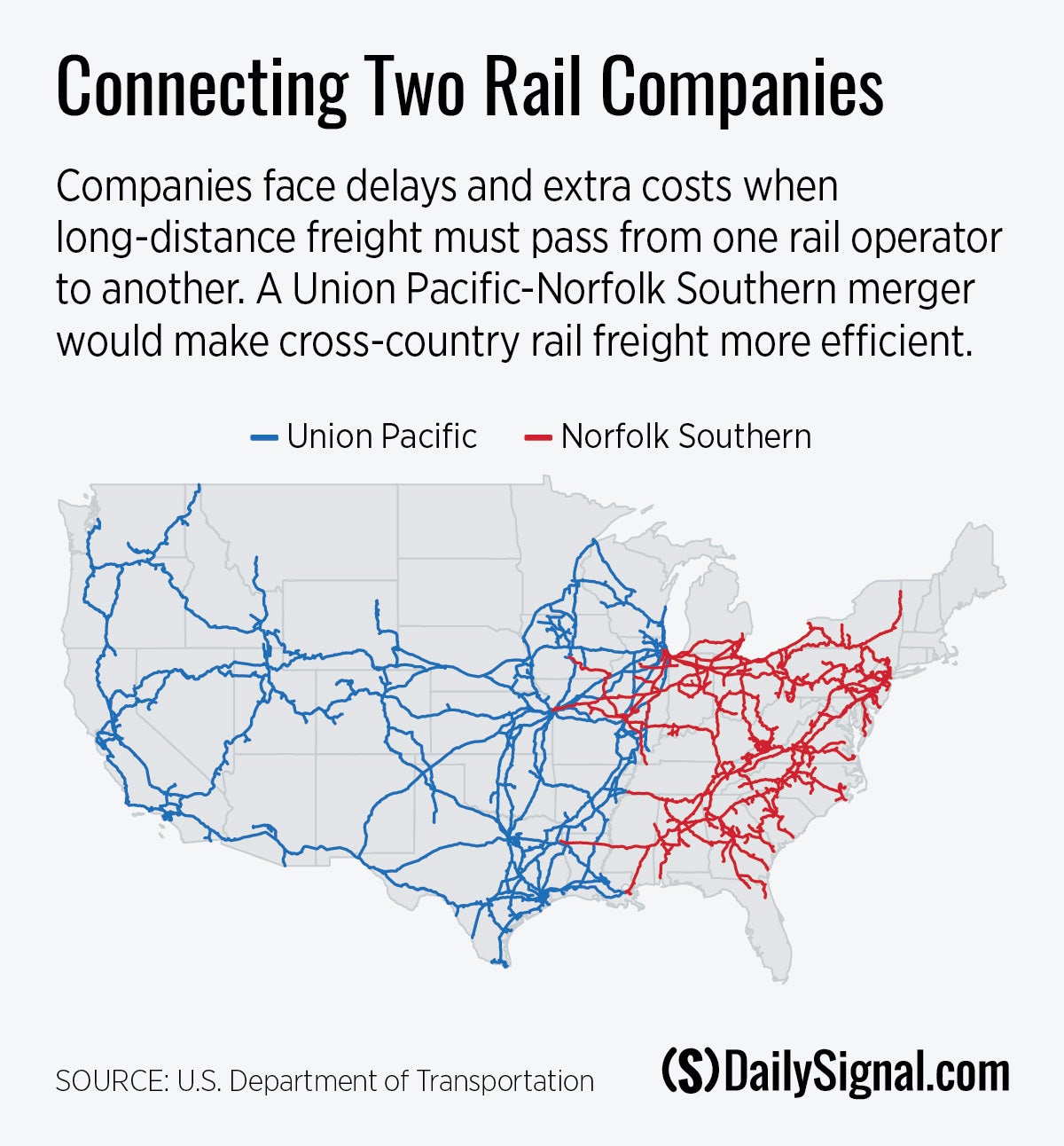
Today, no single company operates a transcontinental railroad across the United States.
Currently, when coast-to-coast rail freight reaches central hubs near the Mississippi River, the freight must pass from one rail operator to another. Congestion at those interchanges routinely adds a day or even multiple days to transit time.


If regulators approve the consolidation, goods will flow more freely across the country, and U.S. industries will become more interconnected, cost-effective, and competitive.
Removing the barrier between east and west would give Americans better access to the abundant and diverse natural resources and industries spread across the land.
Farmers could move grain from the Washington Palouse to Jacksonville, Florida, without the logistical and administrative hassle of dealing with two cross-country freight companies.
The proposed merger makes all the sense in the world.
Union Pacific and Norfolk Southern do, however, compete against Canada’s transcontinental railroad companies, which carry products between the Atlantic and Pacific Coasts and into the central United States.
Union Pacific and Norfolk Southern also compete against trucks, which have different advantages and disadvantages for moving freight. Sending freight by truck is faster and offers more flexibility, especially over short distances, because of the United States’ highly interconnected road system. But moving freight by rail tends to be more cost-effective the farther it travels—except when it’s forced to pass through a cumbersome interchange along the way.
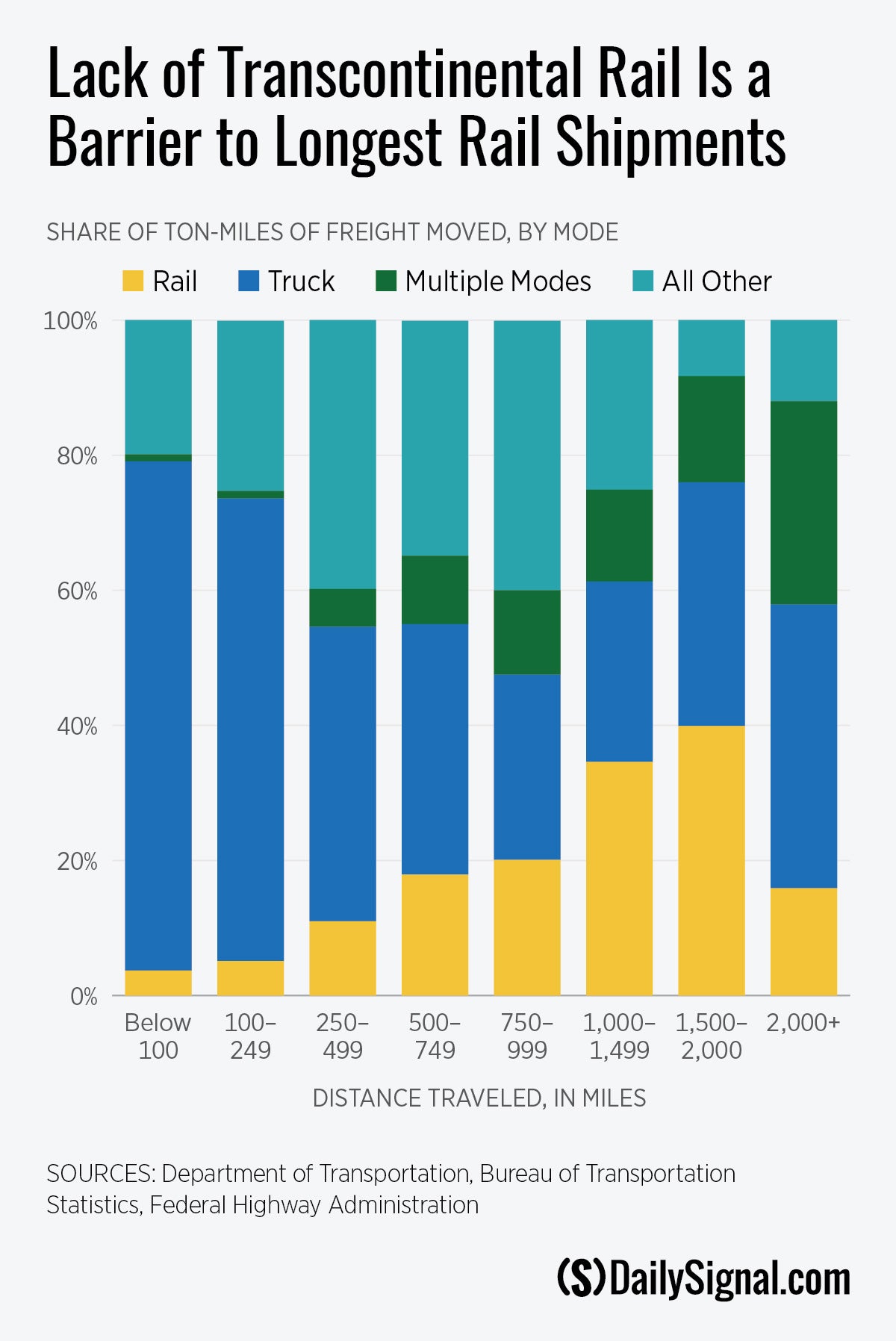
However, rail’s advantages evaporate for the longest trips, as nearly all rail trips of 2,000 or more miles must cross an interchange point. As a result, rail accounts for just 15.9 percent of ton-miles of freight traveling more than 2,000 miles, compared with 42 percent carried by trucks. (An additional 30.1 percent travels by multiple modes.)
A united transcontinental railroad company would increase the volume of cross-country freight, resulting in widespread benefits.
Reducing the ton-miles of freight carried on U.S. highways would also reduce wear and tear on roads, lower maintenance costs, strengthen the highway trust fund, and reduce pressure for higher gas and income taxes.
Regulators shouldn’t stand in the way of a deal that would benefit American workers and consumers. Instead, they should allow barriers to be torn down and let builders and innovators grow and flourish. A more perfect union should start with the Union Pacific Transcontinental Railroad.