Opioids are medicine’s premier analgesic. Capable of making the conscious brain feel celestially sublime, opioids make surgery a life-saving medical procedure and end-stage cancer pain a physically bearable experience, rather than an excruciatingly painful Nazi-like form of torture.
Unfortunately, the euphoria brought on by opioids can have a corresponding abysmally awful effect on long-term users. They can become physically dependent on the drug (viz., they suffer the pangs of withdrawal from discontinuing its use) or become addicted to it (viz., their entire life is singularly devoted to acquiring the drug to fend off withdrawal’s agonies).
What the public might not realize (perhaps because our elected officials haven’t taken the time to educate themselves or their constituents about it) is that synthetically produced drugs—what science denominates as novel (or new) psychoactive substances (NPSs), colloquially called “designer drugs”—have largely replaced heroin and morphine as our primary lethal toxicants. Heroin and morphine are derived from the opium poppy, but NPSs are born in laboratories from precursor chemicals that themselves lack any botanical lineage. That creates additional problems for us not present in the historical “hard drugs” that we have used.
The provenance of NPSs is central to their very problematic nature. Morphine and heroin are derived from the latex found in opium poppy capsules, which are grown in places such as Southwestern Asia (e.g., Afghanistan and Turkey) or Southeastern Asia (e.g., regions of Burma [also known as Myanmar], Thailand, and Laos, known as the “Golden Triangle”).
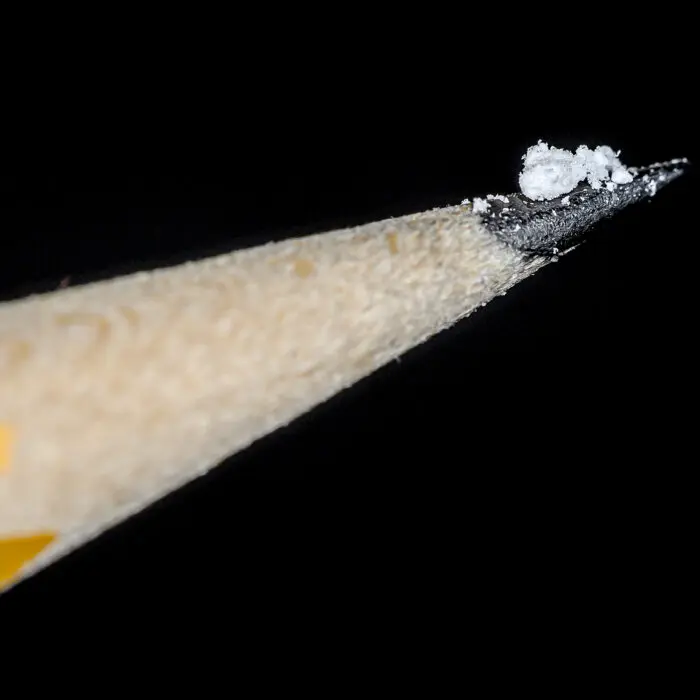

Since 1999, in the United States alone, more than 800,000 people have overdosed and died from using illicit fentanyl (nearly two-thirds of the total), an amount that exceeds the number of American fatalities in all our post-World War II military conflicts. Fentanyl works so quickly that it kills some users before they can even extract a hypodermic from their veins. Illicit fentanyl has become our domestic public enemy No. 1—and people are justifiably scared that it will kill more of us than the most prolific human serial or mass killer.
A Swiss pharmaceutical company first synthesized nitazenes, technically known as 2-Benzylbenzimidazole opioids, in 1959 to develop a more powerful but less addictive analgesic than morphine. The company got it half right; some nitazenes are 500 or 1,000 times more powerful than morphine, but also far more addictive, and have a far smaller “therapeutic window”—i.e., the range between the maximum therapeutic dose and the minimum lethal dose. As a result, the Food and Drug Administration has never approved their use, and they are considered contraband under American law. Consequently, nitazene use increases the risk of addiction and a fatal overdose, particularly when used in illicitly produced drugs.
Nitazenes were dormant for decades but emerged in the illicit drug markets of the United States, Canada, and Europe in 2019. In their powdered form, nitazenes can be used in various ways—intranasally, intravenously, sublingually, by vaping and insufflation, and so forth. More insidiously, nitazenes can be added to other powdered drugs, such as cocaine or heroin.
Perhaps even more insidiously, by using pill-press devices, nitazenes can be made into counterfeit forms of legitimate-looking pharmaceuticals such as Adderall, a stimulant that can be legitimately prescribed to treat (for example) attention-deficit/hyperactivity disorder but that also can be used for enhancing athletic or cognitive performance, for suppressing appetite, or merely for the stimulating effect. Just as individuals can unwittingly consume fentanyl-laced cocaine, high school and college students can unknowingly ingest nitazenes when using Adderall purchased over the internet if trying to cram for final exams or complete term papers. Nitazenes therefore can be lethal even when used for academic-related purposes rather than when trying to become a “psychonaut”—viz., someone searching for the “ultimate high.”
To be sure, China has twice agreed with the United States to curb the production and sale of illicitly produced fentanyl or its precursor ingredients to organized crime groups in Mexico. Yet it is most unlikely that China agreed to assist the federal government in battling illicit fentanyl out of humanitarian impulses.
China’s goal is to surpass the United States as the world’s strongest military and economic power, and increasing the number of people addicted to or killed by illicit drugs is one way for China to weaken this country without taking direct military or economic steps, or any other action that would leave its fingerprints on them. More likely, during its negotiations with this country, China agreed to help the United States fight illicit fentanyl because China received something in return. On top of that, China can continue to weaken America from within by substituting nitazenes and other designer drugs for reduced fentanyl production and sales. Put colloquially, China got something for nothing.
The consequence is that the United States must act, independently and with “friendlies,” to address this problem. Fortunately, there are steps that the United States and other nations, both within and outside of NATO, beset by illicit drug problems, can take in collaboration to address this problem.
Start by admitting both that there is a growing NPS problem and that responsibility for its harms lies not only with nations such as China and Mexico, but also with our own drug users and society. China and Mexico might be responsible for the creation and smuggling of illegal NPSs into our nation, but America’s own citizens are guilty of voluntarily using illicit drugs. The latter is, in part, a consequence of a lost sense of the value of making sacrifices for the greater good as part of a shared communal responsibility.
Mexico has served as a source of illicit drugs from cannabis to hashish to methamphetamine to fentanyl, and the TCOs have no interest in stopping their profit-making enterprises. Like those last two, nitazenes and not-yet-invented NPSs can be synthesized in makeshift laboratories by non-PhD-level chemists, so an open border policy will just lead to the same infiltration we saw in the Biden administration. Closing our southwest border, of course, will not stop the TCOs’ efforts to smuggle NPSs into this nation, if only because our border with Canada is an available alternative, but securing our border nevertheless can save lives otherwise lost to drug use.
Long-term steps include tracking of NPSs’ precursor chemicals and educating the public about the dangers posed by the increasing supply of those drugs. The former step will require the federal government to take the lead. Many precursor chemicals are manufactured overseas in China, India, or elsewhere, and only our national authorities can make international agreements with foreign governments to address this problem, even though its effects occur locally.
Will those steps end the series of tragedies we have witnessed in this century? No. Honesty compels us to admit that. But these steps can save lives. Honesty should compel drug legalization advocates to admit that as well. Whether they will and will join us in this effort remains to be seen.