The Modern Welfare State
This brings us to the most rigid part of the American system: where that money goes. Despite the debates over defense or foreign aid, in the United States and Europe alike, the majority of spending is dedicated to pensions, health care, and unemployment insurance.It begins with a monetary system that, by its very design, tends to inflate the value of assets over wages, widening the gap between those who own and those who work. This is compounded by a globalized economy that often hollows out domestic payroll bases—in part because of predatory actors such as the Chinese Communist Party (CCP), who don’t play by the rules—leaving workers with less leverage even as the cost of living, anchored by those rising asset prices, continues to climb.
As demographics shift toward an aging population and modern health care costs rise, dependency ratios increase, placing a heavier burden on a shrinking pool of active earners to support the retired. In addition, many programs meant to assist weaker segments of the populace have actually reversed the incentive to work. In response, welfare commitments must grow, trying to stabilize society. Although each of these moves is a logical reaction to a specific crisis, together they forge a rigid architecture where incentives stack.
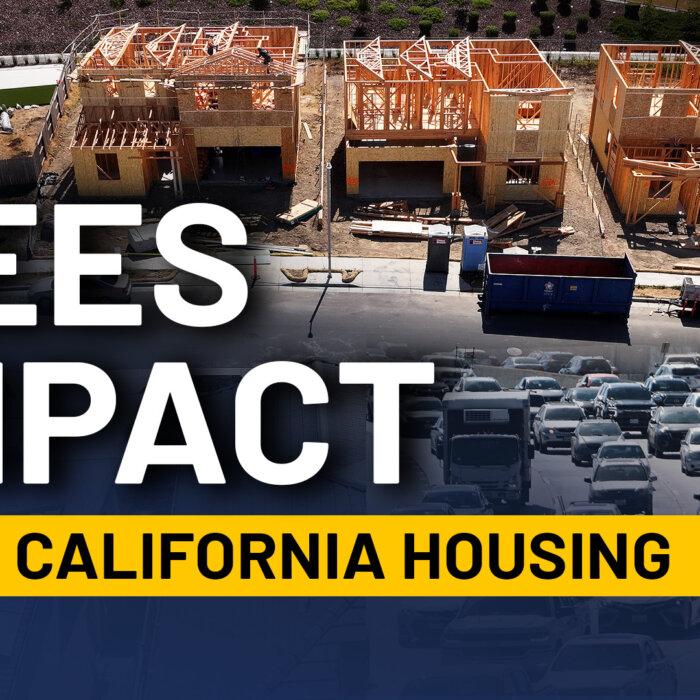
The Housing Trap
Housing is where the abstract world of central banking meets the “bones” of the American family. For decades, home ownership was the bridge between wages and wealth. Today, housing has been financialized, outpacing wage growth and becoming a primary savings vehicle for the older generation at the expense of the younger.The ‘Great Convergence’
In the decades following the Cold War, a single civilizational project dominated the global imagination: the “Great Convergence.” The assumption was as simple as it was seductive: By integrating every nation into a rules-based economic model, we would not only create unprecedented wealth but also inevitably foster political liberalization. For years, the data seemed to bear this out. Goods became cheaper, inflation stayed low, and the supply chains of the world stretched into a seamless, optimized web.
The Asymmetry of Openness
The fundamental flaw of the globalization era was the assumption of reciprocity. The rules-based order, typified by the World Trade Organization, was designed for participants who would internalize its norms. Instead, the system collided with a regime optimized for state advantage: the CCP.China’s entry into the global market in the early 2000s acted as a massive accelerant for Western corporate profits, but it was never a symmetrical arrangement. Beijing treated integration not as an end, but as a means to acquire technology, capital, and geopolitical leverage. While the West optimized for efficiency, the CCP optimized for strategy.
The Diagnostic Disruptors
When systems this large begin to fail, the adjustment does not appear first in policy white papers; it appears in people. The rise of polarizing figures and the hardening of state-led strategies are not the causes of the breakdown; they are its symptoms.In the United States, President Donald Trump’s significance was less ideological than it was diagnostic. He has been giving voice to a constituency that realized elite-managed globalization was no longer self-correcting (if it ever was). By naming grievances—trade deficits, industrial decline, and institutional distrust—he signaled that the old consensus was dead.
The Price of Reality
Adjustment is never painless. Systems accumulate imbalances slowly but release them with the violence of a breaking wave. The “era of cheap everything” was, in effect, a subsidy provided by global asymmetry and the hollowing out of domestic capacity. Removing that asymmetry means that the subsidy is gone.The first friction of this rewind is economic: Rebuilding domestic production and securing supply chains is inherently inflationary. We are trading efficiency for security, and the bill is coming due at the grocery store and the gas pump. The second friction is political: As the economic model shifts, old coalitions fracture. Democracy, by its nature, absorbs this stress “out loud,” leading to the heightened volatility we see today.
The Requirement of Discernment
We have reached a fork in the road where technical knowledge—the models of the Fed or the spreadsheets of the World Trade Organization—is no longer sufficient. What is required now is a civic virtue that different traditions call by different names: prudence, virtue, or discernment.Discernment is the refusal to mistake comfort for truth. In a global context, it means recognizing that integration without reciprocity is not peace, and dependence without leverage is not cooperation. The CCP’s example is clarifying because it revealed the flaws in our own assumptions. The lesson is not that we must isolate but that we must engage with a clear-eyed understanding of when engagement strengthens us and when it erodes us.