This copy is for your personal, non-commercial use only. Distribution and use of this material are governed by our Subscriber Agreement and by copyright law. For non-personal use or to order multiple copies, please contact The Epoch Times Reprints.
The United States stands at the threshold of a rare public health inflection point: ending AIDS-related deaths within our lifetime.
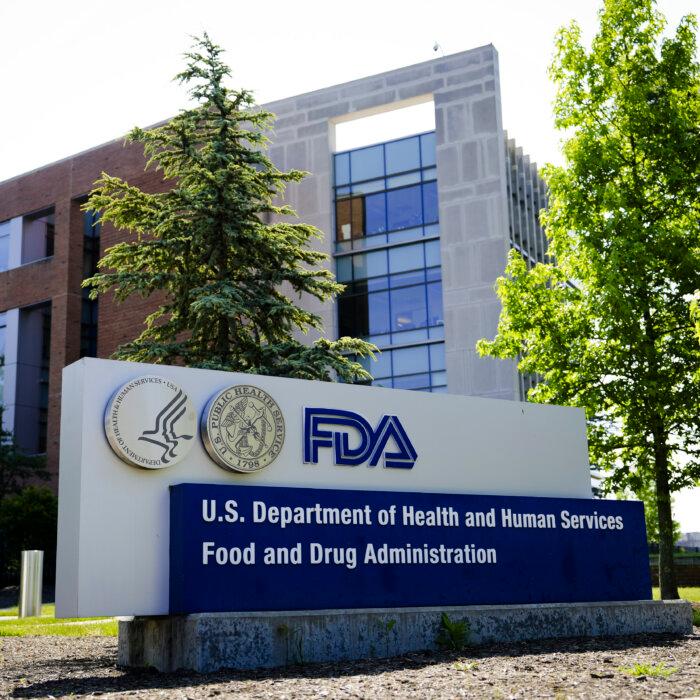
Today, a new breakthrough therapy (UB-421) is up for submission for accelerated clinical development and regulatory approval at the U.S. Food and Drug Administration (FDA). The company, Cana Life (licensed from United Biomedical), seeks to deliver results befitting its biblical name: providing lifesaving therapy to those with multidrug-resistant (MDR) HIV who are failing their current antiretroviral regimen.
Its plan includes a bold foreign policy move: to launch the first-ever medical treatment offered to patients simultaneously in the United States and Africa.
If seized, this moment could define the health legacy of the Trump administration. Rather than remembering AIDS deaths, this could be the administration that acts to end them. And rather than funding international nongovernmental organizations to parachute into Africa, this administration can send an agile signal for its new America First Global Health Strategy, making good on its promises of innovation and strategic bilateral partnerships in Africa and elsewhere.
For more than four decades, HIV policy has advanced through steady but cautious progress, incremental drug improvements, better prevention, and longer lives. That progress has been real and meaningful. Yet the last therapeutic mile of AIDS care remains stubborn: patients with MDR-HIV, treatment fatigue, or adherence challenges who continue to die despite the availability of therapy.
To put it into perspective: More than 40 million people are living with HIV today, with roughly 10 percent to 15 percent suffering from repeated treatment failures, known as heavily treatment-experienced individuals. More than 630,000 AIDS deaths occurred last year, mostly in Africa.
Over the past 15 years, three salvage therapies have been FDA-approved for people with these adherence challenges (ibalizumab, fostemsavir, and lenacapavir). These have represented critical lifelines, yet this progress has fallen short—efficacy is imperfect and varies, all three have encountered emergent resistance issues, and barriers to accessibility prevent their widespread adoption.
Today, the FDA has a chance to move on a new breakthrough drug, UB-421, a next-generation MDR-HIV treatment, designed to overcome multidrug resistance. By targeting domain 1 of the CD4 receptor, it blocks HIV entry altogether. This represents a structural shift in how MDR-HIV can be controlled, suppressed, and ultimately rendered nonfatal.
Clinical trials with 129 patients so far show sustained viral suppression in all patients, both as a monotherapy and in combination with other treatment regimens; this includes two MDR-HIV patients treated at the NIH Clinical Center. Laboratory data from 1,400 primary viral isolates from people harboring MDR-HIV showed no resistance, highlighting a robust resistance-proof profile unparalleled with current treatments. And UB-421 has also shown safety consistent with other anti-HIV antibodies and potential for use during antiretroviral therapy interruption or in combination regimens. Data has been published in journals The New England Journal of Medicine, Nature Medicine, and The Lancet.
This is precisely the type of moment for which the FDA’s accelerated approval pathway was created. The therapy up for approval today fits squarely within the Trump administration’s FDA policy, having an unmet medical need, no risk of off-label use, and a known biomarker. It was developed over more than a decade with the help of scientists at the National Institutes of Health.
Accelerated approval is often misunderstood. It is not regulatory recklessness. It is a risk-balanced framework designed for life-threatening diseases in which existing treatments fail a subset of patients and early clinical evidence shows substantial promise. Oncology, rare diseases, and antiviral therapies have all benefited from this approach—saving lives while confirmatory trials continued.
Critics will rightly argue that evidence matters, and they are correct. Accelerated approval does not eliminate scientific standards; it prioritizes them in context. It requires rigorous early-phase data, ongoing post-approval trials, and the authority to withdraw approval if the benefit is not confirmed.
The implications extend far beyond U.S. borders. Cana Life plans to simultaneously roll out UB-421 in the United States and Africa, partnering with U.S.-based HIV organizations, African ministries of health, and African scientists.
An accelerated FDA approval, paired with deliberate global access planning, would collapse the lag between innovation and AIDS deaths around the world. It would also restore America’s credibility as a leader not only in biomedical discovery, but also in delivery.
The administration, therefore, has an opportunity to align the FDA, the Department of Health and Human Services, the State Department (which is set to sign 55 bilateral agreements this year), and global health partners around a singular objective: finishing the fight against AIDS deaths.
Rarely are U.S. administrations offered the chance to close a chapter of history altogether. But this is one of those moments: If this new breakthrough therapy delivered the results it promises at scale, it would put a period at the end of four decades of AIDS deaths. And that would be a wonderful achievement.
Aside from his other affiliations, Kevin Bardosh is currently a consultant for United Biomedical, to which Cana Life is an affiliated entity. Neither of the companies requested nor edited this piece; he declares his views as his own.
Views expressed in this article are opinions of the author and do not necessarily reflect the views of The Epoch Times.
Kevin Bardosh, PhD, is a Senior Non-resident Fellow at the Foundation for American Innovation in Washington, DC, who recently served as a Senior Science Strategist in the Office of the Director, NIH.