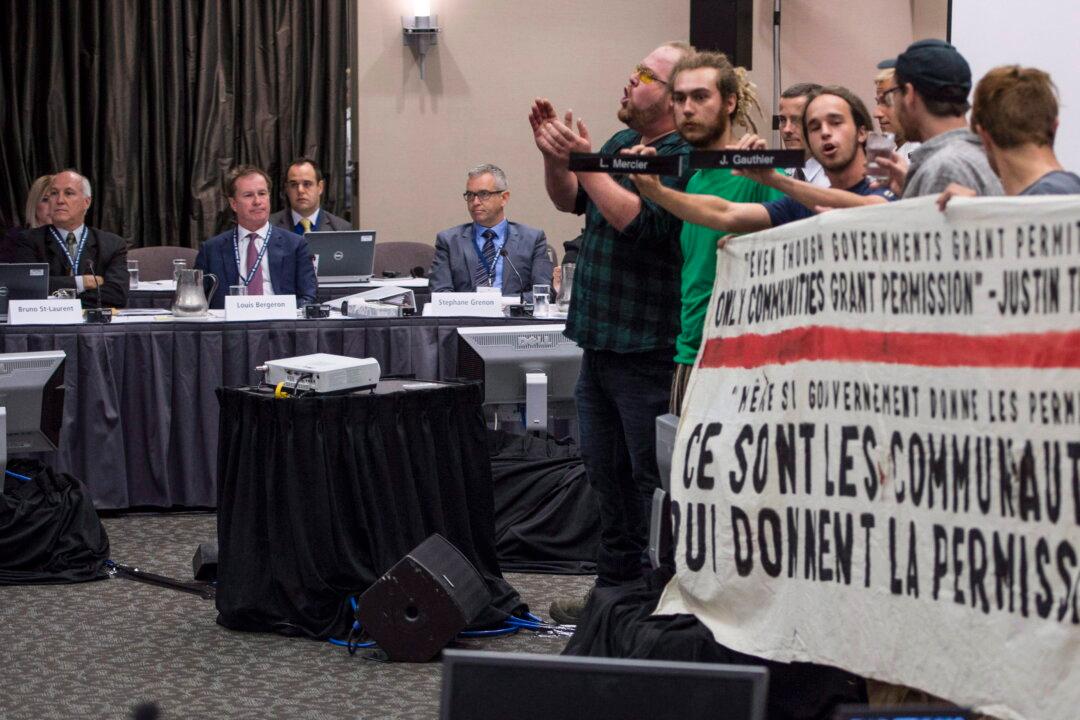
Remembrance Day does not belong to the military bureaucracy. It is a civic ritual that includes a military component. It is part of the foundation of this country’s culture, a part no military command office should have authority to amend unilaterally.
Yet, the military bureaucracy has presumed to do so. On the 11th day of the 11th month, chaplains will stand before cenotaphs facing a choice no 20th-century predecessor faced. The crowd will have just sung an anthem asking God to keep our land glorious and free. The ceremony will close with “God Save the King,” a sung prayer. Between those two invocations, the chaplains, under written orders, may not say what everyone around them is permitted to sing.
On July 29, Military Personnel Command issued Instruction 03/26, replacing a 2023 direction that bound only chaplains. The new instruction binds every member of the Canadian Armed Forces. Where prayers were once offered—from parade squares to Remembrance Day—it now requires a “spiritual reflection” instead: no religious language, with references to God as the first example of what must go.
Section 4.9 preserves regimental prayers as classroom history only: members may study the prayer but they may not say it where it was said for a century. A prayer studied but never spoken is a museum exhibit. Shakespeare made the point about soldiers and prayers. “Henry V” turns on the feast of a saint and an appeal to Providence: “God’s will! I pray thee, wish not one man more.” Strike the saint and the prayer, and the speech collapses into a staffing complaint.
The instruction’s principles fare no better than the Command’s taste. Neutrality demands all this, it insists, but then lists exceptions: Indigenous practices, “some of which contain spiritual elements,” may enter military settings for cultural and educational purposes.
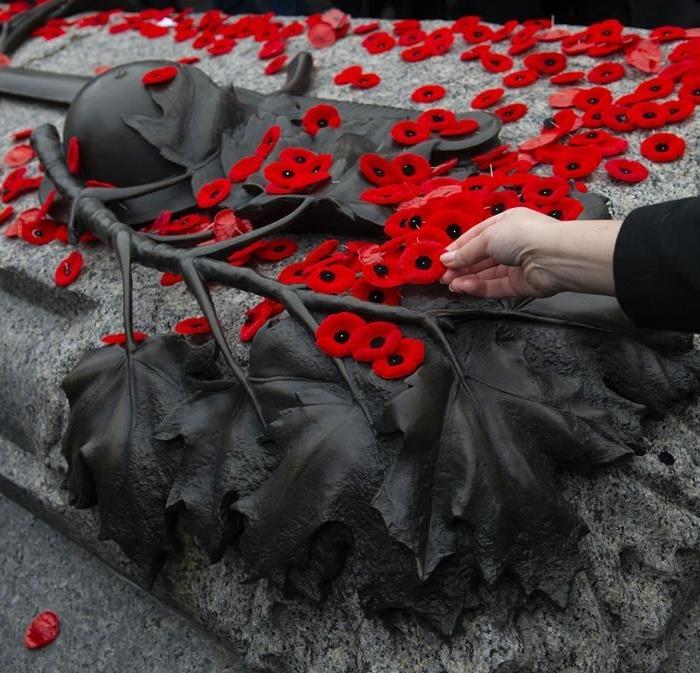
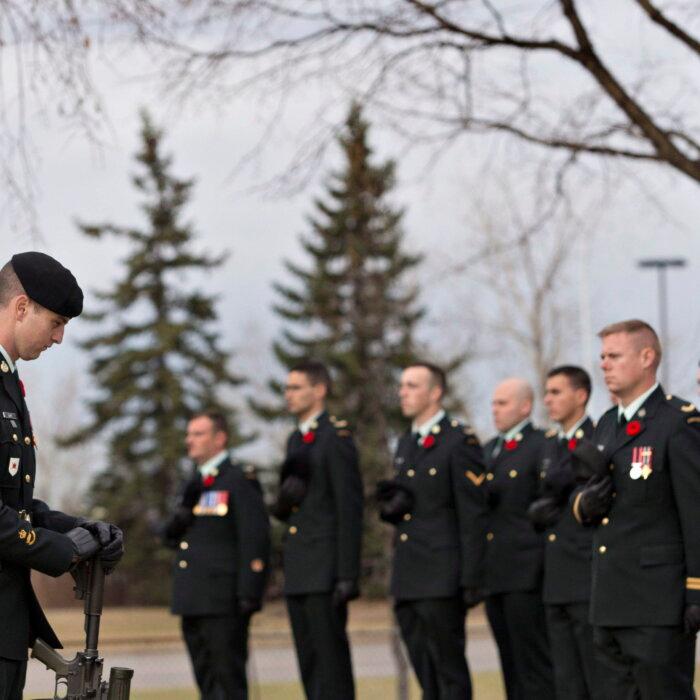
The traditions of the God of Moses and Saint Paul aren’t devoid of spirituality. Nor is Christian prayer merely religious language. Yet the Command treats Christian liturgy as though it were something else. A liturgy is the public work a people does together before the God it names. Strip away God, and all you have is programming.
The real principle rests on a self-induced delusion: one tradition counts as a Charter hazard and another as a reconciliation asset.
The Instruction’s authors conjure a legal footing: a 2015 Supreme Court ruling about a praying mayor coercing citizens, stretched into a gag on the one office the state created to pray. The footing is imaginary, one more delusion in the set. No court ordered this. A bureaucrat chose it, and Parliament was never asked: no bill, no committee, no member rising to speak.
A Remembrance parade is military; the mourning is not. Widows, veterans, and towns participated in building this tradition for a century, and the people keep it.
Those of us who pray for our soldiers and remember our fallen know the liturgy: the Last Post, the silence, the prayers, Colonel McCrae’s poem, the Royal Anthem. We stand our children in the sleet and teach it to them, as Shakespeare promised: “This story shall the good man teach his son.”
A bureaucracy that mistakes its inheritance for a compliance risk contradicts its own stated principle. Rewriting a national rite without asking Parliament and its people demonstrates that it cannot be entrusted with this tradition.
For that reason, Parliament should strip it of any custody over public remembrance.
Civil society can take care of it. The Royal Canadian Legion organizes the national ceremony in Ottawa. Let the Forces march in it as honoured guests, under the nation’s liturgy, prayers included. A country’s civil memory takes no orders.
When King Charles, himself the head of a Christian church, read the Throne Speech, Prime Minister Mark Carney declared that the gesture “clearly underscores the sovereignty of our country.” The Crown, the anthem, the chaplain’s prayer: one inheritance, all of a piece, alongside the Constitution. His predecessor pronounced Canada the world’s first post-national state, and the premise still governs the Command.
If the traditions that formed this country cannot survive a ceremony involving its own military, what sovereignty are Canadians being asked to defend? Only the state itself remains: sovereign in its own right, severed from its inheritance and detached from any people conscious of itself as a people. That is sovereignty as state-worship.
Edmund Burke described society as a partnership between the dead, the living, and the unborn. Nowhere is that partnership more real than at a cenotaph. Strip the prayers, and Remembrance dissolves into an HR function with rifles and fanfare, commemorating sacrifice in language vetted to mean nothing.
An institution that permits no God above itself breaks with the Constitution and has already told you what it worships. A country that turns its back on the traditions of its most tradition-bound institution turns its back on its own identity.
Nobody voted for this. It arrived by command. Parliament can send it back.