It’s too soon to tell—and the fight with Iran started less than a week ago.
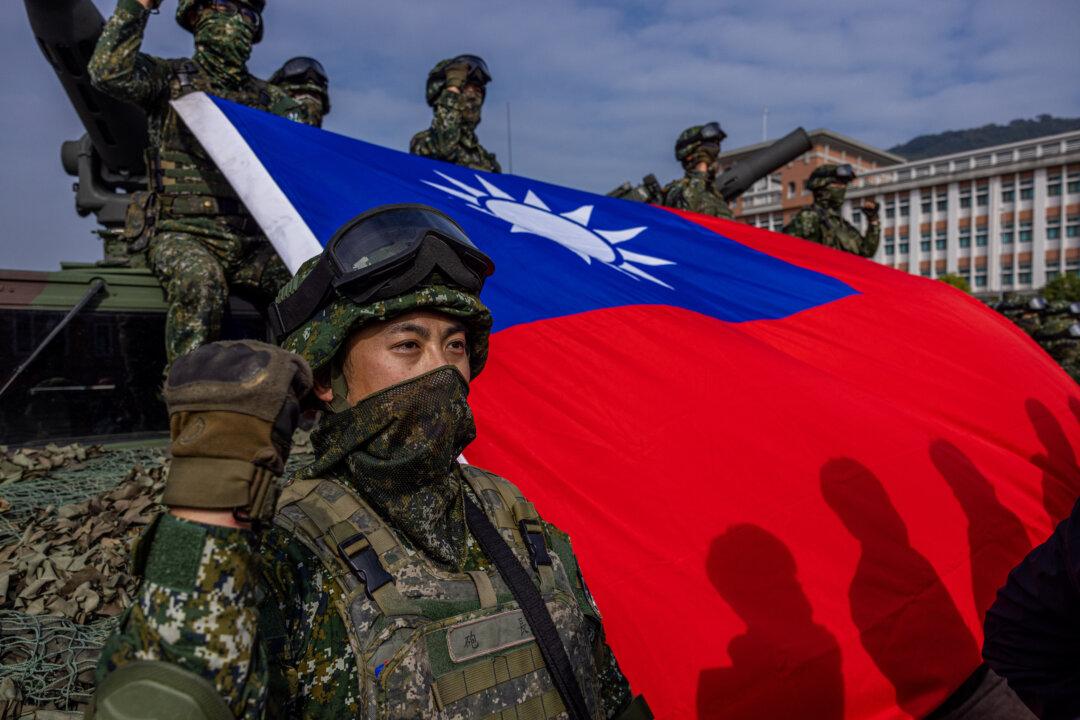
In the near term, China will likely hold its fire on Taiwan.
However, if the Iran conflict continues for an extended period, say, months, while casualties mount and the United States appears bogged down, Chinese leader Xi Jinping might be sorely tempted to move against Taiwan.
Beijing might assess that its military overmatch around Taiwan is such that the United States can’t amass enough force to forestall or respond to a Chinese assault without suffering heavy losses.
Iran as Another ‘Ukraine’
China is glad the Europeans and the United States are embroiled in Ukraine. It burns through U.S. armament stocks and serves as a political distraction—leaving the United States (and Europe) unable to focus on Asia and Taiwan.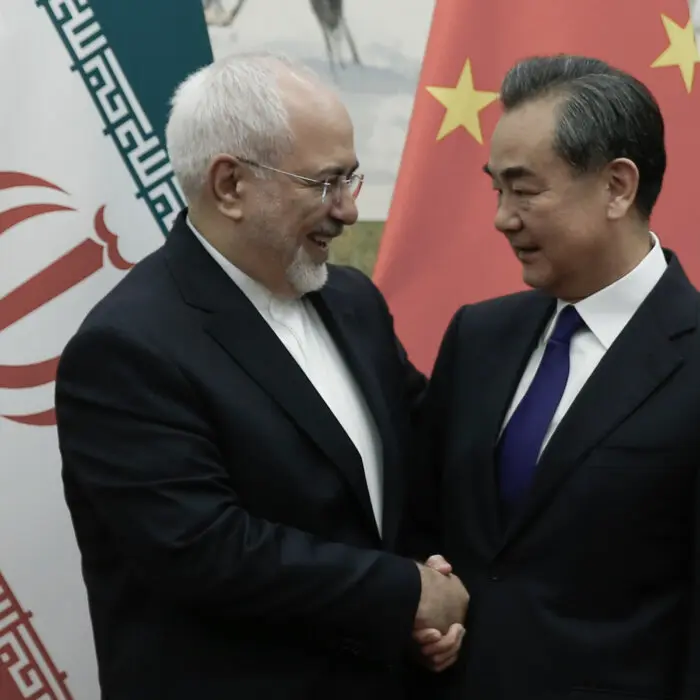

The Iran conflict compounds the distraction and the drain on resources.
Whatever the United States does in Iran or provides to Ukraine, by definition, is not available for a fight in the Western Pacific. And the U.S. military may have to eventually draw down stocks allocated for an Asia-Pacific contingency.
A too-small U.S. Navy, finite war stocks, and an atrophied defense industrial base are converging for the United States, just as the world gets more dangerous. The U.S. military’s perfumed princes and civilian leaders ignored many warnings over the past three decades.
But maybe U.S. allies can make up the difference?
Australia? Its defense force is too small, as is its defense industry.
Taiwan No ‘Sure Thing’ for Beijing
Xi would be rolling the dice if he were to move against Taiwan. And if unsuccessful, it would cost him his position—and maybe his life. The Chinese Communist Party does not tolerate such failure.And even if successful, it would isolate China, as the United States and other free nations would finally recognize the People’s Republic of China as an enemy—and would treat it like one.
Trump’s Gamble
U.S. President Donald Trump is trying to pull off the balancing act of his lifetime.He’s taking on Iran while hoping to avoid another major problem breaking out elsewhere.
If the United States and partners prevail and a sort of friendly regime takes over in Iran, the People’s Republic of China is unlikely to move against Taiwan in the near term. Such would be the effect of the demonstration of American “will” and capability—and the bracing effect on U.S. partners, even the half-hearted ones.
For now, Xi is watching closely, although he can’t do much beyond providing targeting data for Iran’s missiles and drones and some supportive comments. But the longer the war continues and the Iranian regime hangs on, the better, from Beijing’s perspective.
And if Iran’s Islamist regime survives, that would be to Beijing’s advantage. China would help the regime restock and rebuild. Other regional Gulf nations that came in on Washington’s side—expecting that Trump would “finish the job”—would be disheartened and hedge toward China.
Trump’s European enemies also would be emboldened.
Even more, domestic political damage to Trump would be such that his administration—and the U.S. public—would not be interested in a fight over Taiwan against a powerful, nuclear-armed country.
Then, Xi just might decide the time is right. And if U.S. help looks doubtful, Taiwan might even roll over.
So for Taiwan and the rest of us, much is riding on the Iran fight. Win it, and good things happen. Lose it, and bad things happen.
Trump needs to finish the job in Iran.