Probably it’s a regional issue, but I’ve only recently discovered the magic of custard. It’s a creamy, eggy, silky, and deeply delicious topping to be put on many things. It’s warm and incredibly good, ideal for a winter’s evening.
Best of all, anyone can make it right at home with ingredients you likely already have. Making any food yourself is always more satisfying and wonderful than simply snagging a packaged item at the store. This is especially true of desserts. Homemade sweet treats are surely the crown jewel of both the kitchen and the season.
I would rank a simple custard at the top of the list. You can call it crème anglaise, but I prefer the simpler word custard.
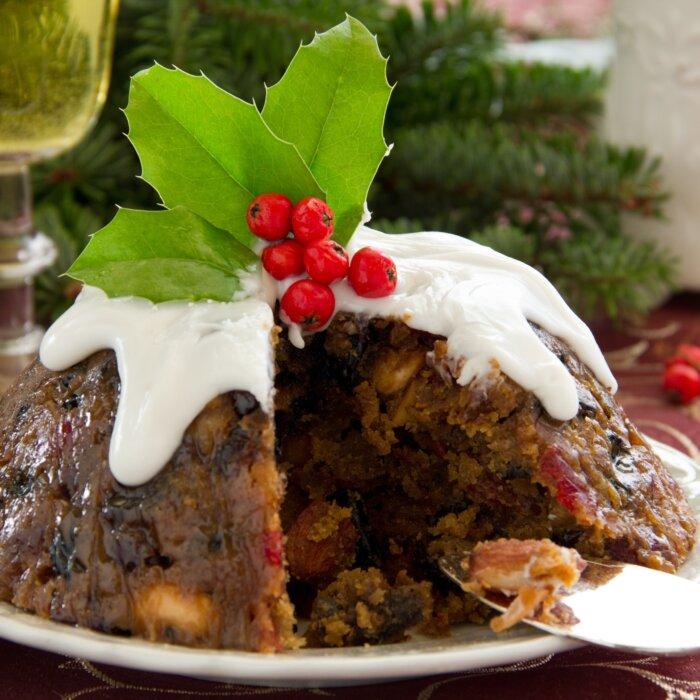
There are all sorts of things we eat that seem to cry out for some kind of topping: pie, a fruitcake, a figgy pudding, gingerbread that gets hard, or just a bowl of fruit. Or let’s say you have a banana on the counter. Rather than just peeling it and eating it as a snack, imagine the same thing sliced and bathed in a warm custard.
Sounds better, right? Add other berries and maybe nuts, and you have a gourmet treat.

A custard has just a few ingredients. It’s eggs, cream or milk, sugar, and some vanilla. That’s the whole thing. The magic happens in preparation, during which time the heat turns it from just normal things into something heavenly. Even for those not skilled in the kitchen, this can be achieved with a bit of focus and attention to detail.
You might know the custard from the more famous crème brûlée, the high-priced dessert with the crusty sugar top served at most fine restaurants. People swear by it, without understanding that it is actually just a fancied-up version of an old-world treat, served cold.
Or you might know the Latin American version called flan, which somehow lacks the high status of the French version even though it is arguably more sophisticated. Instead of a crusty sugar top, it has a caramelized top.
(There is also the American custard pie long used in comedy routines, about which the less said the better.)
The version to which I’m partial is the pure thing, the liquid, served hot or cold, to be added to other foods. It’s the easiest and therefore least intimidating version to make, and the one that unearths the deep history here.
Custards prevailed at a time without household refrigerators and freezers. The eggs didn’t go bad, the milk and cream were delivered, and the rest are things in the cupboard. The foods you prepared and ate were mostly from fresh ingredients readily available.
There was no tub of ice cream sitting around for midnight binging. The class of food that rose up had to come from and withstand a world without preservatives, refrigerators, and grocery stores everywhere. When we eat them now, even if we are barely conscious of it, a realm of DNA memory is thereby tapped, which is why we sometimes call these comfort foods. We might as well call them ancestral foods.
Indeed, custard is the ancestral topping for dessert.
Let’s return to the comparison with ice cream. Custard strikes me as more elegant and comforting, and with a greater overall impact.
Indeed, custard lacks all the commonality and persistent problems of ice cream. What are these? The flavors are endless, which is fine, but many don’t seem to exist for any particular reason.
For example, most flavors of ice cream can be recreated at home with just vanilla plus jam or syrup. If this is true, why are people buying them? A bit of jam or chocolate makes the same thing. I’ve never understood it.
Then you have the problem of extreme sweetness and calories. You want to eat an entire tub, but such behavior is genuinely dangerous. And if you are fussy about what is in your food, you have other problems. Try finding some without high fructose corn syrup, for example.
And making it at home has other problems. You can buy an old-fashioned crank, but then you have to have a big bag of ice plus rock salt, and you turn and turn and only end up with enough for a few people. Then you have to store the maker, which is a mess. This is even true of the electric varieties.
A friend showed off his new kitchen counter ice shaver, which makes something approaching ice cream. The machine wails and grinds for a long time and is very expensive. The results are impressive, but is there really no point to recalling pre-industrial foods that do not take up counter space and do not break the bank and eardrums?
Let’s start with the easy version.
The ingredients are four or five large eggs at room temperature, 4 cups whole milk or a mix of milk and cream, 1/2 cup sugar, 2 teaspoons vanilla extract, and a pinch of salt. You can have cornstarch around in case you are going for something extra thick (or just want an extra guard against curdling).
The preparation is all about temperature and timing. Do it wrong and you end up with scrambled eggs, hence no boiling at any point. That means it takes time. Otherwise, you can end up with a big mess (I’ve been there).
You start with a small mixing bowl, adding eggs, sugar, vanilla, and a pinch of salt. Use your whisk and start blending. You want to do this for up to five minutes to make sure it is entirely integrated.
While you are doing that, you can add your cold milk to a saucepan. Put the burner on medium-low and let it warm to the point of being hot, but avoid anything resembling a boil.
Here comes the tricky part. You drizzle the milk into the egg mixture a bit at a time, mixing the entire time with the whisk. Eventually, it is all added. Then pour the full mixture back into the saucepan on low and whisk for some minutes. You will see the magic all fall into place, as the custard materializes.
I will say again: never boil this. It is in this stage that you can add a teaspoon of cornstarch previously dissolved into a bit of cold milk and gradually blended in.
After about five minutes, you are done with the most delicious topping you have ever tried. It’s simple. It’s effervescent. It’s foundational and rooted. You can use it immediately or put it into a container for chilling in the refrigerator.
I personally had to do this twice to get it right. Once you see how it works, it quickly becomes second nature. After that, you begin to rethink everything. Why have you been buying ice cream all these years when the possibility of making this better and more comforting treat has been right at your fingertips?
Why is custard so underrated, so neglected? It has something to do with the convenience of alternatives. But there is surely more to it. Our generation has so much neglected the kitchen over decades—preferring always to outsource food to the restaurants—that we’ve subtly developed a kind of phobia about making anything from scratch.
We’ve just stopped believing in our own skills, even on such simple matters as making food for ourselves.
Our times are asking us to revisit this habit, simply for financial reasons. The custard I explain above costs a fraction of what you would pay at the restaurant, and it is much cheaper than any store-bought item. Above all else, you have made it yourself. There is much to say for that.