This copy is for your personal, non-commercial use only. Distribution and use of this material are governed by our Subscriber Agreement and by copyright law. For non-personal use or to order multiple copies, please contact The Epoch Times Reprints.
Still from a video shows a U.S. Air Force B-2 stealth bomber returning after the U.S. attacked key Iranian nuclear sites, at Whiteman Air Force Base, Missouri, on June 22, 2025. ABC Affiliate KMBC via Reuters
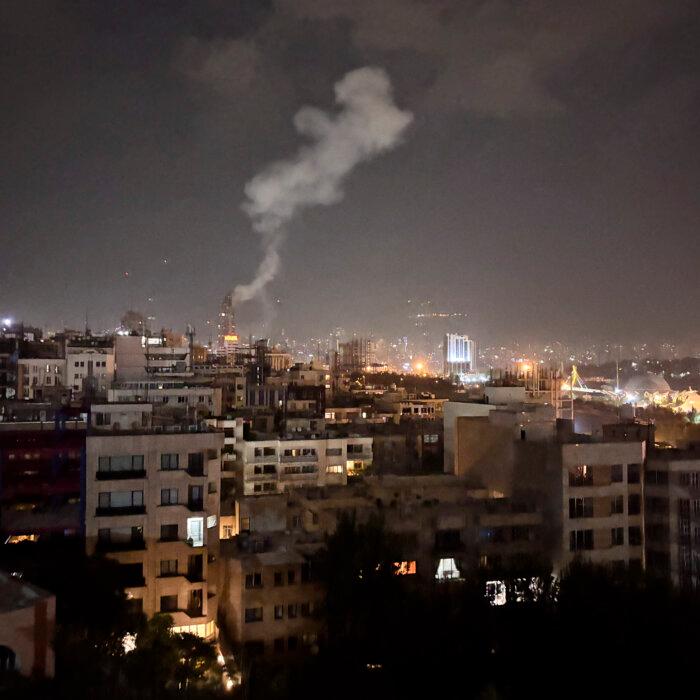
The U.S. attack on Iran’s nuclear installations on June 21 was the most flawlessly executed, thoroughly professional, and totally effective military initiative undertaken by Americans since Gen. MacArthur‘s amphibious landing at Inchon in 1950, if not the D-Day landings commended by Gen. Eisenhower in June 1944. And they achieved the most decisive result of any military operation in the world since the atomic bombs dropped on Hiroshima and Nagasaki on Aug. 6 and 9, 1945.
It has substantially erased the unpleasant memories of the many military fiascos of recent memory: the evacuation from the roof of the U.S. Embassy in Saigon in 1975, the hijacking of the Mayaguez in 1975, the failed attempt to rescue the Iran hostages in 1980, the terrorist bombings in Lebanon in 1983 and Saudi Arabia in 1996, the catastrophic Iraq War, which turned most of that country into a vassal state of Iran, and the shameful debacle of the U.S. withdrawal from Afghanistan in 2021.
Those military setbacks were associated with terrible strategic failures: Vietnam; the fall of the shah in Iran; Lebanon; Iraq; George W. Bush’s insistence on elections that brought Hezbollah and Hamas to power; Obama’s championship of the Muslim brotherhood in Egypt and the ayatollahs in Iran; his cooperation with ISIS; the mad nuclear deal with Iran, under which it would just now be deploying nuclear weapons with the world’s blessing; and Obama’s apology tour (for Roosevelt, Churchill, Truman, and Eisenhower—four great men of distinction).
Given the intense scrutiny of the conflict underway between Israel and Iran, and the speculation about what the United States might do, it was a good deal more complicated than a conventional air raid accompanied by submarine-launched cruise missile attacks. President Trump, through his press secretary, had said that he would reach a decision within two weeks. B-2 bombers were flown to Guam to throw observers off the track, as other B-2s were enabled with prepositioned in-air refuelling arrangements to attack Iran directly from Missouri.
The run-up to Operation Midnight Hammer was a tactical masterpiece. Trump gave Iran 60 days and restrained Israeli Prime Minister Benjamin Netanyahu from mounting attacks of maximum severity prior to the expiry of his deadline. In saying he would decide within two weeks whether to strike, it was generally mistakenly assumed this was an open window of two weeks. But he struck within two days, complete with decoy flights to Guam and a general dissembling. The principal strike-force returned to base within 36 hours; all targets were achieved, and there were no American and minimal civilian casualties. This apparently simple operation achieved or greatly advanced a number of highly desirable objectives.
The Iranian nuclear program is in rubble, and the Iranian government will have grasped the point that arming itself with nuclear weapons is something that will not be tolerated. This hideous regime of bigotry and perversion of primitive religiosity has wasted nearly 50 years of Iranian history in sponsorship of terrorist crime and congestive economic backwardness and human oppression. Israel and the United States now possess the ability to strangle that regime if they wish to do it, although the United States is being careful to formulate its official positions in ways that cannot be confused with the disaster of George W. Bush’s invasion of Iraq. Israel, which controls Iranian airspace, can shut down Iranian oil production and exports and systematically reduce Iran to a primitive and completely dysfunctional condition. At some point, either the regime will discover a modicum of sensible judgment, or the suffering masses of Iran will fling it from office.
Iran will be in no position to continue to sponsor the badly reduced and decapitated Hezbollah and Hamas terrorists or extend any further aid to the Yemen Houthis. Iran may have a number of terrorist cells in the West that it can still activate, but it will not be able to sustain them, and each outrage will bring a powerful response. As a malignant geopolitical force, Iran is finished. Terrorism as a whole has suffered a resounding setback that the whole world will welcome. The road should soon be open to a comprehensive agreement between Israel and Saudi Arabia. The meddling in Arab affairs of their ancient Persian and Turkish foes have brought the Arab powers closer together, with Israel in a common front against these interlopers. Recent events should cause the Turkish president to consider a return to active membership in NATO a preferable alternative to meddling in Syria or playing up to Russia.
Israel and the United States preserved at least a shell of a nuclear non-proliferation policy. If Iran had been a respectable regime, it would have had a receivable argument that the world’s nuclear powers were a sanctimonious club making no effort to disarm as they had promised to do, while heaping moral obloquy on any country that attempted to develop a nuclear weapon. If Iran had become a nuclear military power, eventually dozens of other countries would have done the same, greatly increasing the possibilities of nuclear conflict. At least we now know that countries not even as politically stable or responsible as Pakistan or North Korea will be barred from possessing nuclear weapons. This is a worthwhile accomplishment.
The defeat of the Iranian ayatollahs is also a setback for China. Beijing has pursued a simplistic policy of trying to intimidate all of the West’s friends, especially in the Far East, while encouraging troublemakers farther afield. The comeuppance administered to the Iranians—although the U.S. administration is being careful not to equate it to a setback to China—is in fact a rebuke of China’s mischief-making that the world will notice.
There is also a lesson here for Russia. It bought some missiles from Iran and was happy enough to be associated with Iran, China, and North Korea in a very ragged cabal of abrasive and trouble-making states. Russia has just seen a startling example of American military power and, implicitly, of the capacity of the United States to put arms in the hands of its protégés, in particular the Ukrainians, that will be far beyond the capability of the Russians to deal with.
Their aggressive war against Ukraine, which was supposed to lead to the reabsorption of that entire country into Russia after not more than a month, has already cost the Russians a million casualties and has been an embarrassing military fiasco. In the interests of not profoundly humiliating Russia and confirming its present condition is an obsequious camp-follower of China, President Trump has given Russian President Putin an option to wind down his war in Ukraine, accept a few Russian-speaking areas as prizes of this ill-considered and incompetently conducted war, and begin proceeding towards normalization of relations with the West. Of course, we must have Russia in the West. Despite a good deal of posturing, the civilization of Tolstoy and Chekhov and Tchaikovsky is Western and not Oriental.
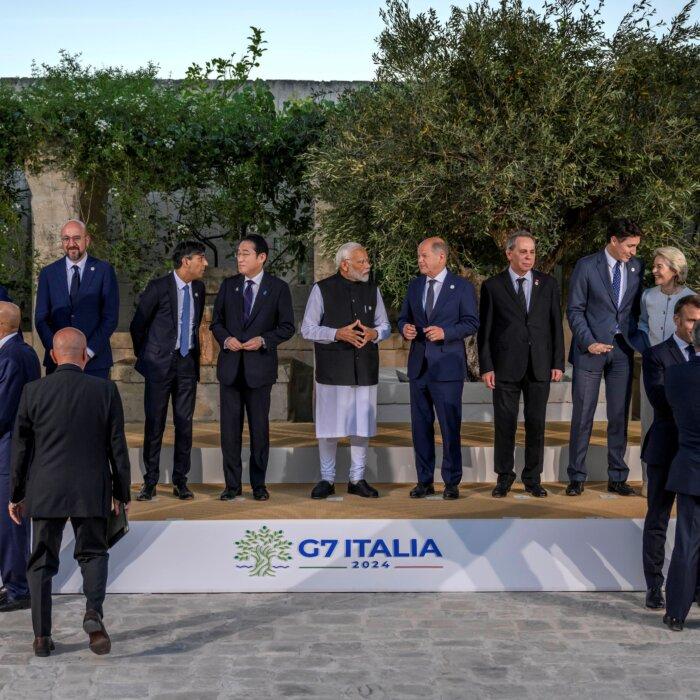
Finally, the Democrats have again made a fatal misstep, as they have in supporting illegal immigration, by calling for Trump’s impeachment over the Iran strikes. If that party generally sticks to its view that Trump has committed an impeachable offence, their political standing will sink to archaeological levels. It is bound to become less fashionable to engage in maximum levels of anti-Trump vilification. He is clearly emerging as an extremely effective president and a profound transformational political phenomenon. This influence extends also to foreign affairs, where once again the shilly-shallying of French and Canadian leaders has been exposed as ineffectual. The British and Germans seem to be scrambling onto the Trump bandwagon behind Italian leader Meloni, Hungary’s Orban, and Argentina’s Milei.
Gradually, the United States is pivoting toward the Pacific to deal with China, which will find itself overmatched. The defeat of Iran will facilitate such a move and will encourage peace in Ukraine, with which the Western Europeans will have no problem holding their own opposite Russia without much direct help from the United States.
The defeat of Iran is a defeat of terrorism and totalitarian despotism. What President Trump has just accomplished is the greatest geopolitical achievement of an American president in over 50 years, since President Nixon triangulated the great power relationship with China, signed the greatest arms control agreement in history with the USSR which reinstated American nuclear superiority, and extracted the United States from Vietnam while preserving a non-Communist government in Saigon.
Underestimating Donald Trump is a hazardous enterprise.
Views expressed in this article are opinions of the author and do not necessarily reflect the views of The Epoch Times.
Conrad Black has been one of Canada’s most prominent financiers for 40 years and was one of the leading newspaper publishers in the world. He’s the author of authoritative biographies of Franklin D. Roosevelt and Richard Nixon, and, most recently, “Donald J. Trump: A President Like No Other,” which has been republished in updated form.