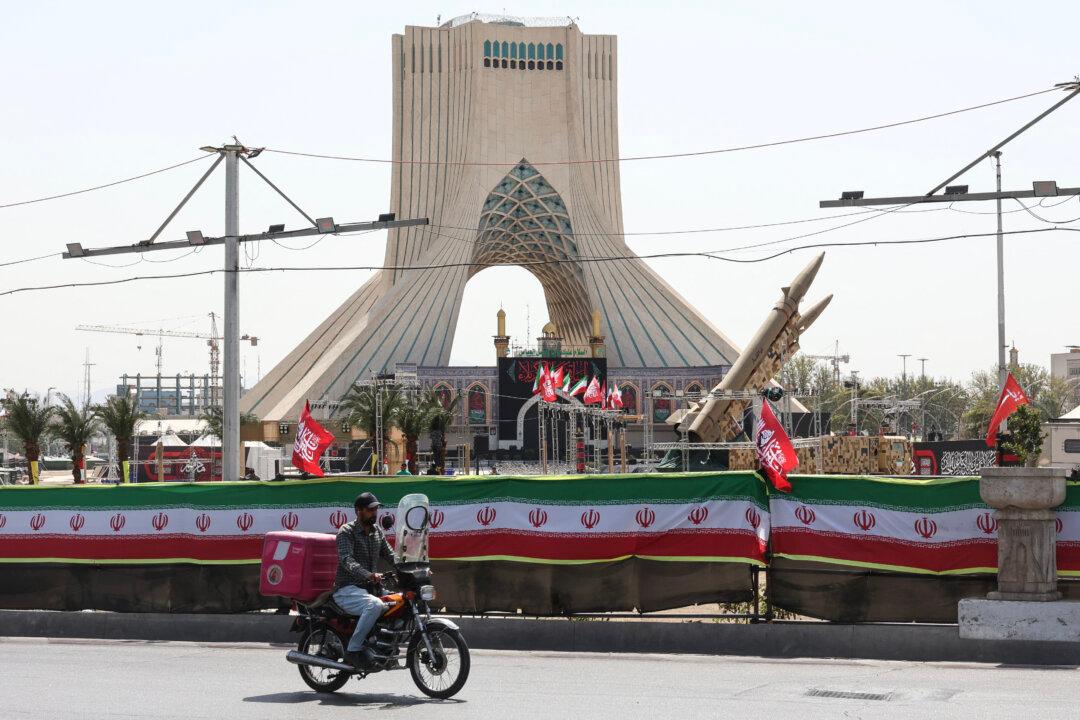
In the light of subsequent events, it is not conceivable that the chief purpose of the NATO meeting at Ankara was other than the preparation for a comprehensive effort to pummel the Islamic Republic of Iran to its knees and put a permanent end to the farrago of threats, outrages, and provocations endlessly inflicted on its neighbors and on the United States by Tehran. People generally tend to believe what they want to believe. Not since Hitler, in the last months of his life, purported to deploy divisions that had been completely destroyed months before and relied upon defeating his enemies with rockets and jet warplanes that German factories could no longer produce, has there been a demonstration of this tendency by the government of an important country as egregious as that demonstrated by the recent conduct of Iran.
In the war with Iran, the American and Israeli attacks upon the country were the most one-sided exchange between serious combatants in modern history. The two powers inflicted more than $1 trillion of vital damage to strategic targets in Iran, including the destruction of the entire nuclear military program except for the uranium itself, and the complete elimination of Iran’s navy and air defenses as well as the reduction of its missile and drone capacity by approximately 75 percent. This was accomplished at a cost of 14 American lives, five of them in an accident that was not combat-related, and approximately 35 Israeli civilians killed by falling debris and explosive cluster devices from Iranian missiles that were intercepted.
There were approximately 20,000 airstrikes on Iran by the United States and Israel, and the regime, which is almost incapable of offering a truthful comment on any subject, only claims 3,500 Iranian dead. That’s one for every seven air or missile strikes, an astonishingly low level of collateral damage.
In their shell-shocked and delusional insanity, the prevailing surviving authorities of the Islamic Republic government apparently believe they won the war by virtue of still having individuals that they can present as leading a government. The fact of the physical survival of the second or third echelon of officials apparently entitles the regime to have signed a memorandum of understanding that declared the country would not seek nuclear weapons and acknowledged the unencumbered right of navigation in the Hormuz Strait. Iran has since construed this as meaning that it would not discuss its nuclear program and would resume it as it wished, and that it had a right to control all traffic through the Hormuz Strait and impose tolls upon the shipping of the world at its pleasure.
This carries bad faith and chronic insanity of judgment to a point of otherworldly detachment of which no one attending the NATO meetings at Ankara would have had previous experience. President Trump stated that he went chiefly out of regard for the host, Turkey’s despotic and frequently gratuitously abrasive president Recep Erdogan. Ever since Europe slammed the door in the face of Turkey 30 years ago, that country has fecklessly turned to the East rather than the West. It has reinvented a Near-Eastern role for itself that had lapsed with the defeat of the Ottomans in World War I. Turkey again imagined that it had some vocation to lead the Arabs, whose historic dislike for the Turks is rivaled only by their dislike for the Persians (Iran), and for essentially the same reasons: the tendency of both countries to impose themselves upon the Arabs.


To this end, Erdogan has dismantled the democratic structure created by Kemal Ataturk (the modernizer of Turkey, 1923–1938), substantially de-secularizing Turkey. He has put on the airs of aggressive Islam, and has reconstituted the great Hagia Sophia as a mosque. How that combination of activities, along with a relentless and brutally formulated antagonism to Israel, has generated affection for the Turkish leader in the heart and mind of President Trump can only be explained in tactical terms. These are based on his strong desire to isolate Iran from Turkey. This would be a sensible step preparatory to leading NATO as a punishment squad to prevent Iran and deter others from disrupting any progress toward peace in the Middle East.
Judging by the subsequent escalation of hostilities against Iran and the direct confrontation in the Hormuz Strait with the apparently serene indulgence of Turkey, it must be assumed that the Ankara conference was successful in its main objective. It is also likely that both the United States and the principal European countries wished a reconstruction of traditional alliance relationships. All sides seem to wish concerted and mutual effort to get over the serious abrasions generated by the Greenland affair and the unutterably annoying posture of a number of the European NATO states, especially Spain, disputing the legality of the attack on Iran and refusing any gesture of solidarity with the Americans. This included some prohibitions of American use of their own air bases in European NATO territory. Anyone can see that no alliance can survive such a fissure for long.
The very capable and energetic NATO Secretary-General, Mark Rutte, worked hard and effectively to smooth over these recent difficulties and to emphasize the success of the Trump campaign to persuade the other NATO countries to raise their defense contributions to 5 percent of GDP. This is an amazing success, and it would be a very unwise squandering of the opportunities this success presents if relations between the principal NATO countries were now to disintegrate seriously.
Now that Iranian dishonesty and uncivilized and compulsive aggression have been comprehensively exposed, there is a much greater likelihood for substantial NATO cooperation in the next phase of the destruction of that country’s ability to destabilize and retard peace in the Middle East and the world oil supply. In all of these areas, the Ankara meeting appears to have been quite successful. There was little of the abrasive conduct that characterized some previous meetings between Trump and the Europeans, and on this occasion the left-wing Spanish Prime Minister Sanchez was quite isolated.
It seems to have been the most satisfactory NATO meeting in some years, and except for Spain, all of the participants appear to have departed in good humor and with an unusual consensus among them that augurs well for the next phase in the life of this most successful defensive alliance in history.