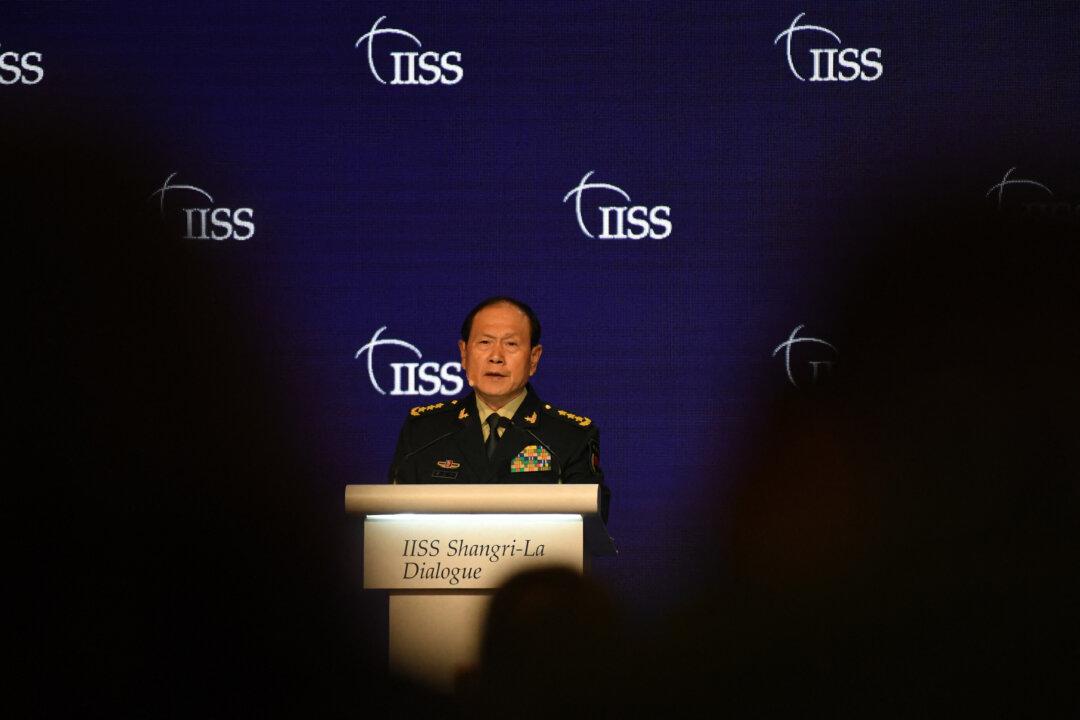
Since the Chinese Communist Party (CCP) launched its brutal persecution of Falun Gong on July 20, 1999, under then-top leader Jiang Zemin, it has systematically tortured and killed countless practitioners in an attempt to force them to renounce their faith. This created a nationwide network of repression involving the Party’s Political and Legal Affairs Commission (PLAC), police, state security, courts, and all levels of government.
Chen Wenqing, a current member of the CCP Politburo—a top decision-making body—and head of the Central Political and Legal Affairs Commission, is one of the key figures driving this ongoing persecution.
Chen was promoted to this position in 2022. The PLAC oversees the police, courts, prosecution, and national security. Since then, Chen has been the primary figure overseeing the entire political and legal system. Under his leadership, the persecution of Falun Gong has intensified both inside China and overseas. He bears direct responsibility for the deaths of Falun Gong practitioners in custody and for the CCP’s transnational repression abroad.
‘Zero-Out’ Campaign
In 2020, the PLAC launched a “zero-out” campaign nationwide aimed at forcing every Falun Gong practitioner in China to renounce their faith—essentially a continuation of Jiang’s original goal to “eradicate” Falun Gong.After taking office in late 2022, Chen continued and expanded this campaign. According to Minghui, a U.S.-based nonprofit that documents the ongoing persecution of Falun Gong practitioners, in the more than three years since he became PLAC’s top official, at least 17,805 Falun Gong practitioners have been arrested or harassed, 2,775 have been illegally sentenced, and 517 have been executed.
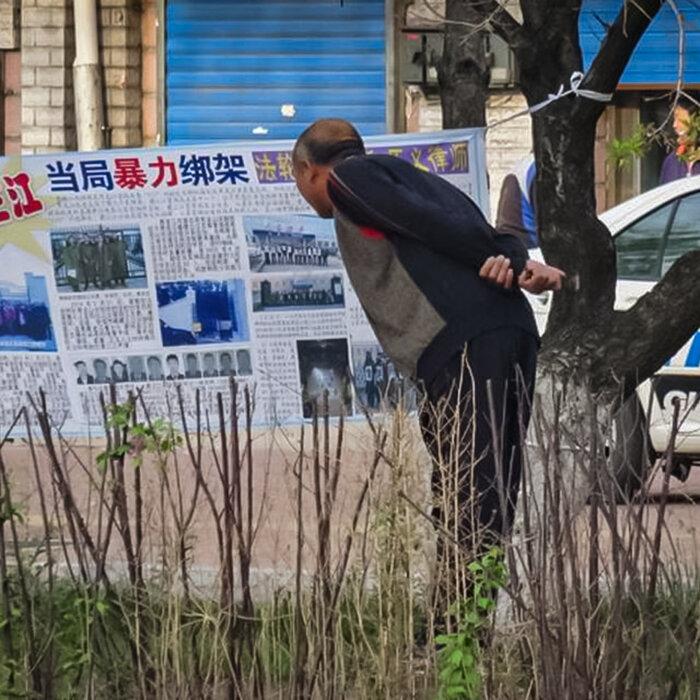
Chen is notorious for his brutal, iron-fisted suppression of Falun Gong practitioners when he served as an official in various procuratorates in Sichuan Province.
According to a December 2024 investigation report by the World Organization to Investigate the Persecution of Falun Gong (WOIPFG), on Jan. 15, 2003, during the First Session of the 10th Sichuan Provincial People’s Congress, Chen, then delivering the Sichuan Provincial Procuratorate’s work report, said that authorities must “show no mercy” in suppressing Falun Gong.
The WOIPFG’s 2005 investigation report revealed that by Jan. 13, 2005, at least 81 Falun Gong practitioners had been confirmed to have been executed in Sichuan Province (excluding 43 deaths in Chongqing), placing Sichuan sixth-highest in practitioner deaths nationwide.
- Beatings, electric shocks with batons to sensitive areas, pepper spray in the eyes, and forced injections of unknown drugs.
- Binding practitioners with restraint belts and forcing them to wear restraint clothing.
- Extreme sleep deprivation (as little as two hours of sleep per night).
- Forcing practitioners to stand facing the sun all day or to sit motionless in a military posture for long hours.
- Restricting meals to just 20 seconds per meal, with only a small amount of rice, barely enough to keep them alive.

Chen’s Years of Involvement in the Persecution
Throughout his career, Chen has consistently pushed the persecution, and he has advanced steadily through his active role in persecuting Falun Gong.As early as 2002, he was appointed prosecutor general of Sichuan, where he oversaw the arrest, prosecution, and sentencing of many practitioners. By 2005, Sichuan had one of the highest numbers of Falun Gong deaths in the country, according to the WOIPFG.
Chen Bears Responsibility for Transnational Repression
Chen has also helped export the persecution abroad in an effort to “zero out” Falun Gong practitioners overseas.According to sources who spoke with The Epoch Times, Falun Dafa Information Center, and the WOIPFG, in October 2022, the PLAC held a special meeting during which CCP leader Xi Jinping ordered a coordinated international campaign targeting Falun Gong practitioners using legal warfare and propaganda. These operations are directed by the PLAC and carried out by the Ministry of Public Security and the Ministry of State Security.
For this purpose, the CCP has created specialized agencies overseas, such as the “anti-Falun Gong North America Office” in the United States, to target Falun Gong.
In addition, Shen Yun Performing Arts—founded in the United States in 2006—has showcased traditional Chinese culture from before the communists took control of China. Shen Yun has received acclaim worldwide. As a result, the company stated that it has become a target of the CCP’s transnational repression and has faced at least 150 threats in the past two years, including bomb, arson, and gun threats.
Concluding Thoughts
Since Jiang launched the persecution of Falun Gong in 1999, every head of the PLAC—Luo Gan (1998–2007), Zhou Yongkang (2007–2012), Meng Jianzhu (2012–2017), Guo Shengkun (2017–2022), and Chen Wenqing—has played a major role in abuses against Falun Gong practitioners.The international community should hold these individuals accountable for their crimes against humanity.