



China’s State Council approved a new initiative on July 13 to boost consumer spending during the 15th Five-Year Plan, which runs from 2026 to 2030.
The timing is surprising. Normally, Beijing waits at least a year after launching a main Five-Year Plan before releasing detailed sector strategies. Releasing this plan early reveals a growing sense of urgency: with exports and domestic investment cooling, Beijing needs consumers to increase spending to keep the economy afloat.
Official narratives frame this plan as the key to resolving the imbalance between strong supply and weak demand, aiming to push total retail sales of consumer goods to 60 trillion yuan (about $8.9 trillion) by 2030.
However, while the plan sets an ambitious total volume, it notably avoids the most critical metric: the household consumption rate, or how much households actually spend relative to the size of the economy.
Currently, Chinese household spending accounts for only about 40 percent of the country’s GDP. This figure is far below the 50 to 70 percent typically seen in developed economies, and it is lower than the 48 percent average for upper-middle-income countries.
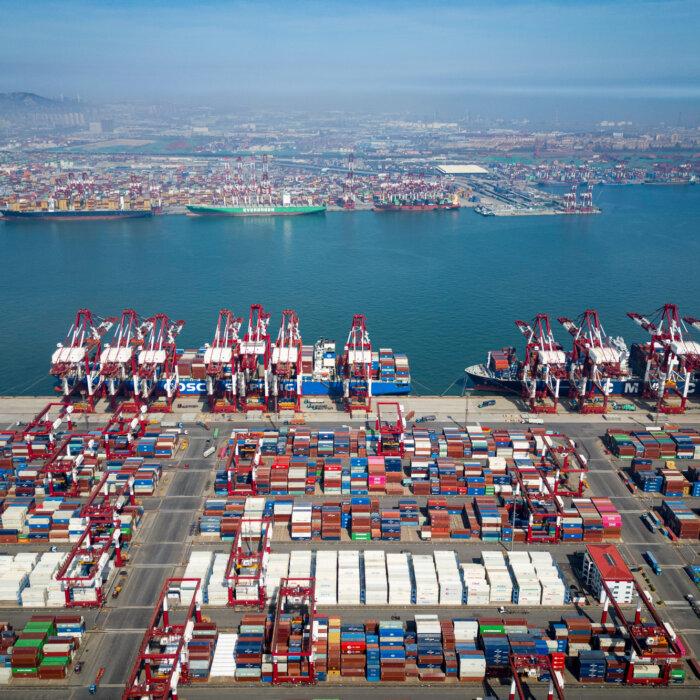
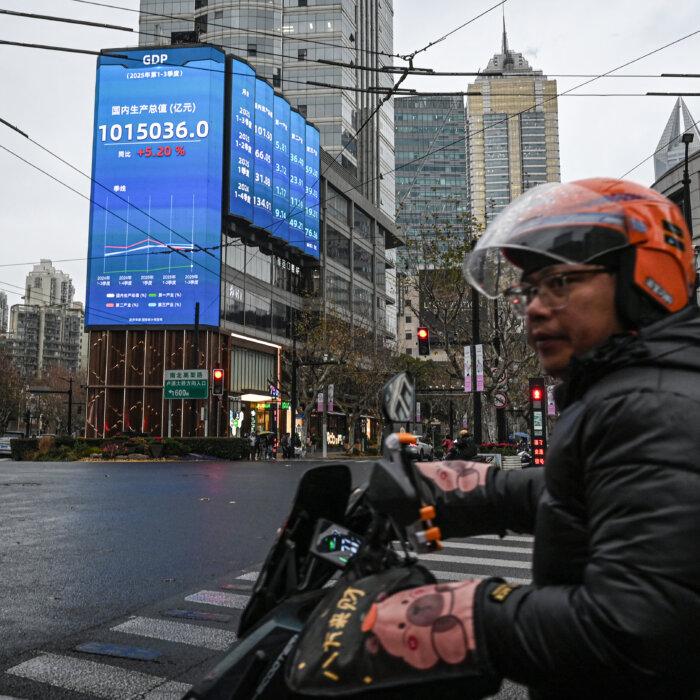
Meanwhile, investment accounts are nearly double the global average at 38.9 percent of China’s GDP, highlighting a persistent structural imbalance.
Economic data from the first half of 2026 underscores the reality of sluggish consumer spending. Total retail sales reached 24.87 trillion yuan (about $3.69 trillion), a mere 1.3 percent increase year-over-year. When adjusted for a 1.0 percent inflation rate, real consumption growth was effectively flat.
More revealing is the divergence in spending: while sales at convenience stores and supermarkets grew, high-end department stores and specialty brand shops saw significant declines.
This suggests that Chinese consumers have shifted into a “defensive mode”—buying basic essentials while cutting back on discretionary and luxury items.
The online shopping boom is also cooling off. During the “June 18” festival—China’s second-largest e-commerce event—sales rose just 0.9 percent. Major e-commerce platforms have largely stopped reporting specific gross merchandise volume figures, or exact sales totals, signaling that even China’s digital economy—once the strongest pillar of Chinese consumption—is slowing, reflecting a broader erosion of households’ willingness and ability to spend.
Despite the decline in demand, the new Five-Year Plan remains firmly focused on the supply side.
The word “supply” appears 30 times in the document, while “demand” appears only nine times. The policy recommendations heavily emphasize “optimizing consumption scenarios,” such as promoting AI-driven retail, green products, and digital experiences.
This implies that policymakers believe people aren’t spending because goods are low quality or shopping options are limited, rather than because consumers lack disposable income or confidence in the future.
Authorities ignore the fundamental prerequisites for consumer spending: income growth, positive expectations, and a robust social safety net.
What truly encourages people to spend is job security, wage growth, and the peace of mind that comes with a strong welfare system. On these fronts, the plan offers mostly slogans rather than concrete, measurable actions.
Beijing’s policy logic places excessive emphasis on managing supply while falling short in addressing consumer needs.
The deeper challenge lies in the structural contradictions between Beijing’s competing policy goals.
For two decades, China relied on infrastructure and real estate to stimulate economic growth. Now that the property bubble has burst and local government debt has soared, authorities are turning to consumption as a last resort.
However, to manage government debt, the central bank keeps interest rates low, reducing the interest income that many households rely on. The regime wants citizens to have more wealth to spend, yet it needs low interest rates to avoid accumulating more debt—creating a clear policy conflict.
Similar contradictions are also evident in social security and employment.
While the plan emphasizes improving the business environment, tax authorities are simultaneously intensifying audits on social security contributions to fill massive pension gaps. This increases labor costs for businesses, leading to pay cuts or layoffs, which, in turn, hurt household income and future expectations.
These self-canceling policies suggest that central authorities are trapped between maintaining fiscal stability and truly empowering consumers.
Boosting consumption requires more than making shopping more diverse or entertaining. Without higher pay, reliable jobs, and financial security, supply-side incentives will yield limited results. Until policymakers address where households will get money to spend and how to restore their financial confidence, a true “consumption-driven economy” will remain out of reach.


