China has officially designated Iran as its primary partner in the Middle East, following the signing of a 25-year cooperation agreement between the two countries in 2021. China relies heavily on Iranian oil; however, if the Iranian regime were to collapse, China could emerge as the biggest loser.
This agreement did not come out of thin air. Chinese leader Xi Jinping came to power in 2013, and within three years, China and Iran began discussions.
“The agreement is said to have been in the works since Chinese President Xi Jinping visited Iran in 2016, also agreeing to increase bilateral trade more than 10-fold to $600bn in the next decade,” the report reads.
“It is expected to be a sweeping ’strategic accord' that includes significant Chinese investments in Iran’s key sectors such as energy and infrastructure, in addition to military cooperation.”
Chinese Mini-Berlin Airlift to Iran in Progress
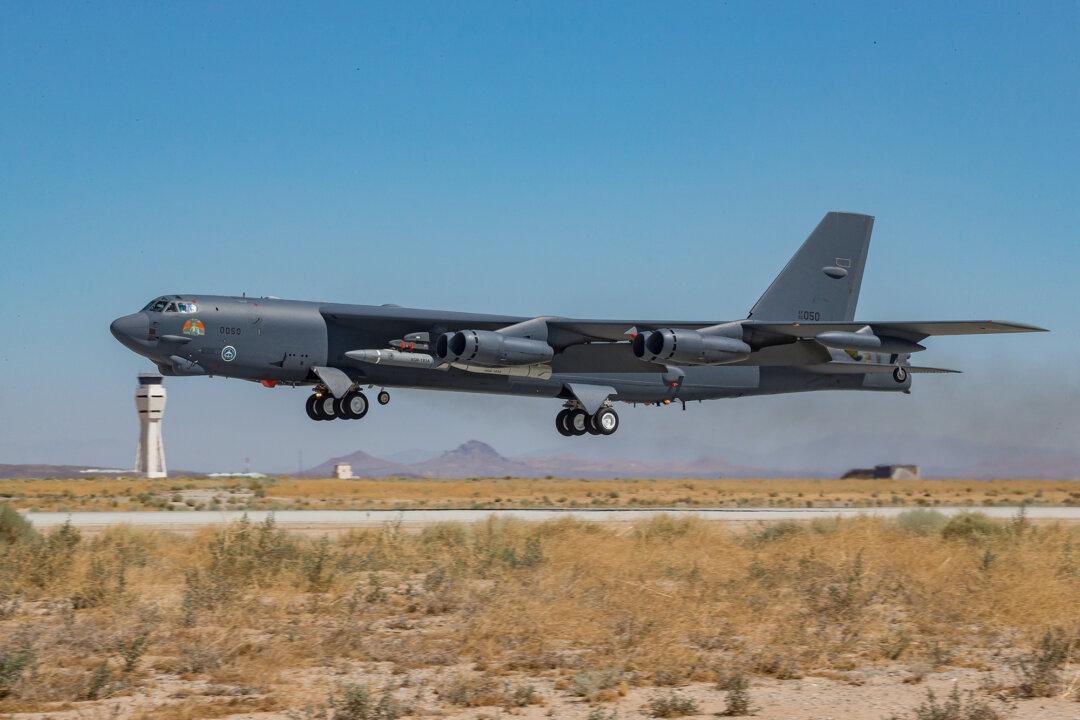
There have been reports of Boeing 747 freighters shuttling between China and Iran, which turn off their transponders when approaching Iranian airspace, thereby hiding them from civilian flight tracker websites but not from Israeli radars and fighters.“It could be ammunition, could be drones, pretty unlikely about that, but it also could be nuclear weapons,” he said.
China’s Energy Buys Sustain Iran
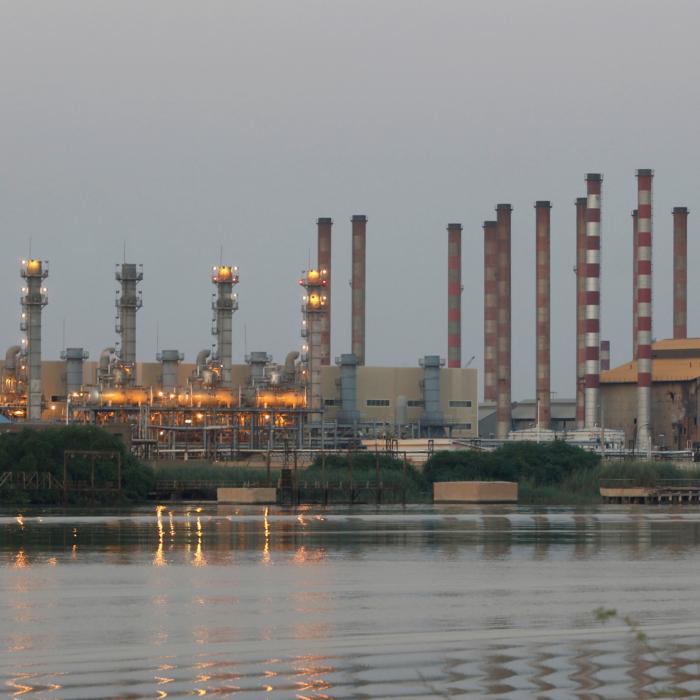
What is clear is that the Iranian regime has become dependent on Chinese consumption of Iranian energy production. Approximately 90 percent of Iranian energy exports go to China, according to commodities data company Kpler. This oil is considered sanctioned and bought by smaller “teapot” Chinese refineries in violation of sanctions.China began focusing on purchases of illicit Iranian oil in 2022, as it was able to receive it at substantial discounts and had it priced in Chinese yuan, which further entangles Iran in the consumption of Chinese exports. Without the purchases by China, the already weak Iranian economy would be a desert, undermining the Iranian regime.
The logical question is that if this oil is sanctioned, how is it not being blocked from transport?
The reality is that there is a distinction between sanctions and the enforcement of sanctions. A key element of enforcement could be the U.S. Navy, which could interdict Iranian ghost fleet tankers at the exit from the Strait of Hormuz and the Strait of Malacca by Singapore. However, the U.S. Navy is still struggling with an undersized fleet and over-extended mission around the world.
China Faces Greatest Risks If Iranian Regime Collapses
The Iranian regime consists of Supreme Leader Ali Khamenei and President Masoud Pezeshkian, both of whom appear to be still alive, and the Islamic Revolutionary Guard Corps (IRGC). It is not clear who is leading the IRGC with the relentless Israeli campaign against the leadership.The second concern is that the CCP would no longer have a trusted proxy leading the proxies of Hamas, Hezbollah, or the Houthis. The first two sub-proxies have largely been eliminated, but the third one remains relatively viable and can still harass the vital shipping chokepoint of the Red Sea, which can be used against European countries that depend on this sea lane.
Third, Iran has also been acting as an arms manufacturer on behalf of China, which has been important to supply Russia with war material while providing some plausible deniability of the Chinese regime’s involvement in Ukraine.
The final point is most damaging to the CCP. China needs Iranian oil—there is little alternative for China if the current Iranian regime were to cease oil exports to China.