Commentary
Five years ago, the world watched one of the most devastating foreign policy failures in modern American history unfold in real time.
The fall of Kabul in August 2021 was not merely the end of America’s longest war. It was the collapse of credibility, the abandonment of allies, and the beginning of a dangerous new era in global geopolitics.
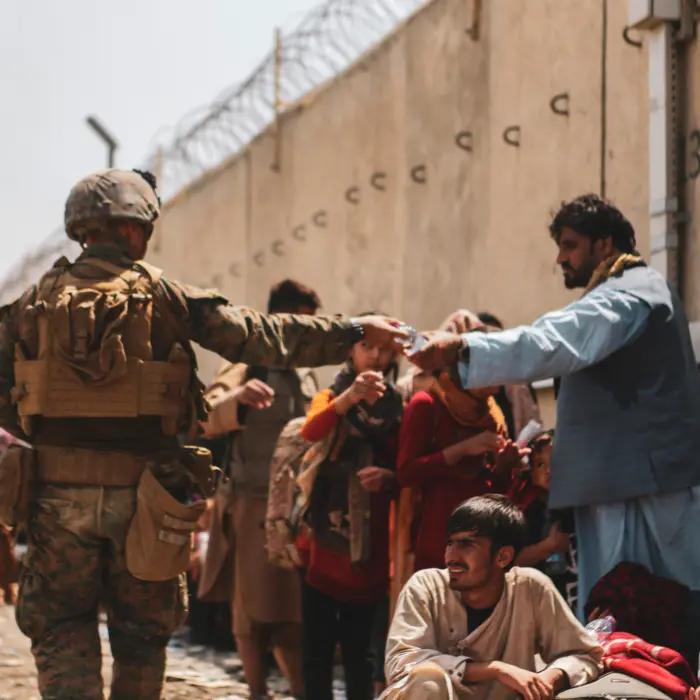
The images remain burned into our national memory. Afghans clinging to aircraft. Families separated at airport gates. American citizens stranded. Twenty years of sacrifice were erased in a matter of days.
I served four tours in Afghanistan between 2004 and 2013; the failure was personal. I believed we were trying to build something durable. I remember interpreters who risked everything to stand beside American forces, villages that experienced freedom for the first time, and young girls who entered classrooms once forbidden to them. I remember the faces of those lost on the battlefield.
The tragedy of Kabul was not that America left Afghanistan. Every war must end. The tragedy was how we left and the price the world has paid since then.

Five years later, the strategic consequences are impossible to ignore, and I predicted that each of the following would occur shortly after Kabul collapsed.
Russia would invade Ukraine.
The Middle East’s inherent instability would explode into open conflict.
Beijing would seize the opportunity to accelerate its challenge to American dominance in the Pacific and increase its pressure on Taiwan.
Tehran would be emboldened as its eastern border was freed of any American influence, and terror organizations would view the withdrawal as proof that patience could defeat even the strongest nation on Earth.
Whether every one of those conclusions was accurate is irrelevant. Perception matters in international affairs. Deterrence depends as much on credibility as capability. When credibility suffers, instability grows.
The years since Kabul validated that concern, and Americans were told to move on, as though Afghanistan represented an unfortunate chapter best forgotten.
That would be a mistake.
Military power cannot compensate for political indecision. For years, Washington oscillated between competing objectives, changing strategies with every administration while asking military leaders to achieve clarity from confusion.
Deterrence requires consistency. Allies must believe America’s commitments mean something. Adversaries must believe aggression has consequences. Mixed signals invite miscalculation.
National security begins long before the first shot is fired. Strong economies, secure borders, and energy independence are not separate from defense policy. They are defense policy.
Most importantly, freedom is never self-sustaining. It requires courage, vigilance, and a willingness to confront reality as it is rather than as we wish it to be.
Today, the United States faces a more complex security environment than it did in 2021. We confront coordinated challenges from China, Russia, Iran, and North Korea. Emerging technologies are reshaping warfare. Information operations influence public opinion at unprecedented speed. The next conflict may begin with cyberattacks, drones, economic coercion, or attacks on critical infrastructure rather than tanks crossing borders.
Yet the fundamental questions remain unchanged: Do America’s allies and adversaries believe we have the will to defend our interests? Can we adequately define what is in our national interest?
History will judge the withdrawal not simply by the chaos of those final days, but by whether America learned from them. The cost of forgetting is measured not in headlines but in future crises that might have been prevented.
Those who served in Afghanistan deserve more than memorial speeches and anniversary reflections. They deserve leaders willing to assess what happened, learn the lessons, and ensure the sacrifices made over two decades were not squandered.
The fall of Kabul should not be remembered as the end of a war. It should be remembered as a warning.